Climate protection in Bremen

“Rapid, far-reaching and unprecedented changes in all areas of society” – the Intergovernmental Panel on Climate Change (IPCC) demands no less to prevent the worst consequences of global warming. Against this background, Bremen has adopted a new, ambitious climate protection strategy in 2022. In the end, citizens’ perceptions of the climate crisis and issues of climate justice also play a crucial role in their successful implementation.

With the project Change of Perspective Climate Justice denkhausbremen wants to enable citizens and politicians to change their perspective and to look at the climate crisis from the point of view of the other. As part of a series of events and interviews, the project sheds light on the background of global climate justice and climate flight and promotes a dialogue at eye level with people from the Global South as an essential prerequisite for just climate policy.

Dr. Harald Ginzky works as an environmental lawyer and transformation scientist for the German Environment Agency, now for more than Read more
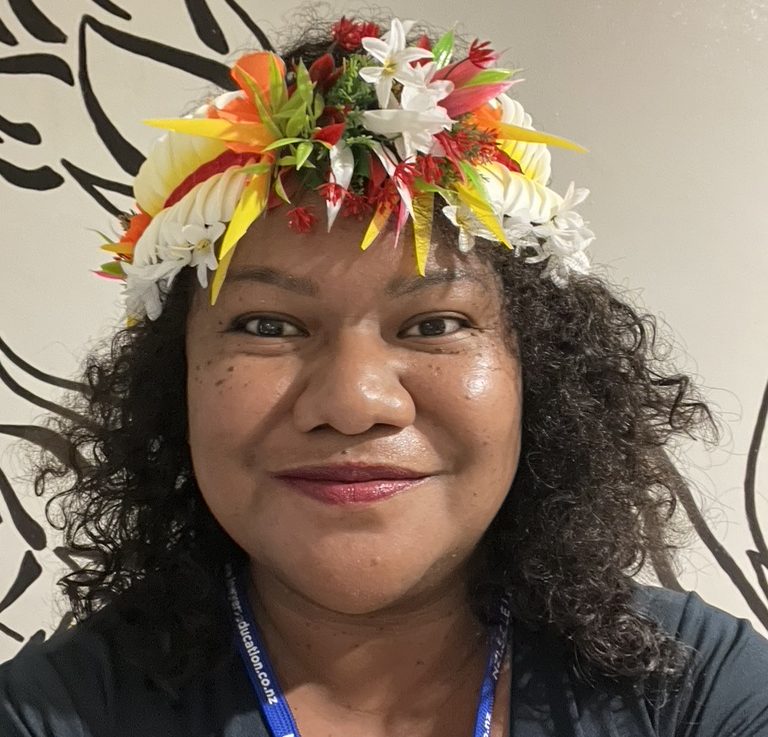
Teresa Lifuka-Drecala in conversation with denkhausbremen about the rising sea level threatening her island state, the difficult decision of people Read more
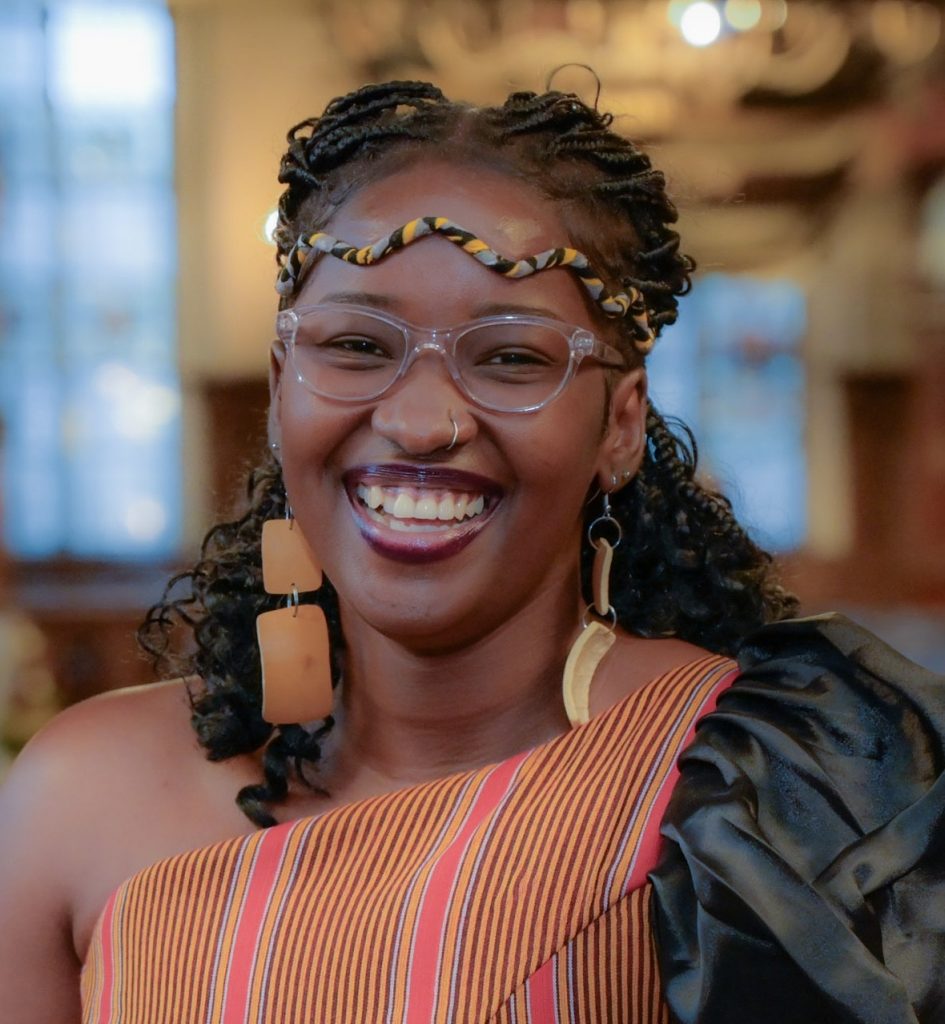
Hamira Kobusingye is a climate activist based in Uganda and the founder of the organisation Climate Justice Africa. In 2023, Read more
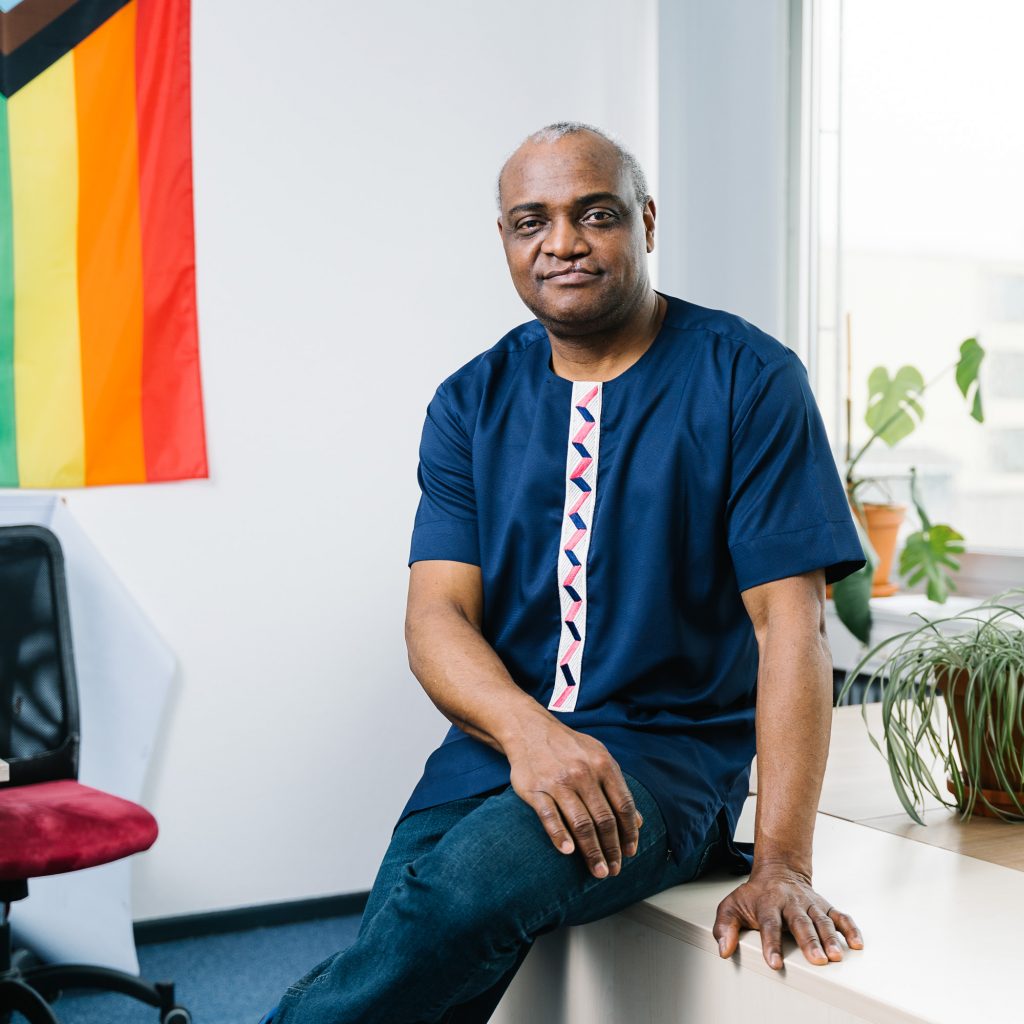
Dr. Sunny Omwenyeke in conversation with denkhausbremen about climate change as a reason for flight, his work to empower refugees Read more
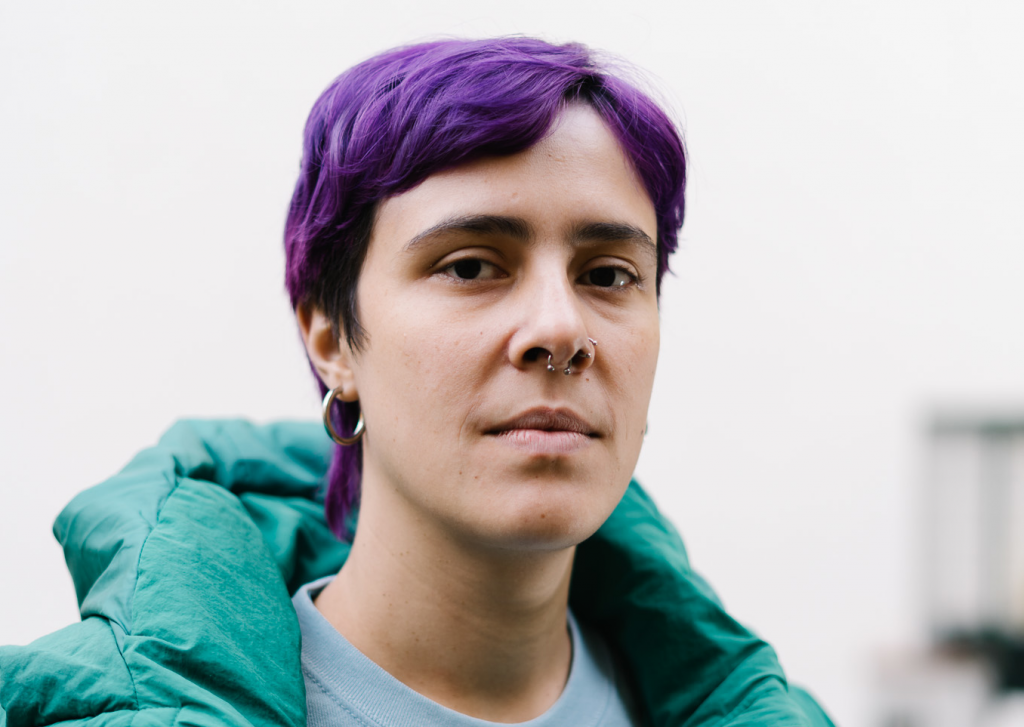
Isadora Cardoso is a queer feminist climate activist and researcher from Brazil, who has been working on gender and climate Read more
Rituraj Phukan in conversation with denkhausbremen on the way indigenous people are affected by climate change and how their cultures Read more


The project “Change of Perspective Climate Justice” is supported by ENGAGEMENT GLOBAL with funds from the BMZ as well as by the German Climate Foundation and the funding program of EWS Schönau, the Senate Dept. 32 – Development Cooperation of the State of Bremen, Stiftung Umverteilen, Bread for the World with resources from the Church Development Service, the Postcode Lottery, and CAFA.


Harald Ginzky: The carbon footprint increases with the size of one’s wallet.

Dr. Harald Ginzky works as an environmental lawyer and transformation scientist for the German Environment Agency, now for more than 20 years, and is in charge of inter alia negotiating international environmental treaties as member of German delegations. In 2019, he co-founded the working group (“Arbeitskreis”) of the SPD Bremen City – Climate Change, Environmental Protection and Sustainable Economy, which he has since led together with Bianca Wenke. In an interview with denkhausbremen – which he expressly did not conduct for the German Environment Agency, but as spokesman for the aforementioned AK – he discusses the challenges for the SPD with regard to global climate justice. (Photo: Ev. Academy Loccum)

denkhausbremen: What does climate justice mean to you? What comes to your mind spontaneously?

Harald Ginzky: We can only achieve justice if we understand what the real challenge of climate policy is. It is often pretended that the core objective of climate policy is just to reduce greenhouse gas emissions. In my opinion, this is fundamentally wrong and in itself leads to an elitist and unjust approach.

At its core, climate policy is something fundamentally different: it is about changing both the economy and society as such in a way that good work and a good life are still possible for everyone under the condition of greenhouse gas neutrality. And this can only succeed if climate policy ensures justice – justice in terms of burdens, but also justice in terms of participation, i.e. participation in decision making and identifying and implementing solutions – both nationally and internationally. Such an approach which ensures credibility and reliability would also directly counteract the loss of trust in politics and the shift in society to the right – as we have unfortunately seen it in the election for the European Parliament.

Does global climate justice play a role in your political commitment?

Bremen’s influence on global climate justice is of course limited. Nevertheless, it is important to understand that Germany, and thus Bremen, has a historical and geopolitical responsibility. Historically, because climate change was mainly caused by the Global North. Geopolitically, because the Global North in particular has the economic and institutional capabilities to quickly implement a socio-ecological transformation towards climate neutrality. Because of the historical guilt of the North, the Global South is orienting itself to a certain extent towards the Global North, in the sense of: If they don’t, then we certainly won’t. In this respect, we have an essential responsibility here.

It is repeatedly argued that we could not expect so much from the people in Germany or in Bremen. The argument is really blind. Are African societies supposed to buffer what we refuse to tackle here – despite our historical responsibility and the much better opportunities?

In my opinion, global climate justice also means that Bremen should recognize and address the approximately 20% of the population with a migration background as a significant stakeholder. In my opinion, far too little is happening in this regard.

You were instrumental in bringing the Climate Working Group of the Bremen SPD into being. What response did you meet within your party? What are the successes – did you face resistence?

The AK was founded in December 2019. The work – complimentary, of course – is fun because we are a heterogeneous, very committed and very competent team of about 25 people – comrades in SPD terms – who work on concrete solutions. We are quite creative in developing ways and means to raise support in the Bremen SPD for our proposals.

In September 2020, the Bremen SPD passed a 15-page fundamental conceptual approach for climate policy in Bremen that is very innovative and clear-sighted. The SPD programme for the 2023 election has also included climate protection, decarbonisation and forward-looking structural transformation policy as core elements. This renewed orientation of the SPD Bremen is certainly a success that can be – to a certain extend – attributed to the AK.

Given our lively and respectful workstyle, the AK is a place of good democracy and political participation, combined with a high level of commitment and expertise.

Were you able to set specific priorities or achieve concrete results with the AK?

Yes, several to many – depending on your point of view: Above all, we have initiated discussions on topics which are of importance for Bremen, e.g. on the idea of a new motorway, the A27, on the readjustment of climate adaptations and on transport policy issues. The Bremen City SPD almost unanimously supported our “no” to the deepening of the Inner Weser, in the fall of 2023.

However, it is also important that we have put the topic of climate policy on the public agenda, with our “Climate Talks” series. Moreover, we have established a trustful network with many core actors in Bremen (including trade unions, churches, universities, the chamber of crafts and environmental NGOs). I think climate and sustainability policy can only succeed if we take advantage of the diverse innovative and creative initiatives from business and society, to promote and network them. It is the society which is in charge and which needs to be hold accountable.

For the German SPD, the social-democratic party, the issue of social justice has always been a core value. In your view, how can we ensure that we design climate change ambitions in a socially just way at the same time?

It is important to understand that justice can be seen from below and from above. For me, justice from above means that those who are largely responsible for the crisis due to a high climate footprint and/or are able to do so due to their economic situation needs to be obliged to bear the costs. Important to know, the climate footprint increases linearly with the size of one’s wallet, the continuous income. Justice from below demands that those who contribute little to climate change or who do not have the financial resources need to be relieved.

The currently discussed “climate money” (every citizen should get a certain amount of money in order to compensate the increased costs) could only be a start, a necessary one, but not a sufficient one. The basic idea of this “climate money” is that the poorer would benefit more from the amount than rich people.

Practically speaking, politics must also ensure that “disadvantaged neighborhoods,” which typically don’t have as strong a lobby as “academic districts,” are not overlooked when it comes to creating green spaces, bike paths, and green roofing.

However, climate justice could not only be achieved by climate policy measures. A decent minimum wage, an appropriate social security system and, for example, construction of social housing, are also means of ensuring climate justice.

Furthermore, it is necessary to withdraw many “neo-liberal” excesses, such as the absence of a wealth tax, the profiteering from increasingly absurd financial products, and the exclusive focus of corporations on dividend size rather than sustainability requirements. After all, we need systems that emphasize what we have in common, which promotes solidarity instead of competition and isolation. More egalitarian approaches are needed such as one health insurance for all.

Has the SPD developed adequate solution scenarios to adequately address the threat posed by the climate crisis?

If they had, Scholz (German chancellor) and Bovenschulte (mayor in Bremen) would have already been nominated for the Nobel Peace Prize. The fact that this is not the case shows that there is still room for improvement.

In principle, however, the SPD is the party for social justice and also for structural transformation policy. In terms of structural transformation policy, the Bremen SPD recently founded a corresponding project group, also partly on my advice. The aim is to consider how structural transformation policies should be developed and implemented in order to ensure a good life and work in the medium and long term under the premise of greenhouse gas neutrality in the two Bremen cities. A really complex challenge, but the SPD has commenced to work on it.

What the SPD is struggling with: letting go of the economic growth paradigm, accepting concepts of sufficiency, changing the mindset of the society. I would like to stress that these approaches will only succeed if the social dimension is taken into account. The main thing is to demand sufficiency from those who have enough anyway and not from for example the subsistence farmer in Zambia.

A last point in this context. In politics and also within the SPD, economic comparisons between fossil and sustainable solutions are still being made to justify what is considered reasonable. To be frank, in fact, this is absurd, because the fossil alternative always leads to costs for society (“externalization”), which on the one hand goes in the wrong direction in terms of climate policy and on the other hand, of course, is also unfair – because the economically weak are always disproportionately affected by the climate impacts. Thus these comparisons are really nonsense.


The tides are flooding our roads, our houses – everything.

Teresa Lifuka-Drecala in conversation with denkhausbremen about the rising sea level threatening her island state, the difficult decision of people from Tuvalu to leave their home country and the need to support vulnerable communities in the face of climate change. Teresa Lifuka-Drecala is a lawyer and an experienced Director and Board Member for various organizations, including the Tuvalu Association of NGOs and the Tuvalu National Youth Council. She is committed to promoting sustainable development in Tuvalu.

denkhausbremen: What does climate justice mean to you? 

Teresa Lifuka: For me, climate justice is a human centered approach. It’s about people in Tuvalu or in any country receiving the aid and assistance that they genuinely need, especially in the face of climate change. Equity is essential – the assistance needs to reach the grassroots level, the communities, which is the level that I work with. I think about climate justice as taking our concerns to court – which is very important – but also as money and funds to help grassroots communities adapt to the impacts of climate change.

As one of the heavily impacted nations, Tuvalu’s needs are very great. So, how about the polluter pays principle? Tuvalu as a nation is far from being a big polluter, yet we are the ones that are heavily affected, even threatened in our existence as a country. Not only Tuvalu, but other island nations around the world as well.

What is the kind of assistance that you have in mind? 

On the global level, we have the human rights framework, for example, including our rights to health, life, water, housing. In the negotiations within the United Nations Framework Convention on Climate Change (UNFCCC), we have discussions about mechanisms around climate adaptation and loss and damage. But these are concerns that countries like Tuvalu have been bringing forth to the UNFCCC since 1993 – and only now we are beginning to truly acknowledge them. Will it take another 30 years to finally implement this?

I appreciate that our governments are working together with others to push this at the global level and to hold other countries accountable. But for me personally, when I think about climate justice, I’m breaking it down to the grassroots level. I am thinking of assistance that is genuine and clearly recognizes our vulnerability. Because when you recognize the vulnerability of a nation or a community, only then you will be able to understand their needs.

We have donors and financial aid coming in, but they all have their set of criteria that we must follow – for me, that’s not genuine at all. How do they really know what the people in Tuvalu need? The reality is, most of the projects are for the people, but they’re not owned by the people. Instead of spending money in Tuvalu without any sustainability, we need equitable access to resources, with a focus on local empowerment.

Rising sea levels are certainly the most discussed when it comes to the impacts of climate change that Pacific Islands are facing. Are there any other impacts that are affecting your communities?

As physical impacts of climate change, we have sea level rise and king tides, extreme king tides. These tides are flooding our roads, our buildings, our assets – everything. The rising sea level brings debris from the sea onto the road. There are frequent roadblocks, preventing children from getting to school on time. People at the ends of the islands, where this mostly happens, are unable to reach work on time. In general, the consequences of climate change in Tuvalu pose a particular challenge for vulnerable populations, especially the elderly, children, and people with disabilities.

With rising sea levels and coastal erosion, the already limited land becomes even scarcer – especially in the capital Funafuti, where most of our population resides. We are losing land, we’ve already lost whole islands during some cyclones. As a small nation, looking for space, we are becoming ever more restricted and living in crowded communities.

We have the seabreeze, allowing our valuables to rust and to deteriorate extremely fast as compared to if it were kept in a safe location. Not to mention saltwater intrusion, which also is a real problem for us, the salinity in our soil is very high. We have vegetables that are very salty, which also affects our health. Producing vegetables that are edible for you and your family requires a lot of effort in tilling the land.

So, besides extreme weather events like cyclones or droughts and the corresponding risks, this is also about food security and water security. How are we able to sustain our supply in Tuvalu, not only for the future generation, but even for the people living here today?

Scientists predicted that Tuvalu will be uninhabitable by 2050… 

Yes, I will always emphasize this. It is the reality – we will be uninhabitable by 2050. And we don’t want to be uninhabitable! This is our home, this is where we want to live. I mean, who wants to lose their home?

Besides the physical and health effects of climate change, we also have psychological impacts. We in the Pacific don’t refer to them in those terms, but when you dig deeper into conversation in the local language, these are really issues and concerns. There is the fear that we will lose our land, lose our cultural heritage. That we don’t have enough to eat, not enough drinking water. This causes tension and friction in families – the fear is real.

In 2023, Tuvalu and Australia signed an agreement enabling citizens from Tuvalu to migrate to Australia in the future. The ‘Falepili treaty’ has been called ‘groundbreaking’ as it is the world’s first climate resettlement agreement. What are the discussions about that in Tuvalu? 

Well, it might have been groundbreaking, but it also caused a lot of heartbreaks, I can say that. As I highlighted before, many of us would not want to move. I would love to stay in my country forever and have my kids and their kids live in this nation. But the reality is that Tuvalu will be uninhabitable by 2050 and there are measures that need to be undertaken.

Nevertheless, when this agreement was first announced, I was quite upset. Because when such treaties are endorsed and signed by governments, usually there is a national consultation prior to this. But there was no consultation and no transparency then. I was worried about the terms of security in this treaty, I felt we were giving away too much to Australia. But if this is an avenue for migration in the face of climate change that our leaders are building on to ensure that we have a future, then I commend them for that.

I’m happy to note that our new government is addressing the concerns Tuvaluans have about the treaty in a list of 21 priorities, going back to the discussions and trying to resolve them. Once that is done, hopefully we may have consultations on the matter, and they may provide us with more feedback.

It’s hard to imagine an entire – albeit small – nation leaving their homes and moving to another country. 

It is difficult. I fear for what it may do to our identity as Tuvaluans, our sovereignty, culture and heritage. As great as the Australian initiatives may have been in Tuvalu in terms of aid and assistance – still, this is a country that has not acknowledged the rights of their own indigenous people. If they cannot acknowledge their own indigenous people, then how can we be sure they would recognize us outsiders coming in? So, for me as an indigenous person, this is quite a risk. I trust this is something the new government is working on in the final details of the treaty.

You said that everyone wants to stay – is there a difference between younger and older people?

There’s a bit of both. You have young people that don’t want to leave, then you have old ones that have already left. And you can’t really blame them, because most of the decisions of why people migrate are because of better work opportunities, better access to health services, better benefits for their children. When it comes to our children, that’s something we just cannot argue with – to give them the best life that we could possibly hope for. For most Tuvaluans that I have talked to, those are the common reasons. It’s always around family, giving them a better life.

What could politicians in Bremen contribute to climate justice?

I have a very community minded approach in the sense that before you help others, it would be good to help your backyard and to have sustainable policies in place, without use of coal or other fossil fuels. Support your vulnerable and marginalised communities that are neglected and strongly affected by climate change!

Beyond fostering international cooperation and supporting the call for climate justice that comes from the Pacific and from indigenous groups, it’s also about having practical initiatives in your own country to address proper healthcare, proper sanitation, access to water and food for your vulnerable communities. I’m a firm believer in engaging NGOs and other stakeholders because fighting climate change is not just the responsibility of governments, but it’s everyone’s responsibility.


Hamira Kobusingye: Africa should forge its own path towards a sustainable future

Hamira Kobusingye is a climate activist based in Uganda and the founder of the organisation Climate Justice Africa. In 2023, she received the Bremen Solidarity Prize for Climate Justice. In conversation with denkhausbremen Hamira Kobusingye talks about her climate activism in Uganda, the importance of climate education on grassroots-level and her fight against a new oil pipeline project (Photo: Bremen Senator Press Department).

denkhausbremen: What does climate justice mean to you? 

Hamira Kobusingye: When I envision climate justice, I see a world where no one’s life is valued more than another’s. Even today, African communities are exploited by the Global North, particularly regarding investments in oil fields. A glaring example is the long-lasting impact of an oil spill from a Shell pipeline in the Niger Delta, which has left residents with severe air, water, and soil pollution. Additionally, children in regions like the Congo are forced into labor to mine cobalt, which is then used to manufacture electric cars in Europe. This exploitation must end immediately; it is fundamentally unjust. Everyone deserves the right to a good life.

To me, climate justice also means that each community should have its own unique solutions for reducing emissions, transitioning to sustainable energy production, and achieving economic growth simultaneously. Climate justice means reducing inequalities in the social, economic and environmental sphere.

Let’s start from the beginning. What motivated you to become a climate activist? 

Before I joined the fight against the climate crisis, I was deeply involved in empowering women. Growing up without a father, I witnessed firsthand the sacrifices my mother made to ensure I had opportunities in life. Many of my female friends were forced into early marriages, became young mothers, and were deprived of education. This motivated me to join a project aimed at helping young women, particularly single mothers, to grow their own vegetables. This initiative was designed to improve their financial situation by allowing them to sell their crops and use the money for education, health, and additional food for their children.

However, recurring droughts and floods repeatedly destroyed their crops, which was devastating. This heartbreaking experience led me to read and delve deeper into the climate crisis. I soon realised that climate change was the root cause of many issues in my community. This fueled my determination to spread awareness and inform more people about the impacts of climate change.

What did you do to achieve that? 

In 2018, I began protesting on the streets of Kampala, holding up placards to raise awareness within my community about the climate crisis. At first, I felt like a drop in the ocean, and it was quite dangerous. There were times when the police intervened, forcing me to flee. Protesting in Uganda is not the same as in Germany; some of my friends were even jailed for their activism.

I understood that change wouldn’t happen overnight, but I believed that if I could get a few people to read my placard, they could spread the information further. Over time, I have seen a significant shift in awareness among those around me. Many people now have a better understanding of the climate crisis and how deeply it affects every aspect of our lives.

Last year, you received the Bremen Solidarity Prize for Climate Justice – in a country like Germany, being one of the biggest polluters in the world. Isn’t there a kind of irony in it? 

Indeed, it was a bittersweet moment for me. Winning the prize didn’t change the fact that Germany remains a major polluter, often delaying meaningful climate solutions and the phase-out of fossil fuels. This was evident in Lüzerath in January 2023. However, as a climate activist and representative of the Global South, I was grateful for the opportunity to speak before German politicians about our demands, such as appropriate climate financing.

It was encouraging to see political leaders in Bremen supporting climate activists and advocating for climate justice. This contrasts sharply with Uganda, where it is rare to find politicians who support our cause. In fact, we are often treated like adversaries, despite our goal of improving the lives of our fellow citizens. Additionally, the prize money has been useful in helping Climate Justice Africa to become officially registered as an NGO, which is a significant step forward for our organization.

What is Climate Justice Africa about?

Climate Justice Africa originated as an idea in 2020 and officially became an NGO during COP27 in 2022. As the founder, my mission has always been to raise awareness about climate change, promote sustainable development, and empower grassroots communities to advocate for real change and join a network of climate activists across Africa. This mission is of utmost importance to me.

For example, we run a capacity-building and skill-sharing program for communities and climate activists. We provide education on critical topics such as the Paris Agreement, the Loss and Damage Fund, and the workings of international climate negotiations. Additionally, we offer tailored solutions to help communities build resilience against climate change.

Climate education is essential—not only to ensure people receive accurate information but also to combat misinformation and encourage citizens to support politicians who prioritize the climate crisis. Through these efforts, Climate Justice Africa aims to create a knowledgeable and proactive community ready to tackle climate challenges head-on.

You are also active in fighting against the East African Crude Oil Pipeline Project, which is supposed to transport oil from Uganda to Tanzania. 

Yes, this proposed pipeline is estimated to emit 35 million tons of CO2 annually. If this project proceeds, Uganda—already severely affected by climate change—would become a significant polluter. We cannot afford this, as we are already grappling with a climate crisis we did not cause. Uganda has immense potential for sustainable energy production through solar power, this should be our focus. Instead, amid an escalating climate crisis, our government has chosen to invest in fossil fuels. These investments do not benefit our people; rather, they ensure the supply of fossil fuels to Europe. This is truly shameful. Africa must stop serving the needs of the Global North and forge its own path towards a sustainable future. Otherwise, Western countries will continue imposing their environmentally destructive practices on us.

What are your main concerns regarding this planned pipeline?

I fear that people in Uganda and Tanzania will face the same devastating consequences as those in the Niger Delta. Having visited the region, I witnessed the horrific conditions that persist years after the oil disaster began. The local communities have been robbed of their livelihoods; they struggle to grow crops or catch fish because the land and water are contaminated with oil. Even breathing fresh air is difficult, prompting recommendations to buy air cleaners, which many cannot afford. Fresh air should be free; it is a fundamental human right. Instead, the people of the Niger Delta live with the constant fear that they might cough up blood or experience lung failure at any moment. This is a stark example of how billionaires, corporations, and major polluters dehumanize people for profit. Once they have extracted what they want, they pack up and leave, abandoning the affected communities to deal with the mess.

How can politicians from Germany support the fight for climate justice in the Global South? 

I could suggest that they push for speeding up in climate action and invest in the Loss and Damage Fund, but the truth is—they already know all this. This is why we, as young people and members of civil society, must unite and keep advocating for urgent climate measures. Real change is coming from grassroots efforts and individuals making a difference in their communities. German politicians can support this by providing resources, such as laptops, to grassroots activists. This might seem simple, but it would really help. With access to technology, these activists can educate themselves, follow climate negotiations online, and use social media to network and advocate for climate action within their communities.

Seems like your hope lies in the civil society, not in political leaders…

Yes. To be honest, I am really disappointed with most politicians, as many of their promises are empty. Throughout the past year, I felt depressed and anxious. There is so much injustice in this world, it is frustrating. Most politicians do not treat climate change as the crisis it is, even though its impacts are already surrounding us. If we do not act now, more people around the world will suffer and die from its effects. Looking at Small Island Developing States (SIDS) like Tuvalu, Mauritius, Kiribati etc. their current situation is telling us to act now or a whole civilization, culture and heritage might be extinct.

So, what is the alternative? Real change is never easy, and investing in climate protection and a socio-ecological transformation will require significant financial resources. However, taking a proactive stance and striving for a sustainable future for everyone is, in my opinion, far better than passively waiting for a climate catastrophe to unfold.


Sunny Omwenyeke: Western countries must take responsibility!

Dr. Sunny Omwenyeke in conversation with denkhausbremen about climate change as a reason for flight, his work to empower refugees to fight for their rights and the responsibility of Western countries to work on their colonial history and the damage they have created across Africa. Sunny Omwenyeke is a long-term activist of the refugee movement in Germany and founder of the Bremen Solidarity Center (BreSoC) e.V. (Foto: Ana Rodríguez).

denkhausbremen: What does climate justice mean to you? 

Sunny Omwenyeke: To me, climate justice would be a situation where countries that are most responsible for all the mess in our climate take more responsibility, where they are held accountable. Those are essentially the Western countries that have such a long record of exploiting and devastating many other countries – simply because they want to maintain their standard of living here. These countries are inconsiderate and greedy.

If the Global North is serious about addressing climate justice, for me that would mean to pay something back to other countries they have destroyed. Even as we speak, this destruction continues. It’s time to realize that the people who are not living in these so called Western developed countries also have a right to enjoy exactly the same standard of living. If this is not acknowledged, we are not playing on the same field.

You are the founder of the Bremen Solidarity Center (BreSoC) e.V. Can you describe the work that you are doing? 

Yes. I founded BreSoC in 2017/2018. Before, I studied social movements and advocacy in the UK – apart from being an activist for a very long time in the refugee movement in Germany. My work is basically focused on the grassroots-level. I don’t believe in changes coming from politicians and trickle-down effects. Self-organization, empowerment and solidarity – these are the principles that guide my activities and engagements.

I founded BreSoC, because I felt that in most of the left-wing activism in Germany, there’s always a tendency to go along with the hype on whatever the issue may be. The moment the hype is out, there is no longer any attention to the initial problem – even though it is not solved. This means that at each and every point, you have to start afresh. I felt that refugees especially needed a stable structure on the ground that they can trust and rely on, which facilitates and supports continuous activism. One year after I founded BreSoC, we also started “Together we are Bremen”, previously called “Shut it Down, Gottlieb-Daimler-Straße”, to fight against a refugee camp.

You mean the refugee camp in Bremen-Gröpelingen?

Yes. I was attending a meeting of the Flüchtlingsrat, where a social worker was talking about how great it was to be able to help refugees in this camp. I couldn’t believe what she was saying. This camp was so terrible, and these social workers were seriously thinking they were helping refugees to feel good there and even encouraged them to stay there. I was very annoyed when they wanted to move on to the next item on the agenda. I said, what the hell do you think you are doing? Do you care about what these refugees want? Do you ever ask them? So, we agreed that I should hold a meeting with the refugees from the camp in Gottlieb-Daimler-Straße. That’s what I did – and it was the beginning of „Together we are Bremen“.

So, what did these refugees want?

We had that meeting with about 35 to 40 young African refugees. I introduced myself, where I come from, what I do – and then I wanted to hear from them. Because what most people don’t understand is that when you deal with refugees, you have to create the room for them to talk. Unfortunately, many Germans who work with refugees feel they know “everything” about their situation and overlook the necessity for the conducive room for the refugees to speak. In the end, these guys started to talk and it lasted for over two hours. They described how horrible the conditions were in the camp and how dehumanizing it was to live there.

I said, “Welcome to Germany”. You have talked about how bad it is. Now the question is whether you are ready to fight and change it or if you go back and leave it as it is. I assured them I would be there to guide and support them, but the choice would be theirs in terms of what they want to do. So, I repeated the question and they said they want to fight. From this moment on, it was clear. I said, the decision of what happens to this camp is in your hands – don’t believe any other person telling you something different. They will close this camp if we fight to close it. We met again, started to inform other people and organized a demonstration in the city, with more than 700 participants. It was so powerful to see all these refugees breaking their silence and fighting for their rights. Six months later, against the determination of the former social senator in Bremen, the camp was closed. This is what empowerment can do.

Do you see a connection between your work and the issue of climate justice? Is it part of the discussions that you have with refugees?

Yes. Climate change is definitely a reason why people leave their countries in search for more security and a life in dignity. In the whole of the West African coast, for example, people make a living from agriculture and fishery, which in many cases is no longer possible due to the impacts of climate change. When it comes to climate justice you should keep in mind that it is the fossil fuel industry that causes a lot of emissions that led to the climate crisis, but it also destroys the livelihoods of people and therefore causes migration.

I come from Nigeria, where the oil industry is exploring the oil in the Niger Delta area. If you go to the villages, you will see that the farmlands are totally messed up, the water is polluted and everything is covered with black soot from burning oil pipes. People can’t live in these areas anymore.

However, my perception is that refugees don’t talk very often about the climate crisis and that it had anything to do with their flight. They are more concerned about how to earn money and support their families back home. But in the end, if you put all of these issues together, you can’t look at it apart from climate justice – because climate change is very much at the base of it all.

As climate change is such an important factor, but not a top issue being discussed as a cause of flight – do you think about including it into your strategies to empower refugees? 

Well, if you look at the Geneva Convention, which is the basis of asylum, it is long overdue to revise this document and include climate change as a reason of flight. This issue has been discussed among practitioners, activists, lawyers and policy makers for a long time already. But if you touch on the convention now to include climate change and other factors that are not recognized yet, right-wing political forces will try to change it just in the other direction. There is an attempt to water it down more and more and make it less effective as a binding document for international protection. And that is exactly what many countries, including Germany, have been doing for many years now. At the moment, you could very well argue that the continuous decline of the Geneva Convention as an effective protection tool has culminated in a situation where there is hardly any protection anymore from the EU-level. Politicians are afraid that acknowledging climate change as a cause of flight would open the door for many more refugees to be legally accepted here in Europe. That is exactly what most politicians want to prevent.

What could people and politicians from Bremen do to contribute to global climate justice?

The first thing is to look at the colonial history. Bremen is one of the top cities in colonial business and therefore has a lot of responsibility and accountability that is still pending. So, if local politicians are serious about contributing to climate justice, they would have to deal with this colonial history and to recognize the mess that was created in African countries many, many years ago. This should be the basis for any further discussion on what concrete consequences can be drawn out of this history today. But what I only often hear is something like inviting 10 young people from Namibia or other countries in Africa to study here or whatever. This is a very condescending lip-service, without any substance to it. We don’t need this bloody exchange – we need justice! But you can’t dare bet on it. Bremen also claims to be a “safe harbour”, yet look at refugees in the camp in Bremen. Now they want to add the racist and discriminatory “Bezahlkarte” for refugees to it. That tells you all.

Many people in Germany really think that Africans are poor. They don’t understand that we are not poor. By any standard, we are not poor! Millions and millions of dollars are transferred from African countries to Europe everyday – Europeans are stealing our wealth and resources from us, every single day. We know it, you know it and now it is time to stop it.


Isadora Cardoso: Climate justice means a good life for everyone

Isadora Cardoso is a queer feminist climate activist and researcher from Brazil, who has been working on gender and climate justice for many years. After being with the Research Institute for Sustainability in Potsdam, Isadora is currently working as a PhD Fellow at the Freie Universität Berlin. The conversation with denkhausbremen revolves around false narratives around gender and climate issues as well as intersectional perspectives on climate justice (Foto: Ana Rodríguez).

denkhausbremen: What comes to your mind when you think of climate justice?

Isadora Cardoso: The first thing I can think of, is that climate justice is about a good life for everyone, especially for people that are most affected by injustices in general. Where even the most marginalized people in our societies from all corners of the world can live in dignity and have access to a good environment, housing and so on. These are basic rights, every human deserves them. The climate crisis aggravates the structural injustices that already exist today. This is why for me climate justice involves every fight for justice.

As a researcher, you are working on gender issues and the climate crisis. What is the connection between these topics?

First of all, the reduction of gender issues to women and girls is still very widespread in research on the topic. From this narrowed perspective of gender, there is evidence that – in many social contexts – women and girls are facing more difficulties to adapt to the impacts of climate change and to be represented in decision-making around climate issues.

Can you give an example?

One very common example, which is reused a lot to justify the connection of gender and climate, is that of severe droughts. In many communities, women and girls are expected to do most of the unpaid domestic work. That’s why they are also responsible for supplying their families with food and water. Due to more frequent drought events in the future, women and girls will have increasing problems to find enough water, grow vegetables and provide care for their families. They might have to walk longer distances to get food and water, which consequently leads to more unpaid work, but also to a higher exposure to violence, depending on where they have to go.

In my opinion, this common narrative about gender and climate generalizes too much. It spreads the message that women and girls are more affected by climate change everywhere. In my opinion, the underlying studies are not sensitive enough to the specific social contexts and different power dynamics within them. Most of this evidence is just reproducing the same pictures: Women and girls are turned into victims.

So, the focus should be more on the power relations in general?

Yes. Within my research, I have been working with an intersectional framework since some time. I try to be sensitive to the context and to understand the power dynamics in and between communities. Gender is always an issue I have a look at, but I see it in relation to other aspects in our society, such as race, age, class, disability or territory. All of them are interconnected and should be analyzed in relation to one another, so that power imbalances, oppressions and hierarchies are turned visible. With this, the work of fighting injustices becomes clearer. I find this really important to have in mind, so that you are not simply jumping to „women and girls are dying more due to the climate crisis“.

Apart from that, it is also important to mention that the gender narrative is still very binary. It often approaches inequalities of women in relation to men – non-normative genders and sexualities are usually not considered in many studies.

How does the climate crisis affect queer people?

For example, when losing your house or your documents due to flooding-events, this is tough for everyone, of course. But for queer people, the chances of being exposed to additional social discrimination and violence when trying to recover their documents or finding a secure space to live after such a disaster, are higher. We are stigmatized everywhere, even here in Germany, where society calls itself progressive. Queers, especially trans people, face extra barriers in accessing basic needs, from dignified healthcare access to decent jobs. In situations where we need extra support and care, I think any queer person can understand the difficulties of not easily finding safe spaces. One is turned very vulnerable.

When already quite in disadvantage in non-critical conditions, the brunt of having to cope in the face of climate impacts becomes much heavier on us, even more when we are also marginalized based on our race, migratory status, age or disability. Again, instead of falling for binary and simple explanations of how climate change affects different society groups, for me it is important to understand people and communities intersectionally, and in relation to their contexts.

So, climate justice is also about giving spaces to everyone… You attended the UN Climate Change Conference (COP28) in Dubai at the end of last year. How did you perceive it?

Well, these negotiations are inaccessible spaces in many ways, especially for the most affected and marginalized people from the Global South. Not only because there is security as well as language and physical barriers that prevent you from really being part and influencing in the way you think it’s necessary. But also, because there are certain agendas and settings you have to adapt to, not the other way around. You must speak English to articulate yourself and to follow the debates about climate policies that decide about your future.

The people who suffer the most from structural injustices are not the ones deciding. Due to this inaccessibility, I find these international climate negotiations very contradictory and hypocritical.

From a gender perspective, the negotiations are still very male-dominated.

Yes, that’s true. To promote a gender balance in international climate policies, the UNFCCC (UN Framework Convention on Climate Change) publishes a gender report every year. Interestingly, they still count binary – men and women participants basically. In 2022, at the COP27 in Sharm el-Sheikh – for which the latest data are available – only 37 % of the party delegates were women. Mostly white men decide about everyone’s future.

How can we contribute to solve the international struggles for climate justice from the local level?

It is important to have the big picture in mind. Understanding that when we talk about climate justice, we are also talking about the very injustices of our everyday lives, like classism, racism, transphobia, colonialism or neo-extractivism, especially in the Global South. Keeping in mind the historical responsibilities and conditions that give so much more power and privileges to the citizens, private companies and governments of the Global North.

From this understanding, we can support grassroots organizations or movements in the Global South in implementing their projects in their context, for example through research or money transfer. Unfortunately, most of the international cooperation projects are very problematic as they are based on a Western European logic, only a few are grounded on real equality and solidarity with the groups they work with. In my opinion, it is crucial to give autonomy and sovereignty to people and initiatives in territories most affected by climate injustices – because they know what’s best for them and their context, and not the privileged.


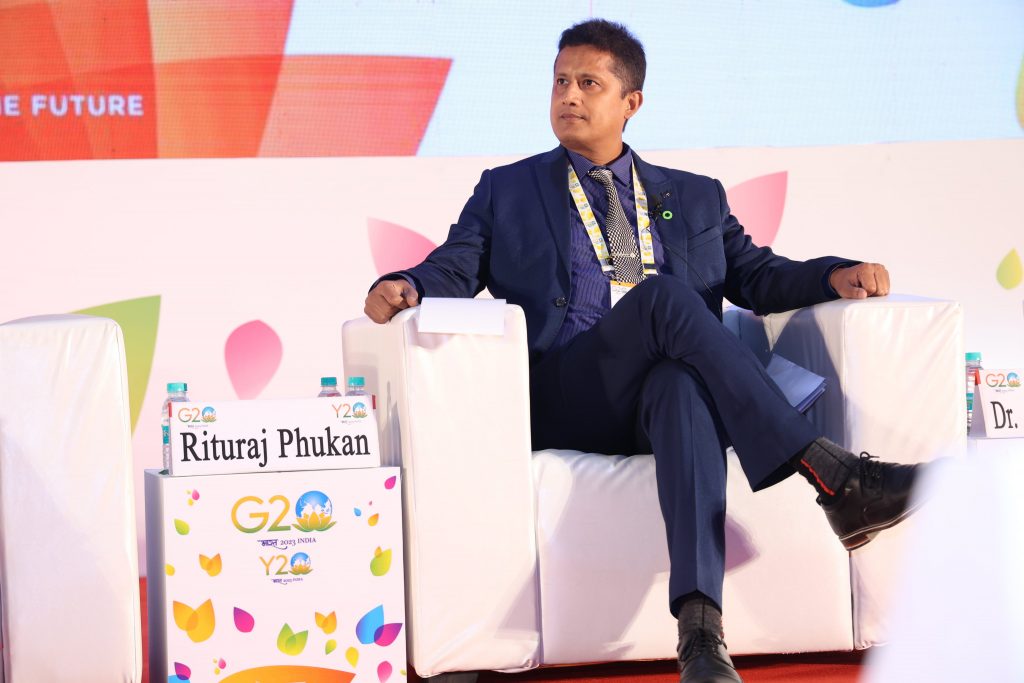
Rituraj Phukan: Indigenous communities are at the front line of climate change

Rituraj Phukan in conversation with denkhausbremen on the way indigenous people are affected by climate change and how their cultures and management practices can help to restore and preserve degraded natural lands. Rituraj Phukan is an environmental activist and writer based in Assam (India) and the founder and president of the Indigenous People’s Climate Justice Forum.

denkhausbremen: When you think about climate justice, what are the first thoughts coming to your mind?

Rituraj Phukan: Well, first I would say that by default, climate justice is crucial to social justice. Indigenous people and the poorest of the poor are some of the worst affected by climate change and they don’t have the means to do anything about it. They have contributed very little to the accumulation of greenhouse gases. To make sure they have the resources to live a humane life – I think that defines the aspect of climate justice.

For indigenous communities this is also very much connected to the way they live. I belong to the Tai-Ahom community in Assam in the Eastern Himalayas. If you look at the indigenous communities in this region, all of us are deeply connected to nature, our lives and our cultures are dependent on the biodiversity around us. Food security, water security, health and immunity are all connected to biodiversity. To make sure that indigenous people all over the world have access to these resources, to the food that their ancestors had access to – I think this should be part of the climate justice narrative.

Can you say something about the way that indigenous people like the Tai-Ahom are affected by climate change?

The Eastern Himalayas are one of the early and fastest warming regions of the world. According to recent projections we might loose up to 95 percent of the glaciers by the turn of the century if warming continues at the current rates. Even if the international community manages to mitigate a warming of more than 1.5 degrees Celsius – which looks very unlikely – we still loose about 2/3 of the glaciers by the turn of the century. And the region has already warmed by at least 1.3 degrees Celsius.

As a river, the Brahmaputra carries at least 30 percent of glacial melt water. So, in the short term, we are going to see more floods, more erosion, and more displaced people. This might lead to further conflicts, loss of livelihoods, agricultural land and food security. Once the glacial meltwater runs out – along with the changes in rainfall, which has already been decreasing by 20 percent over the last two or three decades – this region might turn from a water-abundant area to a water-scarce area. This is why studies name the Brahmaputra region as one of the areas, where future water wars are likely to happen.

The Tai-Ahom have historically been the rulers of the land for around 600 years. Before that, our ancestors migrated across the border from Thailand via Myanmar and then settled in the biodiversity-rich Brahmaputra valley.

The indigenous people including the Tai-Ahoms, the Mishings, the Bodo people, Tiwa, Adivasi, Deori, Rabha, Karbi, Naga, Garo, Khasi and many other local communities of the region are largely dependent on farming and agriculture. The consequences of these cascading impacts that I described are already affecting lives and livelihoods. And future projections are gloomy with the potential of widespread water scarcity, biodiversity loss, risk of food security and conflicts.

You are the founder and president of the Indigenous People’s Climate Justice Forum. What is the purpose, what are the political goals of this forum?

Many years back I used to be in government service before I quit to work for nature. My projects used to be on the conservation of birds and on the coexistence of humans and elephants. Assam is probably the area in the world with the maximum number of casualties due to human-elephant conflicts. Then I got exposed to the potential of climate change aggravating these issues and I was convinced that almost all these problems that we see in Assam – floods, erosion, human-elephant conflicts – can be attributed to climate change.

I have seen it with my own eyes that the intensity and frequency of floods have increased. Human-elephant conflicts used to be seasonal, now they arise throughout the year and in a broader region. All of this can be connected directly to changes in precipitation and other effects of climate change. And the people who are suffering from all of this did not contribute anything at all to the emission of greenhouse gases. We still live a very low-technology and low-carbon footprint life, especially the people in the rural areas – but they are right at the front lines of climate change, as are indigenous people all over the world.

Going to global political gatherings and regularly attending the UN climate negotiations, I found that we do not have any representatives from the indigenous communities in these forums. Even though there are over 700 indigenous peoples and local communities in India, who are all – without exception – suffering from climate change driven disasters. There is no voice that is representing them at negotiations. So when climate justice will be implemented, when the funds are available for loss and damage and adaptation, these will not be available for our communities, because we have not been represented. That is the reason why I set up this forum.

You are giving indigenous communities a voice in these political processes…

Yes, as I believe that as guardians of the remaining natural places on the planet indigenous people should be sharing best practices and leading the transitions for a sustainable future. Therefore we are also documenting the possibilities of natural adaptation in these region and collaborating with other indigenous people and local communities around the world. For example, here in Assam the Mishing community build their houses on stilts. Since they have very well-equipped kitchens, these super-resilient people can survive inside of their houses, even if we have a few weeks of flooding. They have boats to move around and they also have certain varieties of rice paddy, which have been developed, that are resistant to inundation. This kind of resilience can provide a kind of replicability in other areas.

So, knowledge and traditions of indigenous communities are important for them to tackle the impacts of climate change. What can modern societies learn from this?

I don’t think there is one methodology that is applicable for all, but all the indigenous communities around the world are very much connected to the natural world around them – whether it’s coastal communities who live of the sea or montane peoples who live of the mountain resources. Their life and culture, their food and medicine, everything is derived from nature. Western societies could learn how to live with nature, because that is the definition of resilience.

These communities have been living peacefully coexisting with nature for millennia, because they consider themselves to be part of nature. I think that is the key. 80 percent of the remaining natural places on Earth are still owned or managed by indigenous communities. Therein lies the answer. The indigenous way of managing natural lands should be used to restore degraded areas and add to reforestation efforts.

I work with my friend Jadav Payeng from the Mishing community, who is known as “the forest man of India”. His methodology is to replicate nature with native species. He creates forests, not tree-plantations. He is asking himself: How would an elephant plant this? How would a bird plant it? In what season should we plant? The success of his methodology can be seen from the fact that this forest is now home to Royal Bengal tigers, rhinos, Asian elephants and hundreds of bird species. All studies point to its success as one of the most effective models for carbon sequestration over the last 40 years in which the forest has existed.

What concrete measures with the highest priority would you suggest from an indigenous perspective?

Firstly, I think it is very important to understand that all the nature-based solutions should be placed in the hands of the indigenous communities. The mitigation, adaptation and loss and damage funds established by international climate negotiations should include restoration of degraded lands as well as reforestation efforts in areas owned or managed by indigenous communities. One of the ways we could do that is by aligning the targets and approaches with the 30/30 target of the Global Biodiversity Framework. The goal is to restore and preserve 30 percent of all land and sea by 2030. The local indigenous communities would play a central role here: The efforts should be community-led and indigenous people should have the funds and the power to decide how to restore and what to do when – so they can restore and revitalize what was once their land.