Bioeconomy Action Forum

The Bioeconomy Action Forum coordinates environmental and development organisations for a socially just and ecologically sustainable bioeconomy. The participating organisations are also committed to the responsible production and use of biomass. At European level, denkhausbremen works together with its partner organisations Fern (Brussels), ELF (Estonia) and Luontoliitto (Finland). In Germany, denkhausbremen co-operates with BUND (Friends of the Earth Germany).

The age of fossil fuels is drawing to a close. The supply of other mineral resources is also finite and is becoming increasingly exhausted. Mankind will increasingly have to resort to renewable raw materials. The term bioeconomy has established itself for an economy fed by biogenic resources.

The participation of environmental and development associations in this debate is urgently required. The associations would be competent and compatible here, as they are already working on numerous individual aspects of the debate about a future bioeconomy, such as agriculture, forestry or bioenergy, as well as related problems such as conflicts of use or land grabbing.

Now it is finally out! Commissioner Jessika Roswall did not miss the chance to personally present the new EU Bioeconomy Read more
Reframing the EU Bioeconomy Strategy: Towards an Ecologically and Socially Sustainable Future At the end of 2025, the European Union Read more
Bremen, Brussels - June 12, 2025 Download position paper as PDF here! In a position paper published today, 60 civil Read more
What political frameworks are necessary for the future bioeconomy in Europe to be both socially just and ecologically sustainable? The Read more
70 NGOs call for sustainable and socially just EU bioeconomy strategy Bremen, Brussels - 12. March 2024 Download the position Read more
An increasing number of industries are committing to transition to a bioeconomy, to replace everything from cotton to plastic to Read more
Environmental organizations warn against an expansion of the so-called bioeconomy at Forest Movement Europe gathering As always, it was a Read more
Consequences of the Ukraine war for world food supply: German government must rethink bioeconomy Download position paper as PDF here! Read more
What is actually going on in the bioeconomy debate at EU level and in our neighboring European countries? And how Read more
Far more than 100 experts from civil society, ministries, federal agencies and academia had dialed in to the Alternative Bioeconomy Read more
The Bioeconomy Action Forum has created campaigning materials on bioeconomy, in cooperation with the agency construktiv. The four animations and Read more
Cover photo: Ana Rodríguez On Wednesday, December 8th, 2021 the photo exhibition "On the wrong track - Overexploitation of Humans Read more
By Peter Gerhardt The forest has always been more than the sum of its trees. It is familiar with being Read more
By Peter Gerhardt The fossil era is coming to an end. Mankind will increasingly have to rely on renewable raw Read more
By Peter Gerhardt They exist for wood, paper, palm oil or cod: sustainability labels. All too often, these have been Read more
A study by denkhausbremen and BUND examines the possible impacts of the bioeconomy. Bioeconomy could become a catalyst for the Read more
Joint statement by German environmental and development associations on wood biomass Download the statement as a pdf here Forests are Read more
The European Green Deal and the EU bioeconomy strategy avoid necessary system changes By Jana Otten and Peter Gerhardt At Read more
Cover photo: Peter Steudtner / Mozambique Coordination Group The bioeconomy has so far been a niche debate that essentially has Read more
The newly appointed Bioeconomy Council is to support the German government with expertise in the phase-out of the fossil economy. Read more
Position paper for pdf download here! The bioeconomy can only contribute to a sustainable future if our economy is put Read more
From Paula Leutner Plastic has been polluting our oceans for years. From fishing nets to plastic bottles to straws - Read more
In terms of quantity, fossil fuels can not be entirely substituted  by renewable resources. A sustainable bioeconomy requires systemic transformations Read more
The possibilities that the bioeconomy can provide, become visible in the practical applications. However, in order to contribute to a Read more
Press memo: Bremen, April 16, 2021 Environmental and development associations are giving the German Bioeconomy Council a paper with their Read more
The agenda (pdf) for download here Plant-based plastics are among the practical applications of the bioeconomy that have already successfully Read more
  by Jenny Walther-Thoß, WWF While the world population is growing arithmetically, the available land area per person is becoming Read more
  by Nik Geiler, BBU The bioeconomy threatens global freshwater resources. As biomass imports play an important role in the Read more
  by Thomas Fatheuer, FDCL Globally, the share of renewable energy from biomass is 50%, in Germany even 60.2%. In Read more
  by Jenny Walther-Thoß, WWF As many as 50 countries have developed strategies to promote economic development of a bioeconomy. Read more
  by Jutta Kill, WRM A growing bioeconomy with an increasing total biomass consumption means land grabbing and displacement of Read more
  by Thomas Fatheuer, FDCL The Brazilian chemical company Braskem is the world market leader in bioplastics. Its customers include Read more
  by Christof Potthof, GeN The list of false promises of genetic engineering advances is substantial. The bioeconomy opens up Read more
  by Steffi Ober, NABU Growth and securing prosperity are the dominant priorities for research policy in the field of Read more
  by László Maráz, FUE Firewood, paper and timber construction are already entirely using up the wood grown in Germany. Read more
  by Josephine Koch, FUE A broad bioeconomy debate has not taken place in society yet. In order to develop Read more
  by Joachim Spangenberg, BUND The bioeconomy is dependent on biological resources. Continuous high levels of resource consumption therefore exacerbate Read more

The project “Civil Society Action Forum Bioeconomy is a joint initiative by 


Funding note:
This project is funded by:

uba hinweis

The project “Strengthening the Role of Civil Society in the Implementation of Bioeconomy Strategies in Europe” is funded by the Federal Ministry for the Environment, Nature Conservation, Nuclear Safety and Consumer Protection (BMUV) as part of the European Environment Initiative (EURENI), based on a decision of the German Bundestag. 


EU Bioeconomy Strategy: Growth First, Planet Second?

Now it is finally out! Commissioner Jessika Roswall did not miss the chance to personally present the new EU Bioeconomy Strategy last week at a press conference. It has become the expected document – steeped in the spirit of economic growth, so-called innovations of all kinds, and the dismantling of supposedly hindering regulations, but also with a touch of sustainability and planetary boundaries. Or, to quote the Commission: “Nature itself can become part of Europe’s competitiveness.”

The publication of the strategy update represents the end of a process of discussions with NGO colleagues and exchange with staff from the Commission and Parliament. Above all, we contributed to the debate in cooperation with 60 fellow civil society organisations and developed frameworks for a responsible bioeconomy. Moments like this are a good opportunity to draw conclusions about whether one’s own commitment to the process ultimately justifies the outcome. More specifically, it can be checked whether any of our jointly formulated demands have been adequately addressed in the final version of the strategy.

Concerning our first point – the EU bioeconomy heading for a massive gap in the supply of sustainable biomass – there is at least a vaguely defined acknowledgment of planetary boundaries and the need for sustainable sourcing of biomass. However, concrete proposals from civil society, including a ban on wood burning wherever possible, did not make it into the final version – even though they were still included in leaked drafts. Well done, dear chainsaw lobby!

Our second core demand was that the European bioeconomy should not be carried out on the backs of the Global South. Indeed, this point is included in the text, stating that the bioeconomy should “avoid negative environmental or social impacts abroad.” However, this reference is made in a context where the text discusses urgently needed access to markets in the Global South and that Europe must assert itself in the competition for resources. No crystal ball is needed here to predict which positions will prevail.

And finally, we argued that the EU’s bioeconomy strategy must be coherent with other European measures. Last week, the EU delivered a sobering example of how not to do it: the implementation of the EU Deforestation Regulation has been pushed back. Unfortunately, this is the exact opposite of “avoiding negative impacts abroad.”

We have seen this pattern across many bioeconomy strategies: Goals such as scaling up innovation and investment, or developing lead markets for materials and technologies, are backed by concrete new initiatives. Yet when it comes to the sustainability of the biomass used, little goes beyond monitoring and data collection. Planetary boundaries are acknowledged in the foreword, but the concrete steps for implementation focus almost entirely on investment support and market development.

Why such EU documents must be written in a language that seems to be a wild mix of Kafka, ChatGPT, Gemini, and other friendly chatbots remains unclear even after decades of careful observation from the sidelines. Probably this is something like gravity: EU policy papers just have to be stuffed with “plastic words.” In light of the spreading democratic fatigue, a more normal language would be a huge step toward citizen-friendliness.

As we cannot continue to treat our biosphere the way we have been, we still need to amplify our demands for an ecological and socially just economy of the future and raise our voices. The updated EU Bioeconomy Strategy shows that it is ultimately very growth-focused and, considering biodiversity and the climate crisis, somewhat detached, reflecting the broader political climate. Our simple answer to this is: solidarity – also in the context of a bioeconomy.

Building a Better Bioeconomy

Reframing the EU Bioeconomy Strategy: Towards an Ecologically and Socially Sustainable Future

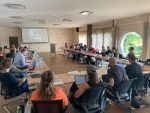
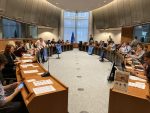
At the end of 2025, the European Union will present its revised Bioeconomy Strategy – a step with far-reaching implications for rural communities, businesses, climate action, and forests both in Europe and globally. While a public consultation on the topic is currently underway, denkhausbremen and its project partner Fern organized the high-level event “Building a Better Bioeconomy” at the European Parliament on June 12, 2025, as part of a project funded by the European Environment Initiative (EURENI). The event was hosted by Members of the European Parliament Maria Ohisalo (Greens/EFA) and Michal Wiezik (Renew), with support from BirdLife Europe, Oxfam, and the European Environmental Bureau.

The gathering brought together over 50 participants from rural areas, the business sector, forestry, and civil society from across Europe, alongside representatives from the European Commission and the European Parliament. The objective: to ensure that the new strategy paves the way for an ecologically and socially sustainable bioeconomy.

The discussions quickly made one thing clear: the amount of biomass available globally is limited – and already overexploited. This is evidenced by the transgression of several planetary boundaries, particularly in the area of biodiversity, and the current Human Appropriation of Net Primary Production (HANPP) of approximately 30%. Simply replacing fossil resources with biogenic ones is not a viable solution. Instead, there is a pressing need to drastically reduce overall resource consumption and to recognize and protect the vital ecosystem services that only healthy, intact nature can provide.

There was broad agreement – including from EU Environment Commissioner Jessika Roswall, who was in attendance – that biomass should be treated as a valuable resource, used as efficiently and as long as possible, in accordance with the cascade principle and the principles of a circular economy.

Against this backdrop, many participants voiced strong criticism of short-lived uses of biomass – particularly the burning of primary wood for industrial energy production. Such practices were widely described as inefficient and wasteful, with calls for an end to EU subsidies supporting them.

Several forestry practitioners present at the event demonstrated that alternatives are not only possible but already in practice. They focus on material use of wood and close-to-nature forest management, thereby supporting both environmental sustainability and regional economic development.

Given that bioeconomy-related decisions have direct impacts on the people living in and caring for rural forest areas, it is essential to include their perspectives and make their voices heard in the policy-making process.

If smart regulation can significantly reduce resource use in key sectors such as wood combustion and animal feed, the bioeconomy could play a crucial role in bringing the use of natural resources back within planetary boundaries – limits that have already been severely exceeded. With its upcoming strategy update, the EU has a unique opportunity to take a step in that direction.

As part of the event, the organizers presented Commissioner Roswall with a joint position paper, summarizing key demands for the new Bioeconomy Strategy. The paper was endorsed by 60 civil society organizations from across Europe and beyond.

Speakers:

  • Jessika Roswall, EU Commissioner for Environment, Water Resilience and a Competitive Circular Economy (Keynote)
  • Martin Jentzen, Forest Manager (Ekoskog, Sweden)
  • Anu Korosuo, Joint Research Centre
  • Anna Johansson, Founder of VistaHolm Byggnadshantverk
  • Rickard Troeng, Digital Entrepreneur, Founder of Skogsportalen
  • Pieter-Jan Desmet, CEO of Decospan
  • Joachim Spangenberg, Friends of the Earth

CSOs call for a future-proof EU Bioeconomy Strategy

Bremen, Brussels – June 12, 2025

Download position paper as PDF here!

In a position paper published today, 60 civil society organizations call for a fundamental reorientation of the EU bioeconomy strategy: The bioeconomy of the future must be ecologically sustainable and socially just.

The organizations criticize the fact that the current bioeconomy policy perpetuates an outdated economic model based on overuse and waste (for example through energy production from biomass). Real change requires a consistent break with this logic.

Large-scale biomass imports from the global South are not a responsible option. Residual and waste materials are also far from being able to cover the raw material requirements of future economic models. A sustainable bioeconomy must therefore above all drastically reduce the overall consumption of resources.

The statement was initiated by denkhausbremen, Oxfam, Fern, EPN, Ecodes and many other organizations committed to a responsible bioeconomy in Europe.


CSOs call for a future-proof EU Bioeconomy Strategy

In light of the revision of the EU Bioeconomy Strategy, civil society organizations are calling for a future bioeconomy that is socially just, ecologically sustainable and economically efficient.

There is no doubt that an economy primarily based on fossil resources is a model of the past. In this context, the bioeconomy, as an economic system fundamentally reliant on biomass, made from plants, animals and biological waste, presents itself as a potentially sustainable scenario for the future.

However, a closer examination reveals a more complex and troubling reality. As it stands, the bioeconomy risks exacerbating social inequalities, undermining human rights, and accelerating environmental degradation. Natural ecosystems are already under immense pressure from the growing demand for biomass.

The limits of what ecosystems can sustainably provide have long been exceeded. Without embedding this shift in a broader socio-ecological transformation and a substantial reduction in overall consumption, a mere substitution of fossil resources with biological ones would not solve the problem; it would deepen it.

We, the undersigned civil society organizations, therefore urge the European Union to develop a bioeconomy that truly recognises, respects and protects ecosystems’ ecological boundaries, thus protecting people, nature and our climate.

Staying Within Limits: Tackling the EU’s Growing Biomass Gap

The EU is on track to face a growing biomass gap, where the demand for biomass outpaces its supply. We support the European Commission’s analysis highlighting this risk, and stress that without swift and comprehensive action, the EU bioeconomy strategy will exacerbate ecological degradation and undermine climate and biodiversity goals.

First and foremost, it is essential to acknowledge that the production and consumption of biomass must not exceed planetary boundaries. The availability of biomass is inherently limited. The need to preserve and restore natural ecosystems, such as forests and wetlands, as vital carbon sinks and biodiversity reservoirs further restricts the potential supply of biomass. Meeting climate and biodiversity targets will therefore require the conservation and sustainable management of a significantly larger share of global land resources.

The assumption that biological waste and residual materials can bridge the biomass gap is misleading. Two key aspects are particularly relevant here. Materials often referred to as „residues“ may in fact serve essential ecological functions. For instance, so-called forest residues do not truly exist in a natural sense—nature does not produce waste. These materials play crucial roles in nutrient cycles and habitat preservation. Additionally, the technical and economic potential of residual biomass is already largely exploited, and as such, these resources do not represent a significant additional source for the expansion of the bioeconomy.

Given the reality of limited sustainably available biomass, it is imperative to use these resources as economically and ecologically efficiently as possible. This requires prioritizing their application in sectors where they offer the greatest added value and support a genuinely sustainable bioeconomy. For example, the principle of cascading use ensures that biomass is primarily used for high-value applications like food, materials or chemicals. Similarly, applying circular economy principles to the bioeconomy means minimizing waste, extending the lifespan of materials, and promoting reuse and recycling wherever possible.

Conversely, biomass should not be wasted on low-value or inefficient applications such as bioenergy production, singleuse paper products, or feed for industrial livestock. These uses are considered inefficient because they deliver minimal climate or resource-efficiency benefits per unit of biomass, often lead to high emissions, and compete directly with higher-value or more sustainable uses of the same resources.

Putting Justice at the Centre of the Bioeconomy

The EU must not attempt to close its biomass gap by increasing imports of biomass from the Global South, an approach that risks deepening extractivism and perpetuating historical injustices and human rights abuses. Many bioeconomy scenarios envision securing biomass supplies through large-scale imports. This reliance raises serious concerns regarding global equity and sustainability. In many regions of the world, industrial-scale agriculture and forestry already contribute to the displacement of local communities, the exploitation of labour, and the degradation of ecosystems. A substantial increase in EU biomass demand, as projected in several transition models, risks intensifying these social and ecological injustices. It reflects a continuation of the Global North’s overconsumption at the expense of the Global South.

To address these challenges, a dual strategy is essential: reducing overall resource and energy consumption in the EU through binding demand reduction policies and sufficiency strategies, only using biomass for higher-use values, and enforcing strong ecological and social sustainability standards across global supply chains. A fair transition must confront the structural inequalities behind overconsumption, ensuring that the wealthiest parts of society and regions, those most responsible for emissions and resource depletion, cut their consumption first and fastest. A just bioeconomy must also uphold the rights and agency of vulnerable communities, making sure decarbonisation efforts do not come at the expense of people or the planet. Only by putting justice at the centre and reducing inequality can the EU build a truly sustainable and inclusive bioeconomy.

Avoiding Policy Incoherence towards a Sustainable Bioeconomy

The bioeconomy is a cross-cutting issue that intersects with a wide range of EU regulations, strategies, and policy initiatives, but some of these regulations contradict and undermine each other. Therefore, the development of a future EU Bioeconomy Strategy must be carefully aligned with existing frameworks. It is crucial to reduce the contradictions between different policy instruments and avoid that they result in increased pressure on ecosystems or the violation of human rights.

For instance, conservation targets set out under the Nature Restoration Law must not be undermined by an increase in biomass demand driven by an updated Bioeconomy Strategy. There is a particular risk that intensified logging could lead to the further degradation of forests, thereby reducing even more of their capacity to contribute to climate goals in the LULUCF (Land Use, Land Use Change and Forestry) sector, and instead turning them into net sources of carbon emissions, as it is already happening in Germany, Finland or Estonia.

Moreover, the Renewable Energy Directive continues to stimulate additional demand for wood and crops, placing it in direct competition with material uses that should be prioritized in a sustainable bioeconomy. Another example of conflicting policy objectives is the continued permission of the widespread use of single-use paper products within European markets under the recently adopted Packaging and Packaging Waste Regulation. This is contrary to the principles of a circular bioeconomy.

The undersigned civil society organizations see these recommendations as a concrete contribution to building a responsible and future-proof bioeconomy. The upcoming revision of the EU Bioeconomy Strategy could help us take an important step in this direction.


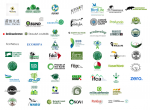
Signatories (as of 13th June 2025):

ARA – Germany
Association For Promotion Sustainable Development – India
Association pour la Conservation et la Protection des Écosystèmes des Lacs et l’Agriculture Durable – DR Congo
Aurora – Sweden
AXIAL, Naturaleza y Cultura – Paraguay
Bank Information Center – USA
BankTrack – Netherlands
Biodiversity Conservation Center – Russia
BirdLife Europe and Central Asia – Belgium/International
BirdLife Sverige – Sweden
Bond Beter Leefmilieu – Belgium
Canopea – Belgium
CEDENMA – Ecuador
Center for Climate Change – North Macedonia
Centro de Documentación en Derechos Humanos “Segundo Montes Mozo SJ” – Ecuador
ClientEarth – Belgium
CliMates – France
Comité Schone Lucht – Netherlands
denkhausbremen – Germany
Deutsche Umwelthilfe – Germany
Deutscher Naturschutzring (DNR) – Germany
Earth Thrive – UK/Serbia
Ecodes – Spain
ECOS – Belgium
eco-union – Spain
Environmental Paper Network – International
Evo-Tiras International Association of River Keepers – Moldova
Fair Finance International – International
FDCL-Center for Research and Documentation Chile-Latin America – Germany
Fern – Belgium
Finnish Association for Nature Conservation – Finland
Focus Association for Sustainable Development – Slovenia
Foodrise – Netherlands
Forests Now – Poland
Forum Ökologie & Papier – Germany
Fundación Pachamama – Ecuador
Gemeinwohl-Ökonomie Deutschland – Germany
Greenish Foundation – Egypt
Instituto para el Futuro Común Amerindio IFCA – Honduras
Landelijk Netwerk Bossen- en Bomenbescherming – Netherlands
Latvian Ornithological Society – Latvia
Leefmilieu – Netherlands
Naturwald Akademie – Germany
Oxfam – Belgium/International
Partnership For Policy Integrity (PFPI) – USA
Pracownia na rzecz Wszystkich Istot – Poland
Protect the Forest – Sweden
Quercus – Associação Nacional de Conservação da Natureza – Portugal
Red de Acción por los Derechos Ambientales RADA – Chile
Rettet den Regenwald – Germany
Salva la Selva – Spain
Stichting Mobilisation for the Environment – Netherlands
Stowarzyszenie Nasz Las Tulecki – Poland
The Royal Society for the Protection of Birds (RSPB) – UK
Transport & Environment – Belgium
United Kingdom Without Incineration Network (UKWIN) – UK
Univerisité Catholique de Lille – France
Wild Europe Foundation – Netherlands
Zero Waste British Columbia – Canada


European Conference: Towards a Social-Ecological Bioeconomy

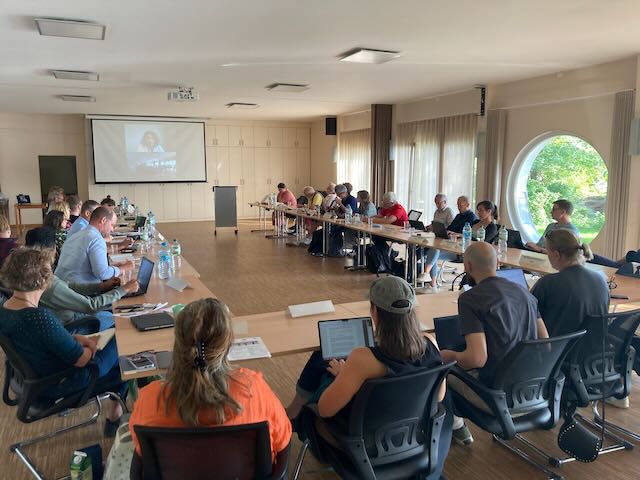
What political frameworks are necessary for the future bioeconomy in Europe to be both socially just and ecologically sustainable? The conference, organized by denkhausbremen and featuring high-profile guests, aimed to provide answers to this question. Around 40 participants from nine different European countries gathered for a three-day retreat in Lychen, near Berlin. Representatives from the European Commission, the German government, academia, and civil society engaged in panel discussions following numerous keynote presentations. An artistic program provided a creative backdrop, rounding off the successful event.

A key point emphasized throughout the conference was the limited availability of bio-based resources, given that ecosystems are already under strain and suffer damage from current biomass uses. Additionally, the potential danger was highlighted that the so-called Global South might primarily become a supplier of raw materials for a European bioeconomy. Ultimately, however, participants agreed that the bioeconomy could be part of the solution – provided the right political frameworks are in place.

The discussions were able to tie into current political processes, as the EU is currently revising its bioeconomy strategy, planning to publish an update by the end of next year.
This conference was organized within the project “Strengthening the Role of Civil Society in the Implementation of Bioeconomy Strategies in Europe,” which denkhausbremen is implementing together with its partner organisations FERN (Brussels) and ELF (Estonia). You can find the agenda of the conference here.


70 NGOs call for sustainable and socially just EU bioeconomy strategy

70 NGOs call for sustainable and socially just EU bioeconomy strategy

Bremen, Brussels – 12. March 2024

Download the position paper as a PDF here!

With the impending revision of the EU Bioeconomy Strategy on the horizon, 70 non-governmental organizations (NGOs) have jointly issued a position paper today, advocating for a bioeconomy that upholds both ecological sustainability and social equity.

The undersigned organizations emphasize that the focus of the bioeconomy strategy must fundamentally shift for this purpose. The current waste economy must be stopped. They assert that large-scale biomass imports from the Global South are not a viable solution. Moreover, the NGOs assert that waste and residues alone will not suffice to meet the future economy’s raw material requirements.

In addition to these points, the NGOs call for genuine participation of citizens and civil society, urging for tangible resources to support their involvement, not just on paper.

The initiative to release this statement was coordinated by the Bioeconomy Action Forum, with active involvement from denkhausbremen, FERN, and ELF, all committed to promoting a responsible bioeconomy.


NGOs raise concerns: Bioeconomy leads to further ecosystem exploitation

The term “bioeconomy” is intended to sound green and natural, a refreshing alternative to the fossil economy. But a closer look at current discussions around this political term reveals that the bioeconomy has the potential to further erode human and social rights and aggravate environmental destruction. Forests and other ecosystems are already being overexploited for paper and packaging, bioenergy and more.
We have surpassed what can be sustainably supplied and so moving from fossil to bio sources without embedding it in a wider socio-ecological transformation and drastically reducing consumption would be a disaster. We, the undersigned associations and organisations, have therefore come together to call on the European Union (EU) and the national governments of its members to end the waste economy and to design European land use policies that protect people, nature and our climate.

Europe is banking on the promises of the bioeconomy. In recent years, several European countries have adopted their own bioeconomy strategies, and the EU released its updated strategy in 2018 with the title “A Sustainable and Circular Bioeconomy”. The bioeconomy is also explicitly referenced in the European Green Deal. In all of these strategies, the idea is to develop an economy based on biological resources. The focus is on replacing fossil fuels with biomass rather than on changing the prevailing wasteful energy- and resource intensive economic model.

The strategies ignore the fact that increasing demand for biomass would pose an additional threat to global ecosystems and the people who depend on them. Even today, the ecosystems from which these resources would come are dramatically overused, as planetary boundaries are being exceeded.

The economy of the future must be environmentally responsible and socially just

For the bioeconomy not to be a destructive force, the focus on such strategies needs to be fundamentally changed – it must break free from the compulsion of growth, accept ecological and planetary boundaries, promote sufficiency, and aim to build a fair society. Only by significantly reducing extraction and resource consumption, in all sectors of the economy, can we meet the demand for biological resources without further harming biodiversity and the climate.

Land is limited

Intact natural ecosystems such as forests and wetlands are essential carbon stores for climate protection as well as habitats for the preservation of biodiversity. Meeting climate and biodiversity goals will therefore require conserving and sustainably managing a much larger portion of land. With the European Green Deal and the European Biodiversity Strategy, the EU has set a goal of protecting 30 percent of its land and marine areas and promoting ecosystem restoration.[1]

This reduces the already limited land for biomass production and increases competition for land from food and feed production, recreation, infrastructure, and urban development. Limited land cannot be allocated multiple times, so it must be used in the most socially just way. Any bioeconomy strategy would need to include aims to alleviate the pressure on land use, such as by significantly reducing consumption of animal products and, thereby, the cultivation of animal feed.

Biomass imports from the Global South are not a solution

Imports of biomass from the Global South are a cornerstone of raw material supply in many bioeconomy scenarios, but this is highly problematic and unfair. Industrial agriculture and forestry are already displacing and exploiting people in the affected countries, as well as destroying natural habitats. A dramatic increase in biomass demand would exacerbate these problems. We therefore need effective measures to reduce resource consumption as well as mandatory ecological and social standards.

Long-term material over energy use: Stop the waste!

Because biomass is a limited resource, and intensive land use has harmful consequences for both humans and nature, it is essential to follow the cascading use principle: Prioritise long-term material uses over short lived disposable products, and only use biogenic resources for energy at the end of its life cycle. Creating energy from biomass, such as in biogas plants, for biofuels or wood burning, is an environmentally damaging waste of valuable resources. Countries and the EU need to remove incentives for wood burning and to introduce policies to reduce single-use packaging and implement reusable systems.

Waste and residual resources are already being used

It is clear that fields, forests, and seas cannot supply enough resources for a bioeconomy at today’s consumption levels, so some strategies consider also using waste and residual materials – but these are already a scarce commodity subject to vigorous competition. In agriculture, “residual materials” like straw are widely used. In fact, they are considered a useful resource.

In truly sustainable forestry, “forest residues” would be left in the forest as they are a key part of the ecological cycle. As such, material defined as waste or residual can provide only limited amounts of raw material for the bioeconomy.

Community participation is essential

To ensure broad societal participation in the implementation of the bioeconomy, engaging civil society and citizens on an equal footing is essential. They need to much more than before help identify conflicting goals, and to be asked to help design an economy built with the interests of future generations at its heart. European governments and EU institutions should establish suitable procedures and allocate adequate resources to ensure this happens.


[1]: Although this was the initial goal of the European Green Deal, the final Nature Restoration Law (part of the package to implement the Deal) actually called for 20 percent of land and marine areas to be restored and land for biomass production to integrate nature restoration objectives. Competition for land will still be fierce and so our recommendations remain the same.

Updated version as of 14th March 2024. Signed by:

AbibiNsroma Foundation – Ghana
Amis de l’Afrique Francophone – Benin
ARA – Germany
Arnhems Peil – Netherlands
Association Workshop for All Beings – Poland
Aurora – Sweden
Bergwaldprojekt – Germany
Biodiversity Conservation Center – Russia
BirdLife – Europe
Blue Dalian – China
Bulkley Valley Communities Coalition – Canada
Bund für Umwelt und Naturschutz Deutschland – Germany
CEDENMA – Equador
Coastal Plain Conservation Group – United States
Colectivo VientoSur – Chile
Comité Schone Lucht – Netherlands
De Bomenbond – Netherlands
De Klimaatcoalitie – Netherlands
Denkhausbremen – Germany
Deutsche Umwelthilfe – Germany
Earth Action – United States
Earthbilt – United States
Earth Thrive – UK/Serbia
Ecodevelop – Germany
EcoNexus – UK
Ecoropa – Europe
EDSP ECO – Netherlands
Ekomaktab – Uzbekistan
Estonian Fund for Nature – Estonia
Environment East Gippsland – Australia
European Environmental Bureau (EEB) – Europe
FDCL – Germany
Federatie tegen Biomassacentrales – Netherlands
FERN – Europe
FIAN Deutschland – Germany
Forum Ökologie & Papier – Germany
Forum Umwelt und Entwicklung – Germany
Fridays for Future Sundsvall – Sweden
Fridays for Future Sweden – Sweden
Fridays for Future Uppsala – Sweden
Friends of the Earth International
FSCI, Dastgiri Center – Tajikistan
Global Forest Coalition – International
Green Longjiang – China
Green Squad – Croatia
Instituto para el Futuro Común Amerindio IFCA – Honduras
International Association of River Keepers Eco-Tiras – Moldova
Landelijk netwerk Bossen en Bomenbescherming – Netherlands
Leefmilieu – Netherlands
LPESM Riau – Indonesia
Luontoliitto – Finland
Milieudefensie – Netherlands
Miljöjuristerna – Sweden
Natural Forest Academy – Germany
Naturschutzbund Deutschland – Germany
NOAH Friends of the Earth Denmark – Denmark
PanEco Foundation – Switzerland
Pivot Point – United States
Profundo – Netherlands
Pro Regenwald – Germany
Protect the Forest – Sweden
Pro Wildlife – Germany
Rettet den Regenwald – Germany
Rainforest Action Network – United States
Robin Wood – Germany
Save Estonia’s Forests – Estonia
Scholar Tree Alliance – China
Snow Alliance – China
Society for Responsible Design – Australia
Sustainable Development Institute (SDI) – Liberia
Teraz Lasy! – Poland
Victorian Forest Alliance – Australia
Wuhu Ecology Center – China
ZERO – Associação Sistema Terrestre Sustentável – Portugal

New Study: The potential of forests to supply the European bioeconomy.

An increasing number of industries are committing to transition to a bioeconomy, to replace everything from cotton to plastic to concrete with biomass alternatives. They are supported by a European policy environment that is encouraging this shift. But what does this mean for forests?

Fern and denkhausbremen commissioned a report to give an overview of current and projected levels of EU wood production; uses and impacts on forests, the climate and biodiversity: ‘Stemming the Tide – the potential of forests to supply the European bioeconomy’.

Although forecasting is a difficult exercise as the amount of wood that a forest can supply depends on the rate of climate change and responses to it across the economy, the findings were clear:

multiple policies are increasing demand for wood for a range of sectors, which is increasing production (harvesting) as well as imports of tropical fibres. As a result, forests are absorbing and storing less and less carbon dioxide, making it harder to meet climate commitments.

Increasing the European bioeconomy without reducing consumption would be a disaster. Policies should therefore focus on ways to decrease planned roundwood production (offset partly by increased salvage logging); increase recycling (requiring products to be designed, priced and used accordingly); and emphasise the cascading wood principle, with less wood being used for paper and burned for electricity and heat.

The study concludes that there is already a lack of woody material available and a lack of forecasts about the likely future demand for biomass. If the bioeconomy is to help address the climate, biodiversity and waste emergencies, it must start from an understanding of how much socially, environmentally, and commercially acceptable wood there is available.

Download the study here. 

When biocapitalism unpacks the chainsaw

Environmental organizations warn against an expansion of the so-called bioeconomy at Forest Movement Europe gathering

As always, it was a meeting in the forest for the forest. The annual top meeting of environmental organizations and forest activists, hosted this time by the Polish organization Workshop for All Beings in Białowieża in northeastern Poland, one focus was on a growing concern of the European environmental movement: The threat to forests posed by the bioeconomy.

Apart from its roles in climate regulation, biodiversity, and water balance, the forest is expected to become a significant source of raw materials for the future economy. Wood is already used as an energy source, in the paper industry, and as a construction material. In the future, it could also replace oil, gas or coal in the production of cola bottles, tar for road surfaces, and serve as a raw material in the chemical industry.

This potential expansion raises the possibility of extensive deforestation if the aspirations of the forestry industry and bioeconomy strategists come true. Consequently, denkhausbremen, along with project partners Fern and ELF, and other environmental organizations gathered at the meeting to gain an understanding of the situation and ensure that the bioeconomy is at least directed toward environmentally friendly and equitable paths.

Official government pronouncements often hail the bioeconomy as the new solution for the world. Consequently, billions of research funding are being allocated to explore how biomass can sustain our wasteful economy in the future. However, this approach seems to overlook the fact that many ecosystems are already overexploited, and biomass production cannot be endlessly increased.

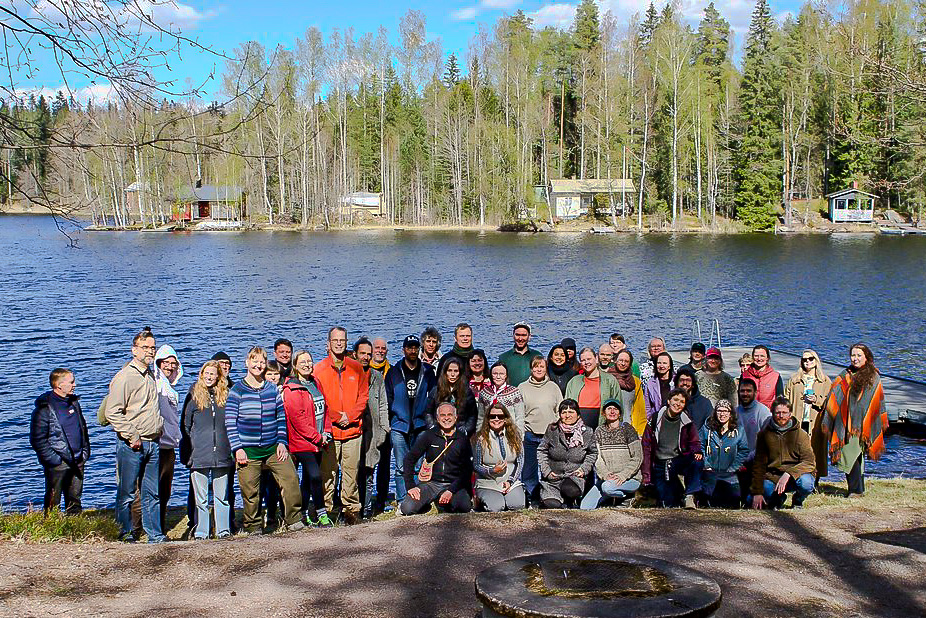
Copyright all images: Workshop for all beings 

Johannes Zahnen and his colleagues at the WWF have conducted a comprehensive study titled “Everything from Wood” which assesses the sustainable supply of wood from forests in the future. Their findings reveal that the amount of wood currently harvested in Europe is already pushing forests to their limits, making further increases unsustainable. Therefore, if additional industrial uses of wood are being considered, alternative sources for this raw material need to be found. For instance, industrial wood burning for electricity production should be halted immediately.

Presentations at the meeting highlighted the expansion plans of the Finnish pulp and paper industry towards the bioeconomy, as reported by Otto Miettinen from the Environmental Paper Network International and Ville Kellokumpu from the University of Oulu. Similar concerns were raised by Lina Burnelius (Protect the Forests Sweden), Sommer Ackerman and Reija Mikkola (Luonto-Liitto), and Liis Kuresoo (Eestimaa Looduse Fond, ELF). These environmental activists emphasized the strong influence of the forest industry on politics in Sweden, Finland, and Estonia, signaling clear intentions for bioeconomy growth in these countries.

Ulrike Eppler and Jonas Daldrup from denkhausbremen provided insights into the German debate and the collaborative efforts of environmental organizations, while also criticizing the insufficient allocation of resources for NGO participation, despite its prominent mention in German government strategy papers.

Martin Pigeon from Fern concluded the meeting by discussing the interconnected lobbying structures between industry and political decision-makers at the EU level. He highlighted the one-sided allocation of research funds and referred to his study titled “In the Name of Innovation – Research and destroy: the factories of the industrial bioeconomy threaten the climate and biodiversity.”

Undoubtedly, biocapitalism is on the rise and poses a real threat to the Earth’s ecosystems. Therefore, it is crucial for civil society to remain vigilant and prevent extensive deforestation.


Consequences of the Ukraine war for the bioeconomy

Consequences of the Ukraine war for world food supply: German government must rethink bioeconomy

Download position paper as PDF here!

The Ukraine war is causing immeasurable suffering: Civilians are being displaced or even killed. The fighting soldiers also suffer trauma, torture and death under the cruelty of war. Beyond this horror, the war once again exposes failures of the world food system and further increases the chronic global crisis of hunger. Most affected are states and people in the Global South who have lost food sovereignty. For the world‘s 828 million hungry, it becomes evident once again that global supply chains are not designed to feed them.
These developments clearly show how hunger is further exacerbated when agricultural commodities are made scarce and expensive by nervous markets. An industrialized countries’ shift from a fossil-based economy to a bioeconomy would result in similar negative effects, if the industrial agricultural system and our resource overconsumption remain unchanged. Wealthy countries as well as transnational corporations would buy all they can to keep their „green“ economy going.

The German government is currently focusing on securing Germany‘s energy supply and accelerating the expansion of wind and solar power. At the same time, however, our overall consumption, as well as our system of agricultural production and the wasteful use of biogenic raw materials, would have to be put to the test as well. This is the only way to address the deeper causes of the chronic global food crisis. In this context, it does not help emphasizing the right to food and the principle of „food first“ in soapbox speeches while continuing with „business as usual“. Available land and other resources are limited and their use urgently requires clear prioritization in favor of food production beyond market logic. Currently, there are many examples of an unsustainable bioeconomy, like Brazilian sugar cane being used for bioplastics in beverage cartons or biogas made from corn that was over-fertilized with liquid manure.

The signing environmental and development associations call for a bioeconomy that is socially just and ecologically sustainable. In view of the Ukraine war, it is imperative that the following points be taken into account in the German government‘s implementation plans for the bioeconomy and for biomass use, as well as in the current debate on guidelines for agricultural production:

  • Arable land must not be used for energy and fuel production. Suspending the blending quota for biofuels would free up 800,000 ha in Germany in the short term for other uses or the restoration of peatlands.
  • Primary wood from forests must not be burned as a substitute for fossil fuels, but must be made available for higher-value material use. Species-rich habitats and carbon sinks in forests must be preserved and expanded. This can only be made possible through legally binding principles of circular economy and cascading use, and the termination of subsidies for climate-damaging combustion of wood.
  • With regard to further developments in bioeconomy, there needs to be a clear and socially agreed roadmap for prioritizing bioeconomy uses. The promise made in the 2021 coalition agreement to limit resource consumption must be fulfilled and clear absolute reduction targets must be developed. A resource conservation law should set up national resource conservation targets and make reductions in the use of biotic and abiotic resources mandatory. This would help to ensure that sufficient land is kept available for food production.
  • Livestock population in Germany and Europe must be reduced drastically. To maintain far too high levels of meat consumption in industrialized countries, large quantities of imported protein feed and grain are used for industrial animal fattening. More than two million hectares of agricultural land abroad are used for Germany’s soy imports, and almost 60 percent of the German grain harvest is used as animal feed. In addition, the import and export of animals and animal products must be limited significantly. Instead of using food for livestock feed, the German government should create conditions to ensure that grain is primarily used for human nutrition.
  • Agriculture urgently needs to be made ecologically sustainable. Industrialized agriculture, which only works with massive use of fossil fuels, cannot be resilient and is inevitably a model of the past. One to three percent of global energy requirements are used for the production of mineral nitrogen fertilizer. Conventional agriculture is thus one of the largest consumers of energy.
  • Last but not least, industrial land use threatens biodiversity through the use of pesticides and GMOs. In the future design of rules for agriculture and forestry, such as the common agricultural policy in the EU or the Federal Forest Act, it must be ensured that biodiversity protection is consistently taken into account.

In view of the current food price and distribution crisis on the world markets, there are once again voices calling for nature conservation and environmental protection to be watered down in favor of increased agricultural production. Thus, existing political targets and agreements such as the Fertilizer Ordinance, the farm-to-fork strategy with its goal of 50 percent pesticide reduction, and current genetic engineering legislation are being attacked under the pretext standing in the way of necessary yield increases. Yet fighting hunger and protecting nature are not contradictions and should not be played off against each other. Without healthy ecosystems, the foundations of life will disappear. In the long term, the bioeconomy can only function within planetary boundaries.

Initial signatory organizations:

  • ARA
  • Bergwaldprojekt
  • Brot für die Welt
  • BUND
  • denkhausbremen
  • DNR
  • DUH
  • FDCL
  • FIAN
  • Forum Ökologie & Papier
  • Forum Umwelt und Entwicklung
  • Gesellschaft für ökologische Forschung
  • Robin Wood
  • WWF

This position paper was developed by the German Bioeconomy Action Forum.


Study on the bioeconomy in neighboring European countries

What is actually going on in the bioeconomy debate at EU level and in our neighboring European countries? And how do our colleagues from the environmental and development associations assess the respective national discussions on the bioeconomy?

This is the subject of the short study “Shaping Bioeconomy Strategies in Europe: The Role of Civil Society”. In it, author Wolfgang Kuhlmann, commissioned by the Bioeconomy Action Forum, describes the main European policy processes and highlights the debate in Finland, Sweden, Estonia, Italy, France and the Netherlands. The focus here is particularly on the role of civil society.

Even if the paper does not claim to be exhaustive, it does show one thing: Looking beyond the German horizon provides fresh impetus.

Click here to download

Summary of the Study

The EU Bioeconomy Strategy stresses the role of bio-based products as alter- natives to fossil-fuel counterparts, and their importance in developing a sustain- able economy based on renewable materials in Europe. It encourages member states to develop national bioeconomy strategies or equivalent policies that enhance the cooperation between primary producers (in agriculture, forestry or fisheries) and bio-based industries.

Currently, nine EU member states (Austria, Finland, France, Germany, Ireland, Italy, Latvia, Spain, and the Netherlands) have a national strategy while others are involved in national or regional bioeconomy development. All have in common that they are primarily geared at enhancing the cooperation of govern- ment agencies and bio-based industry with support of science and primary producers. This is mainly done through the provision of public funds to research and development.

This study takes a closer look at the role of civil society in the development and implementation of bioeconomy strategies in the EU, Finland, Sweden, Estonia, Italy, France and the Netherlands. While the bio-based industry is well organized and well-funded, civil society involvement in drafting and imple- menting bioeconomy strategies at EU or member state level has up to now remained limited.

Although all policy documents related to bioeconomy mention “stakeholder participation” in some way or another, respective stakeholder consultations primarily address state and regional authorities, industry and their associations as well as members of the scientific community. While the opinion of individual citizens is at best taken note of in scientific studies on attitudes towards the bioeconomy, participation of representatives like non-governmental organisa- tions has in most cases only been sporadic. Formal consultation processes are lacking in most countries or are restricted to requests for written comments.

Adding to a lack of political will, participation is also hampered by a lack
of financial resources that limits NGO activities in this field. By contrast, the biotech industry has ample means and lobby power to influence politics in their favour.

This changes, when it becomes evident that the resource needs of bio-based industry may lead to an overexploitation of ecosystems or may adversely affect the livelihoods of local communities. This is the case in Finland and Sweden, where new biorefineries are pushing timber harvests to their limits, or in France and the Netherlands, where imports of biomass for the production of biofuels or for co-firing in coal power plants are not in line with sustainability criteria.

Making sure that planetary boundaries are respected and that all biomass used for bioenergy or the production of bio-based materials is sourced sustain- ably, is one of the main goals of environment and development NGOs. For many citizens, this also is a basic requirement for a broader acceptance of the bioeconomy.

These are some of the reasons for civil society and their organisations to play a stronger role in developing and implementing policies and guidelines for a bioeconomy that is environmentally sound, socially just and provides a genuine contribution to climate and biodiversity protection.

It is time for civil society to change from an observer on the side line to the centre of the playing field. This requires more than routinely mentioning stake- holder participation in policy papers. Moving from paper to practise will not only need inclusive fora for dialogue but also adequate resources to do so.

Click here to download

Alternative Bioeconomy Summit

Far more than 100 experts from civil society, ministries, federal agencies and academia had dialed in to the Alternative Bioeconomy Summit on February 23, when Silvia Bender, State Secretary at the Federal Ministry of Food and Agriculture (BMEL), opened the event with her keynote address:

“How much bioeconomy can our globe cope?” is exactly the right question, she believes. In addition, Bender warned not to repeat the mistakes of the so-called energy transition in the bioeconomy and, above all, to ensure that fewer primary raw materials are used in the future. It is about saving resources and not about ‘business as usual’!

This provided the framework for this online summit. “How should a future bioeconomy be organised within planetary boundaries?” was accordingly also the key question for the high-level panels and working groups. For the future it is crucial not to get lost in abstract debates. The bioeconomy must be regulated with concrete and effective instruments.

Panelists (from top left to bottom right):
– Silvia Bender, State Secretary at the Federal Ministry of Food and Agriculture (BMEL) (Photo: BMEL)
– Kai Niebert, President of the Deutscher Naturschutz Ring (Umbrella organisation of German ENGOs) 
– Daniela Thrän, Co-Chair of the Bioeconomy Council.
– Dirk Messner, President of the Federal Environment Agency (UBA)
– Jörg-Andreas Krüger, President of NABU (Nature And Biodiversity Conservation Union)
– Olaf Bandt, Chairman of BUND (Friends of the Earth Germany) 

The economic order of the future should be socially just and ecologically sustainable, and the bioeconomy will have to be measured against this. Development and environmental organisations should play an important role in this.

After all, important issues for the future are being negotiated in the bioeconomy – and they concern everyone. This was also emphasised by State Secretary Bender: “What is needed now is a broad debate in our society. To which the Bioeconomy Action Forum is making an important contribution.

To that we have nothing to add…….


Bioeconomy Visuals

The Bioeconomy Action Forum has created campaigning materials on bioeconomy, in cooperation with the agency construktiv. The four animations and graphics address key points of the bioeconomy debate and are available to civil society organizations for further use – feel free to reach out to the denkhausbremen crew.

[wc_row] [wc_column size=”one-half” position=”first”]

Animation “It’s me, your planet”

Graphic “Bio Greenwashing”

[/wc_column] [wc_column size=”one-half” position=”last”]

Animation “Extinction of species”

Graphic “Exploitation”

[/wc_column] [/wc_row]


Bioeconomy exhibition “On the wrong track” officially opened

Cover photo: Ana Rodríguez

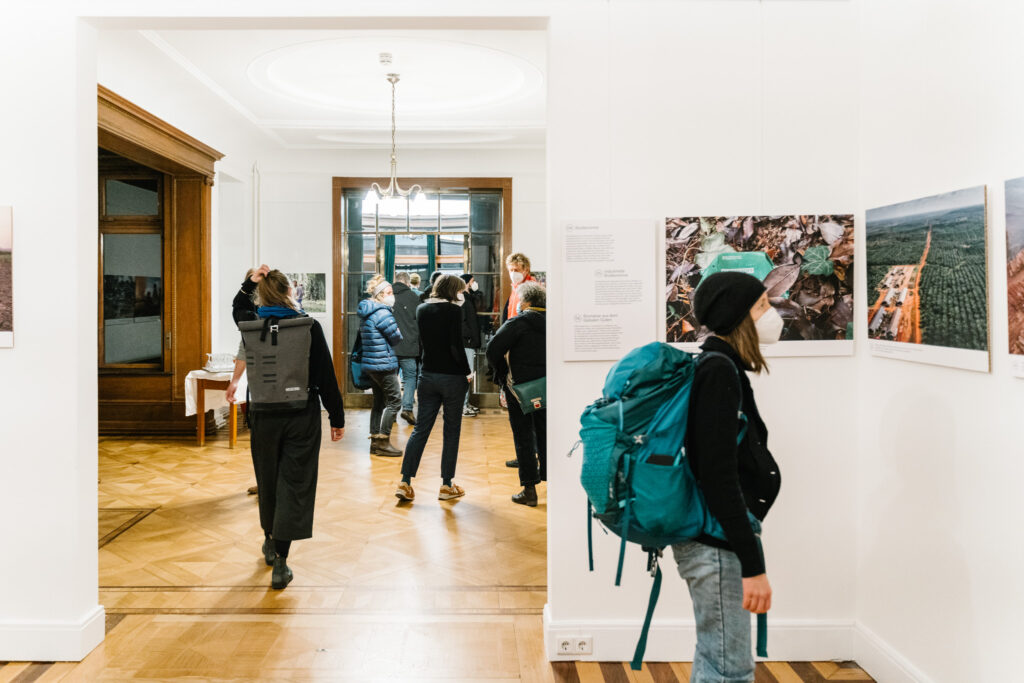
On Wednesday, December 8th, 2021 the photo exhibition “On the wrong track – Overexploitation of Humans and Nature for the Bioeconomy” was opened at the Institut français Bremen.

At the beginning of the evening, the audience had the opportunity to take a first look at the exhibition. Afterwards, the program began in the large hall of the Institut français. denkhausbremen project manager Jana Otten gave an introduction to the topic of bioeconomy and explained the background of the exhibition to the audience. According to this, the production of renewable natural resources is not sustainable per se and often linked to human rights violations and environmental destruction in the Global South.

In a video message, the tropical forest activist Sylvain Angerand from the French organization Canopée, reported on a French success story: In France, palm oil in so-called biofuels has been legally banned since 2020. Fenna Otten, tropical forest officer of Robin Wood, then gave insights into her research trips to Sumatra and highlighted, among other things, the devastating environmental impacts of oil palm plantations.

Within the following discussion, which was moderated by denkhausbremen managing director Peter Gerhardt, different aspects of the exhibition were deepened, such as the environmental impacts of eucalyptus, the inhumane working conditions on sugar cane plantations or possible future visions for the development of a sustainable bioeconomy.

A big thank you to everyone who was there!

Pictures: Ana Rodríguez

Questions? Feel free to contact Jana Otten: jana@denkhausbremen.de

The forest in the bio-capitalism

By Peter Gerhardt

The forest has always been more than the sum of its trees. It is familiar with being a place of longing and a habitat, to deliver firewood and construction material and at the same time to fulfill all the important ecological functions. Our requirements have already put this ecosystem under tremendous pressure and in many places around the world have contributed to the fact that the forests are exhausted or have been destroyed. Regardless, now the forest should also protect humanity from a possible climate collapse and serve as a raw material storage for the economy of the future – the so-called bioeconomy. This cannot go well.

But let’s start at the beginning. At this year’s UN climate summit in Glasgow, the political leaders surpassed themselves in a kind of outbidding competition to determine which country wants to save most of their forests from deforestation in the name of climate protection. At the same time, generous reforestation initiatives were promised. A total of 137 governments, whose nations are home to over 90% of the remaining forest area, promised comprehensive forest protection. In the “Glasgow Leaders’ Declaration on Forests and Land Use”, the powerful discovered the forest as a climate saviour. What are we to make of this?

First of all, the credibility of some of these self-proclaimed forest protectors is close to zero. For example, there is Brazil’s Jair Bolsonaro, who has attracted attention in the past for opening up the Amazon rainforest to illegal logging and gold prospecting and for trampling on the rights of indigenous peoples. To see this climate denier given a stage in Glasgow to make empty eco-promises is just unsettling. Not so much better is the fact that nations like Malaysia or Indonesia, which have converted their forests on a large scale into lunar landscapes made of oil palms, are now among the supporters of the Glasgow Forest Declaration.

Moreover, it is almost certain that countries that reforest large areas with eucalyptus for the pulp industry will also do so in the future in the name of climate protection. This is the case in Mozambique, where international investors are expanding huge monocultures, robbing from the local population their land and their livelihood. Planting trees thus becomes an aggressive act against humans and nature. Under the guise of climate protection, this might become even more effortless in the future.

In terms of climate policy, not only in the Global South things are getting completely out of hand. In the declaration, the european industrial nations such as Great Britain and Germany also praise the importance of forests for the global climate, while doing exactly the opposite on their own doorsteps. With the blessing of the British government, the Drax power station in northern England burns millions of tonnes of wood for electricity, and Germany, which likes to give unsolicited climate advice to the rest of the world, also burns a larger proportion of its annual timber harvest. The carbon stored in the raw material wood is chased through the chimney and ends up in the atmosphere as a greenhouse gas. But it could get even worse: The German government, which is still in office, has plans in the pipeline to subsidise the conversion of old coal-fired power plants to wood-fired ones with public funds.

Clear-cutting for bioeconomy?

And let’s not forget the bioeconomy: the economic system that claims to be something like the future beyond the fossil age. Instead of coal, gas or fossil oil, only renewable primary resources are to be employed. At the beginning of November 2021, there was once again a small foretaste of what the organic future could look like – at least when the industry is in charge: The Finnish forestry and paper company UPM-Kymnene proudly announced that its biorefinery in Leuna, Saxony-Anhalt, will soon supply the Coca-Cola Company with polymers. The refinery needs wood to make the polymers, which are then used by the US company to make beverage bottles that were previously made from crude oil. It is reasonable to ask whether there are not more meaningful bioeconomy applications than filling American sugar soda into plastic bottles. Coca-Cola ultimately turns the so-called star investor Warren Buffett into a billionaire and numerous children into obese diabetics.

Now it’s not particularly difficult to make a little fun of Coca-Cola But the example shows quite well what would be lacking in a bioeconomy: control! Of course, the world needs fresh ideas if fossil resources are to remain in the earth from now on and in the future. And possibly a bio-based economy is part of the solution. However, in order to be able to assess this seriously, first a kind of inventory should shed light on how much the global forests are capable of providing, in a socially just and ecologically sustainable manner. It should be factored in the fact that forest areas for biodiversity conservation or climate protection are further reducing the amount of biomass harvest. And finally, it is still unclear how a meaningful management of scarce raw materials could take place in our profit driven economy. So far, the rule has been: whoever pays the best price gets the deal. Which brings us back to Coca-Cola, which probably can put more money on the table than an eco niche startup.

Sadly, the federal government’s bioeconomy strategy too, is silent in regards to which rules could be decisive for this economy. The paper has no shortage of obscure sustainability promises, instead concrete policy proposals are lacking, that would allow a bioeconomy to operate within the planetary boundaries. Now, this is one of the tasks of the Bioeconomy Council, which has been assisting the federal government for almost a year in its third edition. Of all people, will this motley collection of 20 experts, recruited from the biotech lobby to the environmental movement, be able to develop the necessary strength? Ultimately, everything depends on the political will of a future federal government as to which guard rails are enforced for a bioeconomy.

From climate protection to the responsible supply of natural resources: Forests are indispensable. However, the capacities of this ecosystem are limited. This is precisely why the industrialised countries will have to dramatically reduce their consumption of raw materials. Otherwise, there will be a global devastation.

Forests under pressure: why the bioeconomy threatens our ecosystems

By Peter Gerhardt

The fossil era is coming to an end. Mankind will increasingly have to rely on renewable raw materials. The term bioeconomy has become established for this economy fed by biological resources. Forests get under pressure: their wood is considered to play a decisive role in the supply of raw materials for the bio-based future. Yet, the forest ecosystems are already being exhausted by the global demand for wood for fuel, construction material, electricity production or pulp for paper production.

The natural limits of our planet are progressively entering the core of the political debate: Climate change is moving millions of people around the globe. With regard to the global climate, Brazil’s burning rainforests have long since ceased to be a national issue; they are also an issue for the global community. Even the dwindling biodiversity has arrived in the mainstream and the »Save the bees!« referendum is mobilizing 1.8 million voters in the state of Bavaria.
At the same time, large parts of the population are propelled by unrestrained market forces, leading to an growing economisation of all areas of life. As a result, the primacy of politics is faltering because it is unclear how today’s profit economy can actually be effectively contained. Another consequence are the dramatically rising social centrifugal forces that have set in motion an yet open-ended global struggle for distribution, which is increasingly destabilising the international order. Apparent certainties such as social peace or democracy suddenly feel strangely fragile in industrialised countries such as the Federal Republic of Germany.

The allocation of planet earth is multiple

The struggles for fair access to arable land and soil are fierce. Future debates about climate, biodiversity or bioeconomy are conducted in such separate silos, that each   “planned” the earth for their purpose, creating a grotesque situation of multiple allocation: while the daily news report that a scientist from ETH Zurich wants to plant an additional 900 million hectares of forest to combat climate change, other experts want to establish 1700 million hectares of biodiversity protection areas. These plans are in direct opposition to the the future land use of the earth envisioned by bioeconomy strategists : The Earth is to be converted primarily into arable land for biomass. Ultimately, these scenarios are in competition with one another. Therefore, democratically legitimate decisions about what should happen when and where with the global land area are necessary.

Clearcut logging in the forest for the bioeconomy

In the quest for raw materials such as fibers, oils, starch and wood for a future bioeconomy, the focus shifts more and more towards global forest ecosystems. Forests are expected to make a decisive contribution to the future supply of raw materials to the economy. Yet, the forest ecosystems are already exhausted by the global demand for wood for fuel, construction material, electricity production or pulp for paper production. The expansion plans of the pulp industry on its own, envisaging an additional production capacity of over ten million tons worldwide, exceed any reasonable measure in countries like Brazil. The industry’s intention to turn wood into the basic material for bioeconomic processes and to assemble it into entirely new materials, raises the question whether the forest can withstand this increasing demand at all.

The forest ecosystem is not only a source of timber, but also an area for recreation and a habitat of great importance for nature conservation and biodiversity. The resulting conflict of interests are inherent to the different forest functions and should be negotiated democratically. Forests that are supposed to grow for climate protection cannot at the same time supply raw materials to the industry. It is evident that the forest will not be able to provide huge amounts of wood for a bioeconomy. Safeguarding the ecological services of the forest ecosystem for the benefit to us and future generations, means that the raw material potential of the forest is dwindling considerably.

Bioeconomy – the new world formula?

According to the German federal government, the bioeconomy corresponds to a new world formula that can resolve many contradictions: Fossil and mineral raw materials are being replaced by biological resources and feed an economy that enables a good life to all people while caring for both climate protection as well as biological diversity in regards to the planetary boundaries. Too good to be true? The bioeconomy will only be able to keep its boastful promises if resources are used much more carefully and frugally. The development and environmental associations have the same demands. The necessary transformation will only succeed if fossil raw materials are not simply replaced by biological ones. This in turn requires changed consumption patterns, closed cycles as well as material cascades and multiple use. Contrary to this, the current economic model “Zalando, Amazon & Co.” wants to delight us with fast fashion, fast food and senseless consumption. Taken to its logical conclusion,  responsible bioeconomy would therefore also shake the foundations of our economic system.

So far, there has been little sign of this in official government strategies, neither in Germany nor at the European level. In the case of agriculture and forestry, it is precisely those land use methods that got us into the crisis that are supposed to save us: The federal government’s bioeconomy strategy relies on industrial agriculture and forestry, which are rightly criticised for extinction of insects, the death of spruce trees and nitrate contamination of groundwater. The progressive commodification of nature would thus be enshrined. Of course, the government apparatus is not a unified bloc, and there are also cautionary voices. But a well-oiled industry and large-scale agriculture lobby has the upper hand and is driving forward the “industrial bioeconomy” as promoted by the Federal Ministry of Economics and Technology.

This is also reflected in the research landscape. At national and European level, politics and industry have already launched generously funded support programmes that point more towards of biotechnology than organic farming. Terms such as agroecology, ecological forestry and global justice are hardly to be found in the federal government’s official research catalogue. It fits the picture that the industry-oriented Bioeconomy Council is attacking the Genetic Engineering Act aiming at watering it down. The former advisory body to the federal government wants more free play in the gene laboratories. The precautionary principle is to be thrown overboard in research into new gene-surgery methods such as CRISPR/Cas. Industrial forestry is also positioning genetically modified trees as a source of raw materials for a bioeconomy.

Bioeconomy is everyone’s business

Important decisions for policy and research are largely made exclusively in industry-friendly expert circles. With a few exceptions, even the German environmental and development associations are hardly involved. The large welfare and social organisations are completely sidelined in this important debate on the future. It is above all the citizens with little money who cannot buy themselves a favourable starting position for a future without oil, gas and coal. A broader social majority will only accept change if it is fair. A broad social debate is therefore urgently needed on the framework conditions in which the bioeconomy should take place in the future. However, this dialogue can only succeed if policy-makers provide sufficient resources and opportunities for participation, including for critical voices.

The bioeconomy can also be regarded as a camouflage trick from the PR department – industrial giants who are facing acceptance problems are being greenwashed. Since there is no generally accepted definition of bioeconomy, Monsanto & Co. could provide their controversial products with a green veil of invisibility: Genetically modified corn would become a bioeconomic crop production.
It is to be feared that especially the poor of the global South will have to pay the bill for an increased biomass demand. In an industry nation such as Germany, Bioeconomy requires biomass imports from all over the world. Already today, the “footprint” of every German citizen reaches as far as Brazil or Indonesia, where global consumer goods giants drive out small farmers without guaranteed land rights for toilet paper or chocolate bars. If, for example, the chemical industry alone replaces mineral oil with biological raw materials in the future, the pressure on human rights and ecosystems in the global South will increase dramatically.

Industrial forest plantations are not forests

From a global perspective, forest plantations are becoming increasingly important suppliers of wood and are therefore a possible foundation of a bioeconomic raw material strategy. First of all, it is important not to equate these industrial landscapes  to forests. An eucalyptus plantation in Brazil features a biodiversity comparable to a parking lot, and hence has nothing in common with the original forest vegetation. In South Africa, pulp plantations are installed on natural grassland sites not all suitable for the planting of trees. In addition, marginalised population groups such as landless people and subsistence farmers are displaced from their habitats by forest plantations.

Yet the basic assumption of the bioeconomy, to use forest raw materials efficiently and innovatively, is initially a good idea. Products of biological origin are usually easier to integrate into natural cycles and leave behind fewer problematic pollutants at the moment of disposal than petrochemical materials. In the future, the wood pulp lignin resulting from pulp production, instead of simply being combusted for process heat, could be used as a valuable raw material for construction materials. Wood densification is a promising bioeconomic technique that could allow the substitution of steel or concrete.

However, the danger of the new eco-era euphoria is the neglect of ecological principles in the forest management prioritising wood production only. The consequences of economic interests taking control of the forest are currently witnessed by anyone in Germany: »new« forest deaths make the headlines. The spruce, formerly the bread tree of forestry, has become the problem tree in times of climate change. Nonetheless, influential forest officials continue to insinuate to rely on forest management that is far from nature. Even the federal government got caught up in this tale, and plans to guarantee the supply of raw materials for a future bioeconomy with non-local drought-resistant tree species.

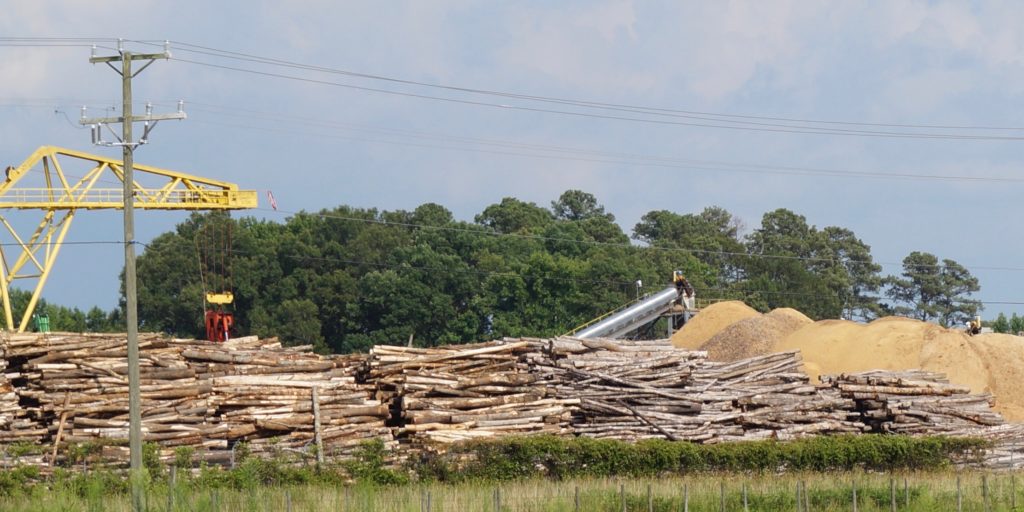
The damage in the forest caused by an increased demand for wood biomass is already seen in electricity production using bioenergy. Electricity giants such as RWE, Uniper and Vattenfall have started to feed their old coal-fired power plants with additional wood and are on a global shopping spree. The EU recognizes this madness as a climate protection measure and in many European countries new wood power plants are springing up like mushrooms. The wood pellets for these plants come mainly from the USA, where, according to the findings of US environmental protection groups, valubale hardwood forests are cleared instead of protected. Europe’s entry into bioeconomic energy production leads to the destruction of forests elsewhere and is bought with a high price and serious consequences. The Environmental Paper Network, an international association of environmental organizations, assumes that more than ten million tons of additional wood will have to be felled for industrial electricity production alone in the future. In addition to Europe, Japan and South Korea are also increasingly using wood as a fuel for their power plants.
The global wood and pulp giants have recognized the signs of the times and smell another big business in the wake of the bioeconomy debate. There are many indications that Finland could become a pioneer in the wood-based bioeconomy. “Bioeconomy is the solution”. That is the ambitious promise of the forest group Metsä. With its Finnish competitor UPM, it sounds as boastful: “We lead the forest-based bio industry into … an exciting future”. On the one hand, the corporations are hoping for new marketing opportunities for products that are already being produced – such as cellulose, which could now also be the raw material for bioplastics. On the other hand, the industry is investing in parallel in so-called biorefineries, which break down wood into much finer particles than a pulp mill and thus make it interesting as a raw material for the chemical industry. The Finnish environmental protection associations are alarmed because in the future up to 30 million cubic meters of wood could additionally be felled for bioeconomic processes on site. That would be an increase in the Finnish timber harvest of almost 50 percent. In Germany, the first pilot plants such as the biorefinery in Leuna are in operation, too, and international multinationals such as UPMKymmene are waiting in the wings as investors for plants with larger capacities.

Ecolabels are not a solution

It is likely that the bioeconomy industry will respond to possible criticism with voluntary certification initiatives. Already today, barely credible eco-labels such as the “Sustainable Biomass Program” are flourishing in the bioenergy sector. The past shows that even the sustainability certificates for wood, paper, palm oil or soy could not prevent the expansion of industrial plantations at the expense of natural forests. Almost all of these labels work according to the same pattern and pretend to involve those affected and NGOs appropriately in a multi-stakeholder process. De facto, in most cases the industry enforces its economic interests. The development and environmental associations are therefore well advised not to be lead astray by this label strategy in the area of bioeconomy.

Outlook

The economic order of the future should contribute to a just society within planetary boundaries. The bioeconomy will also have to be assessed against these criteria. The debate must leave the expert groups and back rooms and into the middle of society. The development and environmental associations can make an important contribution to this, but trade unions and welfare associations should not be sidelined here either. Ultimately, important questions about the future are being negotiated when it comes to the bioeconomy – and they concern everyone.

Demands of the environmental and development associations

■ The consumption of resources should be reduced significantly in all areas of the economy. Such a reduction is the only sustainable way to meet the demand for biological raw materials without further destroying biodiversity and the global climate..

■ The discussion about bioeconomy should be opened up to citizens and civil society organizations.

■ A significant proportion of the billions of euros in research funding that the German government is expected to continue to make available in the future for the promotion of the bioeconomy should be used for research into alternative concepts beyond the industrial market and exploitation logic..

■ The promotion of the bioeconomy should not result in genetic engineering processes such as green genetic engineering being promoted or introduced through the back door and using public funding.

■ Bioeconomy scenarios that rely heavily on the import of biomass should be fundamentally questioned.

Further reading in German: The declaration of German environmental and development organizations on the federal government’s bioeconomy policy.

Remarks
1 »StudiederETHZürich: Afforestation and most effective climate protection«. Report on tagesschau.de from July 4, 2019.
2 S.LeSaoutetal.:Protectedareasandeffectivebiodiversity conservation. In: Science 342/6160 (2013), pp. 803805.
3 European Environmental Paper Network (EEPN): Mapping pulp mill expansion. Risks and recommendations. 2015.
4 Declaration by German environmental and development organizations on the bioeconomy policy of the Federal Government of January 16, 2019 (https://denkhausbremen.de/wpcontent/uploads/2019/ 01 / NGOErkl %C3% A4rungBio %C3% B6konomie.pdf).
6 A.Petermann: NewGJEPreportslamsproposalstoprolong capitalism using trees & green profit schemes, posted on July 18, 2019 in Global Justice Ecology Project.
7 These are the demands of the German environmental and development associations that have come together in the »Civil Society Bioeconomy Action Forum« (www.aktionsforum-biooekonomie.de).
8 EnvironmentalPaperNetwork (EPN): “New maps launched to track the expansion of the biomass industry”, published Sep. 3, 2019.
9 Metsä: Thenewwaveofeconomy: Fromfossiltobiobased (www.metsagroup.com/en/Campaigns/IntelligentMetsa/intel ligentfibre / Bioeconomyisthesolution / Pages / default.aspx).
10 UPM: Visionandpurpose (www.upm.com/aboutus/visionand purpose /).
11 Sustainable Biomass Program (https://sbpcert.org).

This text was also published in the critical agricultural report.

Download the print version of this article

Six reasons why eco-labels are not a good idea for the bioeconomy

By Peter Gerhardt

They exist for wood, paper, palm oil or cod: sustainability labels.
All too often, these have been launched with great fanfare for a better world, only to realise soberly soon after that overexploitation and environmental destruction simply continue. This could be due to the fact that many of these voluntary certification initiatives have a few fundamental flaws built in. The hope is that politics, business and associations will learn from past mistakes and question eco-labels with scepticism. This is particularly true with regard to the current bioeconomy debate, regarding the transformation of our economy from fossil to biological. Here, too, the call for eco-certificates is getting louder.

Already today, the planet is exhausted by the biomass we demand from it: This leads to overfished oceans for Captain Iglo and destroyed rainforests for three-euro chicken. If fossil raw materials are to be completely replaced by biomass in the future, the question consequently arises on which earth this biomass should grow on, or which environmental crimes or human rights violations we might want to accept for that sake. The global distribution of resources could become even more skewed. Because the industrialised nations in the northern hemisphere are not growing enough biomass to keep the turbo-consumption stable, large amounts of biomass will have to be imported.

The same tenor was present at the Global Bioeconomy Summit 2018 in Berlin, a kind of class reunion for the bioeconomy industry. The demand will come as well from countries where corrupt elites are at charge or where a human life costs only $ 1,000. Like in Brazil, where the activist Rosane Santiago Silveira was murdered, in the view of many environmental protection groups, because she was campaigning against industrial eucalyptus plantations of the Suzano group.

There are, of course, positive examples where substituting fossil-based materials with responsibly produced biomass makes sense. If plastic garden chairs are replaced by durable alternatives made of sustainable wood, no one will object. It is also positive if so-called black liquor from paper production is not simply incinerated, but can become in the future the raw material for building materials through bioeconomic processes.

Hence, what could be more obvious than to positively label sustainably produced bioeconomy products with a kind of Eco-TÜV, so that goods with blood sticking to them do not end up in the shopping basket in the first place? Conveniently, eco-labels for biomass from arable crops or timber exist already. The obvious idea is to simply tweak these existing certificates a little so that they would function in a bioeconomy. However, that would not be a good idea, because many of these eco-labels have fundamental flaws.

1. Sustainability labels do not stop expansion

There is one crucial aspect that eco-labels cannot stop: palm oil or cellulose plantations are eating their way further and further into natural ecosystems. The constant expansion is cemented into the DNA of the agricultural and plantation corporations, and the capital interests behind them provide extra pressure. Sustainability certificates are only able to improve the growing conditions on a defined area. However, they do not regulate limits to land use areas and the amount of cultivated crops. The reverse may even be true. Eco-labels may increase consumer demand and ensure that plantation corporations continue to grow at the expense of landless people and smallholders.

Moreover, the labels cannot prevent the possible occurrence of an effect called ILUC (indirect land use change) in the technical debate. The underlying fact is that global markets are interconnected. Even if an eco-label succeded in protecting a piece of Indonesian rainforest in Borneo from being cleared by palm oil, the plantations in Uganda might continue to eat their way into nature.

2. At the round table, the stronger wins – hence usually the corporations

Many certificates follow a so-called multi-stakeholder approach, i.e. groups with a legitimate interest (stakeholders) such as social organisations, local people affected, environmental organisations and companies sit down at a round table and finally agree on inidcators that everyone can live with. In theory, this is a compromise in which all parties involved have to make a few concessions. At first that sounds like lived democracy, participation and fairness.

The reality, however, is different. In fact, such processes require enormous resources such as manpower, time and access to information. Particularly large corporations have more than enough of these resources, which at the end of the day can push through their interests against local village communities from the global South, for example. Even large environmental organisations wear themselves out at the negotiating table with the multinationals. This is the case, for example, with the FSC (Forest Stewardship Council) timber label, which was ambitiously launched in 1993 with the help of environmental organisations and has become increasingly industry-friendly over time. Fed up with the industry’s salami tactics to water down the standards more and more, many large environmental organisations like Greenpeace have now left the FSC. In Brazil, progressive activists now even regard the FSC as the green stooge of the detested plantation corporations.

3. Stakeholder ≠ Rightholder

Regardless of whether it is a global palm oil company, an environmental organisation with headquarters in London or a family of farmers on the edge of a palm oil field: if one follows the logic of many eco-labels, all of these participants are stakeholders with a legitimate interest that must be heard and taken into account. With this conceptual trick, of turning everyone involved into stakeholders, the inalienable land rights of local farmers are suddenly negotiable: Rightholders are degraded to stakeholders.

4. Strong audit firms – weak controls

As a rule, certification initiatives such as the FSC do not carry out on-site inspections themselves, but hand over these tasks to professional certifiers. These are often global testing companies such as TÜV or the global industry leader SGS Group with over 90,000 employees and a turnover in the billions. In practice, this leads to the almost insurmountable task that an initiative like the FSC with only a few employees is supposed to monitor the global activities of large international auditing companies.

5. “Race to the bottom” – the level of auditing is steadily decreasing

The auditing companies are in competition with each other and are also paid directly by the companies. In practice, this leads to those auditors and audit firms prevailing who do not look very strictly and interpret the rules as laxly as possible in the interest of their clients. In the long run, there is a risk that the standards of an eco-label will be diluted further and further.

6. Only works satisfactorily under ideal conditions

The labels also have some successes to report. Even critical environmental groups would admit that, for example, ecological minimum standards for FSC certifications in Germany point in the right direction. However, one can almost speak of laboratory conditions here. Germany has an established democracy with separation of powers and criticism of forest management can be voiced without danger to life and limb. This means that the different interests can be taken into account, at least to a limited extent, when awarding the certificate.

But this is by no means the case everywhere. A large part of the biomass comes from the global South, often from countries with corrupt regimes and poorly functioning state structures. It is precisely here that eco-labels often fail to prevent overexploitation and human rights violations. In countries like Brazil, it can be life-threatening to criticise corporations or to demand one’s rights in a certification case. Moreover, local people are neither familiar with the concept of certification nor are they adequately informed about the possible consequences. In addition, in practice, sustainability certificates practically never adhere to the FPIC standards developed by the UN (Free, Prior and Informed Consent). Therefore, local communities should be fully informed before a possible certification and decide for themselves on this basis whether they agree or reject the process.

In many cases, sustainability certificates are green tranquillisers. They often do not address the irresponsibly high resource consumption of the wealthy and do not change the structural power relations that help global corporations to line their pockets at the expense of environmental destruction and human rights violations.

Biodiversity at risk

A study by denkhausbremen and BUND examines the possible impacts of the bioeconomy.

Bioeconomy could become a catalyst for the already dramatic extinction of species if no immediate and consistent action is taken to reverse the trend. This is the disturbing conclusion of the study “Bioeconomy in the Light of Planetary Boundaries and Biodiversity Conservation” published today, in which denkhausbremen and BUND focus on the impacts of the bioeconomy on biodiversity conservation.

Download study here

The two authors – Dr Joachim Spangenberg (BUND) and Wolfgang Kuhlmann (denkhausbremen) – summarise the main scientific findings on the poor conservation status of many species and ecosystems in Germany. In particular, industrial agriculture is a major driver of species extinction. Furthermore, the non-ecologic management of many forest ecosystems is detrimental to biodiversity.

The study also provides a detailed insight into the current status of biomass use in Germany and derives possible opportunities and risks for a future bioeconomy. The sobering conclusion: replacing fossil raw materials with biomass is not an option – at least if raw material consumption is not drastically reduced. The available land is too limited and the environmental damage caused by cultivation would be severe.

Yet, possible potentials for a bioeconomy are shown on a limited scope, which, however, require a consistent re-orientation in the use of resources. A limitation of the use of the energetic use of wood or the consumption of meat would offer scope for alternative material biomass applications. Nevertheless, a bioeconomy within planetary boundaries is only conceivable if resource consumption in general is significantly reduced in the course of a socio-ecological transformation. Consequently, political regulations are indispensable: including upper limit ceilings for biomass production and clear measures to reduce consumption.

The study was prepared as part of the project “Bioeconomy in the Light of Sustainability”, which examines the possible impacts of the bioeconomy on biodiversity. The extent of the worldwide loss of species and natural ecosystems is dramatic and has not yet been sufficiently recognised by the general public. If the loss of species is not adequately addressed by policy-makers in the future, the bioeconomy runs the risk of further exacerbating this crisis.

Download study here

This study was developed as part of the project “Bioeconomy in the light of sustainability” with funding from the Federal Agency for Nature Conservation (BfN) with funds from the Federal Ministry for the Environment, Nature Conservation and Nuclear Safety (BMU).
The authors are responsible for the content of this publication. The content does not reflect the position of the BfN or the BMU.

No forest overexploitation for a flawed energy transition

Joint statement by German environmental and development associations on wood biomass

Download the statement as a pdf here

Forests are irreplaceable for the protection of biodiversity and our climate, they form the basis of life for people, animals and plants. Nevertheless, the global forest ecosystems are threatened. There are many reasons for this – from illegal logging to the expansion of agricultural land to the high demand for raw materials in the paper and pulp industry. As a result, forests are cleared, overexploited or converted into timber plantations with few species.

Now the forests are also coming under pressure in the name of climate protection. One reason for this is the wrong decision by the EU to classify the combustion of wood as climate-neutral. This gives the EU member states the opportunity to subsidize wood biomass for electricity and heat production as a climate protection measure.

There is a danger that the energetic use of wood biomass will continue to be promoted on a large scale in Germany. The federal government wants to bring the relevant laws and regulations in motion in 2020:

  • The amendment to the Renewable Energy Sources Act is being discussed in the Bundestag. The draft law provides for higher subsidies for electricity generated from biomass and the annual expansion target is to be increased significantly from the current 200 MW to 500 MW.
  • By the end of the year, the federal government wants to finalize the regulation on subsidies for renewable heat. Clear incentives for the use of wood as an energy source are also provided here.
  • As part of the coal phase-out law, the federal government wants to launch a funding program for the conversion of coal-fired power plants to biomass by the end of 2020.

The pressure on the forest is not only increased by a wrong understanding of climate protection through biomass. These debates are fueled by international investors in German wood biomass power plants or the US wood pellet giant Enviva, who work at great expense as lobbyists on the political landscape in Germany.

In the German forestry sector, too, which is looking for sales opportunities for its damaged wood, voices are getting louder in favor of the industrial use of wood biomass in energy production. There is a risk that those systems once installed will be operated in the long term with imported wood biomass, even from questionable origins, after the locally available damaged wood will be used up within a few years.

The use of wood biomass as fuel for energy production is rated as problematic for the following reasons:

  1. Contrary to popular belief, wood combustion is not climate-neutral. The energetic use of wood contributes significantly to the greenhouse effect beyond the time periods relevant to the climate crisis. The time that forests need to recapture the carbon emissions from the energetic use of wood is usually many decades. At the same time, more intensive use reduces the ability of forests to bind carbon in the long term. In addition, burning wood produces more CO₂ per unit of energy than burning fossil fuels.
  2. In order to meet the raw material requirements for the wood biomass power plants, the operators go on a global shopping spree. Environmental groups from the USA or the Baltic States are alarmed already because their forests could end up as fuel in German power plants. Countries from the global south are also in focus: Vattenfall only narrowly failed with his plans to burn wood from Liberia in its Berlin power plants; and in Hamburg wood from Namibia’s bushlands is to be used for energy production.
  3. An increased demand for wood is not good news for German forests either. Increased logging volumes would further weaken the local forest ecosystems and impair their functions for climate protection and biodiversity. For ecological reasons, no quantities of wood are yet freely available in Germany. The annual wood growth is almost completely harvested and a substantial part of the harvested wood has been used in combustion for many years. At the same time, dead wood as an important structural element for biodiversity, nutrient availability and humus build-up is lacking in the forest . We would have to leave a lot more wood in the forest to protect the climate and species.
  4. The combustion of wood biomass also contradicts the principle of cascade use, to which the federal government has committed itself, among other things, in its bioeconomy strategy. According to this, wood should first be used as a material in durable products and only burned for energy production at the end of the respective life cycle.
  5. The use of wood biomass is only possible with massive public funding. For the conversion of the RWE coal-fired power plant in Geertruidenburg, the Netherlands, the energy giant receives more than 1.7 billion euros in subsidies. In the Federal Republic of Germany, too, investors are already speculating on generous public support for the use of biomass in energy production.
  6. In this context, sustainability certificates are unsuitable for adequately countering the negative effects of wood biomass combustion. Even if wood from sustainable forestry is burned, it contributes to the increase in the CO₂ content in the atmosphere and thus to the climate crisis. In addition, certificates do not prevent the further expansion of this unsustainable energy production.

We have to adapt the forest management to the planetary boundaries and handle wood as a valuable raw material carefully. Direct combustion is the worst possible solution. The politically responsible in the federal and state governments should therefore prevent the further expansion of industrial wood biomass energy production and not waste public money on this false climate protection.

Signatory organizations:


European Green Deal – no landing on the moon

The European Green Deal and the EU bioeconomy strategy avoid necessary system changes

By Jana Otten and Peter Gerhardt

At times of aggravating global crises, new answers are required. The international community is increasingly divided into rich and poor, environmental degradation – including the loss of biodiversity – is accelerating and the earth is heating up further. The so-called “European Green Deal” provides an answer to the climate crisis – at least as far as the pompous promise of the EU Commission can be trusted. However, does this European Green Deal really give us reason to heave a sigh of relief? Are the vociferous calls of the climate movement and climate science for a  reduction in emissions finally being translated into political concepts? And what role does the bioeconomy play, which envisions an ecological-social transformation of the economy, too?

About nine months ago, on December 11, 2019, the European Green Deal was presented in big words in Brussels. EU Commission chief Ursula von der Leyen was bursting with superlatives and spoke of a historic moment equal to the moon landing. The climate crisis could be fought, prosperity secured and jobs created, she said at the time. That still sounds almost too good to be true, because the recommendations of the United Nations Intergovernmental Panel on Climate Change (IPCC) to initiate “rapid, far-reaching and unprecedented changes in all areas of our society” have so far regularly been rejected by the politically powerful.

Now, the European Green Deal can be understood as a rough roadmap for the coming decades, outlining the most important measures on the path to a sustainable future. At its core is the promise to make Europe the first climate-neutral continent by 2050. To achieve this, there shouldn’t be a stone left standing and the entire EU economy is to be reshaped, more circular and geared towards sustainability. There is talk of “profound changes” [1] in the areas of energy, industry, construction, transport, food and agriculture. Unfortunately, the European Green Deal is silent on how this is to work in detail.

The promise of a fair and prosperous European society that will leave no one behind seems far removed from reality. The population groups, businesses and regions most likely to be affected by structural and climate change are to be supported financially and with “green” jobs. This sounds like a mockery to the many EU citizens who live on the margins of society. After all, one in five people in the EU is currently affected by social exclusion and poverty, and this has hardly changed in the last ten years [2].

Subsequently, some of the measures announced in the European Green Deal have been specified in legislation or strategies. The European climate law makes it mandatory for the EU to halve greenhouse gas emissions by 2030 compared to 1990 levels and to approach zero by the middle of the century. However, environmental organisations reacted with disillusionment: on the one hand, the climate law lacked concrete measures and interim targets. On the other hand, a reduction of greenhouse gas emissions of at least 65% by 2030 would have been necessary to reach the global 1.5 degree target and thus halt climate change. With those higher targets, as one of the richest regions and a major emitter of greenhouse gases, Europe would have lived up to its global responsibility. According to the NGOs, climate protection has once again been put on the back burner.

About a year before the publication of the European Green Deal, the EU Commission already put another vision of the future on the table: the European Bioeconomy Strategy. In it, the Commission outlined a future circular economy fed by renewable raw materials and promising a good life for all. The Green Deal also makes explicit reference to the bioeconomy, for example when it comes to the circular economy, the recycling of food waste or thematic priorities of the EU’s Horizon Europe research programme. Forestry is also brought into focus. Accordingly, afforestation, protection and restoration of forests are to advance climate protection and promote a bioeconomy within ecological limits. A fair amount of scepticism is called for here as to whether this will actually be achieved and whether the lobby of the industrial forestry sector will not once again put the brakes on the necessary forest conversion.

However, pretty terms such as ” green” and “organic” will not be sufficient for a socially just and ecologically sustainable future. Both the European Green Deal and the bioeconomy strategy remain contradictory and do not address fundamental undesirable developments in our economy:

For example, it has hardly been clarified where the raw materials for the economy of the future should come from. This concerns both biomass for a future bioeconomy and raw materials such as cobalt, lithium, silver or steel for the digital transformation or climate-neutral technologies. Europe has so far tacitly priced in the fact that the Global South will continue to supply us with the necessary resources. This would also perpetuate colonial structures, human rights violations and environmental destruction.

In any case, there are numerous unresolved land conflicts. The Biodiversity Strategy published in connection with the European Green Deal, for example, stipulates that at least 30 % of Europe’s land area should be under protection by 2030. This contrasts with the land demands of the bioeconomy, for which consequently less potential forest and arable land is available to produce biomass.

The EU continues to remain silent on the fact that European consumption needs to be scaled down significantly if we take the ecological limits of our planet seriously. According to a study published by the Global Footprint Network and WWF, we would currently need 2.8 planets if all people worldwide were to live at the high consumption levels of EU citizens. Unfortunately, the EU Commission does not dare to tackle the controversial issue of sufficiency, relying instead on market instruments such as CO2 pricing or labelling of sustainable products. As the past has shown, however, these have so far been unable to satisfy our ravenous appetite for consumption.

Both, the bioeconomy and the European Green Deal adhere to the paradigm of economic growth. As “green” and sustainable as the European Green Deal sounds, it is ultimately above all a fairy tale of a sustainable EU economy in which economic growth is decoupled from resource use. Ursula von der Leyen herself described the European Green Deal as a “new growth strategy” [3]. Paradoxically, the EU is sticking unreservedly to the economic system that has massively driven environmental destruction and led us into the climate crisis in the first place.

Whether it is the European Green Deal or the EU Bioeconomy Strategy, both are little more than vague promises of a sustainable future. If these concepts are to be more than eco-tranquillisers, then European politicians should finally realise that a sprinkle of green rhetoric will not be enough. As long as agribusiness, the car lobby and energy giants set the pace for agricultural or industrial policy, it is worth taking to the streets for a better future. Nonetheless, the real achievement of the European Green Deal is the recognition that we are running up against the wall with business as usual. So far, however, these are just warm words that need to be followed by concrete action – fast.

References:

[1] European Commission (2019): The European Green Deal. As of December 11, 2019. Brussels.

[2] https://ec.europa.eu/eurostat/documents/2995521/10163472/3-16102019-CP-DE.pdf/a978ac50-fde2-f7ff-0dec-9c2e85561795

[3] https://ec.europa.eu/germany/news/20191211-green-deal_de

Cover picture: Markus Spiske

Photo exhibition shows Environmental Destruction and Human Rights Violations for the Bioeconomy

Cover photo: Peter Steudtner / Mozambique Coordination Group

The bioeconomy has so far been a niche debate that essentially has its place in scientific and political circles. To the general public, however, the term is largely unknown. That is why a photo exhibition by denkhausbremen clarifies what the bioeconomy is about and shows possible consequences for the countries of the Global South.

The stakes are high: the bioeconomy involves nothing less than the transformation of our economy. Coal, natural gas and oil are to be left in the ground. Accordingly, the economic system of the future is to be based solely on biomass, which means renewable resources. Ultimately, the great promise of the bioeconomy is to counteract climate change and the extinction of species.

As nice as the bioeconomy sounds in theory, it has not yet been clarified, for example, how the high demand for biomass is to be met, especially since the land area for the additional cultivation of renewable resources is limited worldwide. Politicians and researchers are mainly looking in the direction of industrial agriculture and forestry and the import of biomass from countries in the Global South. Already today this is connected to human rights violations, the disregard of land rights and devastating environmental destruction in South America, Africa and Asia. Sugar cane or oil palms are now growing in huge monocultures on areas formerly covered by species-rich forests in order to produce biodiesel or bioplastics for the European market. Regardless of this, the global forest ecosystems are already depleted by the high demand for wood. It is to be feared that this state will continue to deteriorate dramatically and that the exploitation of people and nature in the name of the bioeconomy will reach new dimensions.

The exhibition of denkhausbremen deals with this subject. Impressive photographs from partner organizations such as f.ex. Save Our Borneo, Repórter Brasil, KoordinierungsKreis Mozambique or Greenpeace as well as from the denkhausbremen photo archive show the social and ecological impacts of biomass production. Possibilities for a socially just and ecologically sustainable bioeconomy and options for action for each individual are also addressed within the exhibition.

The photo exhibition will be opened in Bremen in December 2021 with a supporting program and lectures. Afterwards, it will move to other locations in Bremen. Those who do not have the opportunity to see the exhibition on site will also find a lot of information on the topic in the form of a visual story on the denkhausbremen website in spring 2022.

Questions about the exhibition? Feel free to contact Jana Otten.


Funding note:

The project “On the wrong track – the devastating consequences of the bioeconomy in countries of the Global South” is funded by ENGAGEMENT GLOBAL with funds from the BMZ, by the Senate Chancellery / Ref. 32 – Development cooperation of the state of Bremen and the environmental foundation Greenpeace.

The authors of denkhausbremen are solely responsible for the content of this publication; the positions presented here do not reflect the position of Engagement Global or the Federal Ministry for Economic Cooperation and Development.


Mission implementation plan – Bioeconomy Council is on its way

The newly appointed Bioeconomy Council is to support the German government with expertise in the phase-out of the fossil economy. The success of this change also depends on the Council’s commitment to a socio-ecological transformation.

All good things come in threes. To what extent this proverb applies to the Bioeconomy Council, which is now being launched in its third edition, remains to be seen. In December 2020, the Federal Government appointed the council for three years, composed of a total of twenty scientists and associations representatives.

New this time is that the ministries for the environment and development cooperation, among others, were actively involved in the appointment of the council members. Accordingly, the round of experts is now more diverse, recruited from the biotech lobby all the way to the environmental movement. In contrast to the past, this is a clear step forward: until now, the Council was the domain of more technology-friendly departments and therefore not a haven for ecological and justice issues.

In this respect, it is hardly surprising how biased the previous committee – the Bioeconomy Council II – was in answering central questions regarding the future: Reservations about genetic engineering? Based primarily on emotions and less on facts! How to guarantee the wood supply? Through the use of non-native pine trees and pest control in the forest! Insufficient domestic biomass? “Natural resource partnerships” with South America can help!

But now the cards have been reshuffled and the Bioeconomy Council has been expanded to include members for whom planetary boundaries and the perspective of the global South are central. This is urgently needed, because the council’s main task is to put the bioeconomy strategy presented by the German government last year into political practice.

An implementation plan is needed. This is not an easy undertaking because the bioeconomy strategy is pretty much the exact opposite – a very cloudy, ambiguous document that ultimately aims to please everyone. The strategy praises organic and industrial agriculture alike and avoids the thorny issues: The word genetic engineering is not mentioned once in the fifty pages.

The million dollar question for the new council is therefore: Starting from such a diffuse situation, how do you generate a clear political direction for a bioeconomy that is ecologically sustainable and socially just ? As is almost always the case, the devil is in the details. Agreeing on a sustainable and responsible future at the meta-level is an easy exercise, but effectively constraining industrial agriculture for more biodiversity protection is all the more difficult.

In order for the economy of the future to be socially just and ecologically sustainable, concepts beyond the logic of industrial market and exploitation are indispensable. Only time will tell, to what extent the Bioeconomy Council can develop the necessary strength to shape the future within planetary boundaries.

The following persons were appointed to the council:

Regina Birner , Professor of Social and Institutional Change, University of Hohenheim
Michael Böcher , Professor of Political Science, University of Magdeburg
Viola Bronsema , Dr., BIO Germany e. V.
Thomas Brück , Professor of Synthetic Biotechnology, TU Munich
Jürgen Eck , Dr., bio.IMPACT & SymbioPharm GmbH
Peter Feindt , Professor in the Agricultural and Food Policy Department, Humboldt University
Maja Göpel , Professor, THE NEW INSTITUTE Foundation gGmbH
Ulrike Grote , Professor at the Institute for Environmental Economics and World Trade, University of Hanover
Stefanie Heiden , Professor at the Institute for Innovation Research, University of Hanover
Ralf Kindervater, Professor, BIOPRO Baden-Württemberg GmbH
Thomas Lemke , Professor of Sociology, University of Frankfurt
Iris Lewandowski , Professor for renewable resources in the bioeconomy, University of Hohenheim
Felix Prinz zu Löwenstein , Dr., Association of the Organic Food Industry (BÖLW)
Kai Niebert , Professor, Deutscher Naturschutzring (DNR) (umbrella organization of German associations active in nature conservation and environmental protection)
Monika Pischetsrieder , Professor of Food Chemistry, Erlangen-Nuremberg University
Klaus Richter , Professor of Wood Science, Technical University of Munich
Imme Scholz , Professor, German Development Institute (DIE)
Beatrix Tappeser , Dr., State Secretary a. D.
Daniela Thrän , Professor at the German Biomass Research Center
Markus Wolperdinger , Dr., Fraunhofer Institute for Interfacial Engineering and Bioprocess Engineering

Impulses for the Bioeconomy Council

Position paper for pdf download here!

The bioeconomy can only contribute to a sustainable future if our economy is put to the test and undergoes a comprehensive socio-ecological transformation. The Bioeconomy Council should therefore advocate for clear policy frameworks and guard rails within which the bioeconomy can be shaped sustainably.

Due to the expected enormous demand for biomass, an indefinitely growing bioeconomy can become an additional threat to global ecosystems and the people who live on them. Already today, planetary boundaries have been exceeded in essential areas. In addition to the climate crisis and the massive change in land use, the loss of biodiversity and genetic diversity as well as the overloading of the phosphorus and nitrogen cycles show an excess that can destroy our livelihoods. Consequently, the bioeconomy also needs clearly defined growth limits to ensure economic activity within planetary boundaries.

A realistic picture of the potentials should guide the implementation of the bioeconomy. Aspects related to the common good, such as food security, water availability, biodiversity and climate protection, as well as access to technological progress, should take precedence over market criteria. Bioeconomy becomes a fake solution when fossil fuels are essentially replaced by bio-based raw materials and the question of potential and fair distribution is not asked.

A further expansion or intensification in cultivation would exacerbate the already considerable threat to our natural foundations of life. In contrast, it is necessary to further transform the current management of agricultural and forestry land as well as of aquatic ecosystems to ecological systems. Furthermore, more areas should be withdrawn from cultivation. The reduction of biomass potentials would be the logical consequence.

There is scope for additional natural resources. These can be tapped through the increased use of waste and residual materials. When biomass is extracted, however, ecological aspects should be observed, such as a sufficient proportion of deadwood in the forest and the preservation and development of healthy soils of agricultural land. Prioritising the material use over the energetic wood use as well as the conversion of former fodder- or energy crop cultivation areas, can provide additional biomass, but this must be done under conditions of ecological sustainability and social justice.

With a “business as usual” approach, the bioeconomy will not resolve the conflict that too many resources are being consumed in our growth-oriented economic model. There is no evidence that economic growth and resource consumption can be sufficiently decoupled. Even so-called green growth cannot be achieved without environmental damage. The bioeconomy can therefore only fulfil its promise of sustainability if it is accompanied by a significant absolute reduction in resource consumption.

German bioeconomy policy should fundamentally be measured by its global impact. So far, the German economy has been supplied with biological resources from abroad on a large scale due to its purchasing power. The fact that this often destroys the environment, violates human rights and fuels land conflicts, especially in the global South, is well known and documented. In business-as-usual scenario, the bioeconomy would further increase the need to import raw materials from the global South. At the same time, genetic resources and traditional knowledge from the biodiversity-rich countries of the Global South are used and patented, mostly without equitable benefit sharing. This debate has so far been completely excluded from the bioeconomy discourse. The covid-19 pandemic and the patents on biotech-derived vaccines, among others, clearly show how harmful patents are for a fair distributition of wealth.

The vague sustainability promise of the bioeconomy strategy

In its National Bioeconomy Strategy, the German government proclaims the bioeconomy as the economic form of the future that is to contribute to the preservation of planetary boundaries. The strategy selectively picks up central ideas of the sustainability debate and also mentions the importance of sufficiency and a possible “change in the economic system”. In addition, the importance of biodiversity and climate protection, soil fertility, food security and distributive justice is underlined.

However, it remains unclear how this sustainability promise of the bioeconomy strategy is to be fulfilled in its implementation – in particular with its subsequent global impacts. The newly appointed Bioeconomy Council should therefore commit itself above all to ensuring that the sustainability goals mentioned in the strategy are underpinned by concrete measures and proposals from the federal government. In detail this means:

Regulate biomass production and use

Binding instruments for the hierarchisation of biomass production and use should be developed in order to guarantee food security, distributive justice and the interests of nature, resource and climate protection. These should clearly commit to and apply the relevant principles of international law, such as the right to food. New lscopefor the cultivation of raw materials for the bioeconomy, for example through the conversion of large areas previously used for the cultivation of animal feed and energy crops, should be used in compliance with socio-ecological criteria. For wood biomass, there should be a clear priority for cascading material use prior energy use.

Realistically assess and steer biomass potential

The realistically available biomass potential should be determined taking sustainability criteria into account. Subsequently, an ambitious and legally binding reduction target for resource consumption should be established. Furthermore, an upper limit for the consumption of biological raw materials is urgently needed. Approaches to promote sufficiency, cascading material use and the consideration of recyclability in product design play a role in achieving a reduction in consumption.

Managing ecosystems sustainably

The implementation of the bioeconomy must not lead to a further intensification of land use and the transgression of planetary boundaries. Industrial agriculture is the main driver of biodiversity loss and should therefore be replaced by forms of management that promote a structurally rich agricultural landscape. Furthermore, the bioeconomy must not put further pressure on forest ecosystems, which are already under heavy strain due to the climate crisis. Only more extensive management models should be pursued here as well, so that forests can perform their important functions – including climate protection and food production. Furthermore, it must be ensured that biomass production does not negatively affect the quality of aquatic ecosystems as well as competing uses and the availability of water as a resource.

Effectively control and regulate genetic engineering in agriculture

The bioeconomy must not become a strategy to justify the use of genetic engineering processes in agriculture, and the massive funding of genetic engineering application research should be ended. In the last decades, this has not – as propagated – alleviated the high use of pesticides, cultivation in monocultures and the creation of dependencies, but on the contrary has rather fuelled them.

A large part of the German population rejects the genetic modification of crops and livestock. European jurisprudence has confirmed that newer genetic engineering processes such as CRISPR / Cas or Gene Drives must be subject to the same safety regulations as classic genetic engineering. The existing genetic engineering legislation must not be weakened in the course of the bioeconomy. The precautionary principle and risk assessments must be fully maintained and implemented. This also applies to genetically modified microorganisms.

Restrict biomass imports

Bioeconomy scenarios that rely heavily on biomass imports from countries in the global South or beyond the EU’s domestic market should be rejected. Virtual land and water imports should be avoided. Existing biomass imports, such as for animal feed, must also be significantly reduced. In view of the social and ecological damage caused by biomass imports from countries of the global South, only scenarios that focus on regional resource cycles should be developed in the implementation of the bioeconomy strategy.

Protect food security and land use rights

The global cultivation of balanced and healthy food as well as access to water and aquatic ecosystems by indigenous peoples and smallholders should have clear priority over other bioeconomic applications. 2.7 billion people worldwide secure their livelihoods through access to land and other natural resources. To ensure that the bioeconomy does not threaten their livelihoods and displace local food cultivation, its regulation must not be left to market forces. Therefore, regulatory instruments must be developed, in particular on the basis of the human right to food, in order to politically ensure priority for food production and the rights of use of smallholder producers.

Redesign research funding

New priorities urgently need to be set in public research funding for the bioeconomy. Significant shares of the research funds provided by the federal government to shape the bioeconomy should be used for research into alternative concepts beyond the industrial market and exploitation logic. Funding should be directed towards social and ecological innovations and transformative solutions in land use, such as agro-ecology, and in residue and waste utilisation. Sustainable land use concepts and biotech applications that can contribute to reducing the pressure on agricultural land should continue to be considered. How bioeconomic applications can reduce overall resource consumption should also be addressed. Society should be involved in transdisciplinary research approaches.

Rooting participation

To ensure broad societal participation in the implementation of the bioeconomy, the participation of civil society and citizens at eye level is indispensable. Conflicting goals should be clearly identified, and critical positions and the interests of future generations should be taken into account. The federal government should provide suitable procedures and sufficient resources for their implementation.

Ensure policy coherence

The core of the implementation plan for the federal government’s bioeconomy strategy must refer to the goals, values and rules of the Paris Climate Agreement, the Convention on Biological Diversity, the human rights conventions and the Committee on World Food Security. It must be designed in such a way that it is coherent with other relevant policy processes that focus on environmental sustainability and social justice. It should also be aligned with the EU Biodiversity Strategy’s goal of placing 30% of the land areas in the EU under protection and thus withdrawing further areas from use (including for biomass production).

Signatory Organisations:

This impulse paper was prepared by the Bioeconomy Action Forum.


Bioplastics – Sustainable Alternative or Just Another Eco-Lie?

From Paula Leutner

Plastic has been polluting our oceans for years. From fishing nets to plastic bottles to straws – plastic in all its forms and variations is floating in the waters between Bremerhaven, Hawaii and Hong Kong. In other words: Everywhere.

But the image problem of plastic is not only based on its destructive end of life, but also on its origin. Conventional plastic is made from crude oil and is therefore not exactly climate-friendly. Now there are supposed to be new solutions, which the industry is already happily embracing: Bio-plastics that come with a green promise. But what’s really up with this plastic – sustainable alternative or just another organic lie?

The term itself already causes some confusion. Because ‘bio’ is not always organic and can mean both that the plastic is made from biological resources or that the end product itself is biodegradable.

Numerous companies are already advertising that they offer such bioplastics. Coca Cola is designing the PlantBottle, Pepsi together with Nestlé and Danone the NaturAll Bottle, LEGO wants to convert its entire range to bioplastics in a few years, and even at IKEA customers can increasingly switch to this “sustainable” version.

“Biodegradable” plastics are advertised as dissolving without leaving any residue. They can be made from both plant-based raw materials or mineral oil. However, it is largely unknown that the elaborately produced material can hardly decompose beyond laboratory conditions. Bioplastics hardly compost in the natural environment or in household compost, and even in the context of industrial composting, residues of plastics that have not completely decomposed lead to problems. Packaging made of biodegradable plastic therefore belongs in the (German) yellow bin, just like any other plastic. The misconception that bioplastics will break down lulls consumers into a false sense of security and, in the worst case, could even lead to a proliferation of carelessly dumped plastic in our environment. Ultimately, this creates incentives to hold onto the current throw-away society.

Even if bioplastics could be composted without any problems – as promised by the industry – this would be done at the expense of an immense use of energy and resources. And that, in the end, for a very short usage of a couple of minutes. Because these plastics usually only have a short lifespan and, thanks to their chemical composition, are brittle and not recyclable. Reusable products are the sustainable alternative here.

The second category of bioplastics are bio-based plastics. Bio-based means that they are at least partially obtained from biological resources. These come from various plants such as sugar beet, sugar cane or corn, from wood or even from waste and residues. Most of the time, this plastic in its final form is chemically identical to its petroleum-based relatives and only differs in the starting material. This allows many of these bioplastics to be recycled after use.

At first glance this appears to be a step in the right direction – away from the fossil fuel age and towards renewable alternatives. But here, again, there are legitimate doubts as to whether bioplastics are the proper development.

In many cases, the raw materials for these plastics come from the global south, from intensive industrial agriculture with questionable sustainability. This requires a lot of land, water and agrochemicals. Apart from the fact that this cultivation of crops for bioplastics could compete with food production, soil erosion, groundwater pollution by pesticides and the loss of biodiversity are just some of the devastating ecological consequences. Ultimately, the bill is paid by the local people.

Especially in Brazil, where Braskem, one of the largest bioplastics producers in the world, is located, the industrial monocultures of sugar cane plantations already cover the land.

Most of the companies that currently work with bioplastics source their products from Braskem. This includes Coca Cola, Tetra Pak and Lego. They usually refer to sustainability certificates to legitimise the origin and manufacture of their products. However, as in the timber industry or fisheries, these labels cannot be relied on.

Despite extensive advertising for the “green” plastic, the corporations themselves seem to have doubts about the credibility of their environmental promises and reacted with unusual restraint to direct questions on the subject. In a market survey, denkhausbremen tried to get a picture of the state of bioplastic usage on the German market. The response, however, was surprisingly low. Even Coca Cola and Pepsi reacted extremely tight-lipped, although once can very well come across marketing lyrics about green bioplastics on their company websites. Edeka and Otto, on the other hand, expressed concerns about biological plastics and consumer and retail giants such as Unilever, Mars or Rewe have so far kept their distance from bioplastics.

Thus, it is no secret that green plastic is not so green after all. At the end of the day, it comes down to saving resources and rethinking our obsolete economic and consumption patterns. A system designed for constant growth and waste can hardly be sustainable: circular economy and cascade use, reduction and recycling are the direction that the plastics industry should adopt as well.


Bioeconomy: cutting back expectations

In terms of quantity, fossil fuels can not be entirely substituted  by renewable resources. A sustainable bioeconomy requires systemic transformations of the economy that is currently growth-oriented.

The first conference of the “Bioeconomy in the Light of Sustainability” project, funded by the Federal Agency for Nature Conservation and carried out by denkhausbremen in cooperation with BUND, took place on September 7th and 10th, 2020. In addition to representatives of the relevant environmental and development organisations, experts from science, specialist authorities and politics also took part. They discussed the status quo of agriculture and forestry with regard to the preservation of biodiversity and possible raw material potentials for a future bioeconomy.

Ute Feit from the Federal Agency for Nature Conservation made it clear that biodiversity has so far been insufficiently addressed in bioeconomy discussions. At the same time, conflicts of goals resulting from different demands on the available land – such as biomass production, climate protection and biodiversity conservation – were also addressed and discussed.

In the first keynote, Joachim Spangenberg (BUND) and Wolfgang Kuhlmann (denkhausbremen) present their study results showing that an improvement of the biological diversity status in Germany, requires the consideration of a future bioeconomy context.

In German ecosystems, the raw material potential for the implementation of the bioeconomy is very limited and from an ecological perspective an expansion of biomass production is not possible, neither in the agricultural sector nor in forestry. Farmland that is now used for animal feed or energy crops would have to be converted to the cultivation of industrial raw materials. In forestry, a raw material potential for the bioeconomy would only occur if the energetic use of wood were to be severely restricted in the future.

In the second presentation, Louisa Prause (HU Berlin) clarifies that the increase in biomass imports from countries of the global South merely shifts the land problem to other regions of the world – with serious social and ecological consequences. As examples, she mentions land use conflicts in Senegal and Brazil: smallholders are displaced by agro-industrial monocultures, forests are destroyed and drinking water is polluted by pesticides.

The discussion pointed to the lack of functioning political instruments or effective sustainability certificates that could resolve these conflicts. The Supply Chain Act is a possible start to make global transport and supply chains fair and ecological. Evidently the bioeconomy discourse should go beyond biomass potentials: important issues are the required change of consumption patterns in the wealthy countries and, fundamentally, of our economic model that promises “more” and “more of the same” without limits.

The question of which land area should be used how in the future in view of competing user claims has not been answered yet. Ultimately, the bioeconomy cannot escape the dilemma that the limited land area cannot be used for multiple purposes.

In his talk on agro-ecosystems and biodiversity, Teja Tscharntke from the Georg-August-Universität Göttingen addresses the conflicting goals against which the background of which bioeconomy must be considered: population growth, food demand, global growth limits and the dramatic loss of biodiversity. Food quality and productivity have developed positively, but with ecological collateral damage from agrochemicals and synthetic fertilizers. For example, the costs of water, air and soil pollution and their health consequences are now even higher than the direct economic benefits from the use of nitrogen fertilizers in agriculture.

Population growth, food demand, global growth limits and the dramatic loss of biodiversity. The quality of food and productivity have developed positively, but with ecological collateral damage caused by agrochemicals and synthetic fertilisers. For example, the costs of water, air and soil pollution and their health consequences now even exceed the direct economic benefits from the use of nitrogen fertilisers in agriculture.

Tscharnke emphasizes above all the structure and diversity of the landscape in its important role for the preservation of biodiversity. With an agricultural policy that promotes agri-environmental measures and not the ownership of arable land, biodiversity protection and regeneration could take place. On the other hand, nature conservation islands are not a solution; instead, requirements are needed that set a framework for the conservation of biodiversity in the area. Ultimately, bioeconomy and agricultural policy would have to be designed in a coherent manner in order to enable species protection.

It looks no different in the forest. Susanne Winter , forest expert from WWF, illustrates the tension between biomass production and biodiversity in forests using the current situation of global forest ecosystems. Six billion hectares of forest have become four billion, and since 1970 the number of forest vertebrates has declined by 53 percent worldwide. The speaker named meat consumption in Europe and paper consumption in Germany as the causes.

In the discussion it is pointed out that the use of wood in cascades must be strengthened, since currently over 50 percent of the wood removed goes directly to the incineration without being used as a material beforehand. Countermeasures should be taken promptly with specific instruments and approaches – essentially at EU level. In addition, the European Timber Regulation and its implementation in Germany should urgently be improved. This could be achieved with adequate controls, adequate standards and penalties for violations.

The resource consumption for the bioeconomy should follow a strict prioritization in which food security comes first. Biomass cultivation should be integrated into ecological agriculture. The focus should be on the use of biomass from residual and waste materials, although it must be borne in mind that this should only be removed for further use to an ecologically acceptable extent.

In order for biomass production for a bioeconomy not to aggravate the already massive worldwide loss of biodiversity, a regulatory framework and control is essential. So that the planetary boundaries are also preserved in a bioeconomy, their development must not be left to the mechanisms of the market alone, because these cannot map and include ecological and social criteria in the use of raw materials.

The project “Bioeconomy in the light of sustainability” is funded by:

Best Practice: Pioneers of a Sustainable Bioeconomy?

The possibilities that the bioeconomy can provide, become visible in the practical applications. However, in order to contribute to a socio-ecological transformation, the revision of the policy framework for bioeconomy uses is needed.

At the second conference of the project “Bioeconomy in the Light of Sustainability”, which took place on November 10th and 12th, 2020, everything revolved around examples from bioeconomy practice. To what extent can companies and research projects as pioneers contribute to the success of the bioeconomy in the context of a socio-ecological transformation – and where do they run the risk of being mere green washers of a non-sustainable economy focused on growth ? Participants from environmental and development organisations, scientific institutes and specialised authorities explored this question.

The current state of the world’s ecosystems is very worrying. Arable land and forests are constantly overexploited and biodiversity is rapidly dwindling. According to the World Biodiversity Council IPBES, industrial land use is the main driver of the current species extinction. In the context of the bioeconomy, the conference intensively discussed the possible contribution to solving these problems through the transition from a fossil-based economy to one based on biological raw materials; as well as whether a change in the political framework is not more necessary. The organisers, denkhausbremen and BUND, had invited relevant practioners to present their projects in short impulses and to exchange ideas with the participants on the questions above.

In the first keynote, Jan Peters , Managing Director of the Succow Foundation, presented the idea of paludiculture. On wet and rewetted peatlands, reeds, cattails or peat mosses are harvested, which are processed into bio-based products such as building or insulation material. In this way, the special wet peatland biotopes can be preserved contributing at the same time to climate protection – in conventional grassland use, drained peat soils emit large quantities of climate-damaging greenhouse gases. Key for those biodiversity-preserving forms of agriculture is the capacity to supply significant quantities of biomass for the bioeconomy.

Christiane Baum from the Westphalian Cultural Landscape Foundation, presented the second project: “Energy crops and biodiversity in the Münsterland”. There, concrete measures such as perennial flowering strips in cereal fields or fava-corn mixtures for use in biogas plants are being tested. Combined with approaches of precise tillage and non-cultivation seasons to preserve prairie birds, agriculture and biodiversity conservation can be reconciled. The speaker emphasises that the success of such measures ultimately stands or falls with the acceptance of the farmers. The design of the measures must fit well into agricultural processes and they need to be economically viable.

Christine Rasche is researching the conversion of raw materials for the bioeconomy at the Fraunhofer Center for Chemical-Biotechnological Processes. She describes her work using the splitting of lignin, the processing of rapeseed and an extraction process that obtains chemical intermediates from beech wood. She explains, that next to the innovative chemical processes, excellent valorisation concepts are key to an upscaling of those processes and their commercialisation. The required ground work is time consuming and often underestimated.

In his keynote speech, Christian Sörgel, Mercer Zellstoff- und Papierfabrik Rosenthal GmbH, presents the possibilities of a pulp mill to process basic materials such as cellulose, hemicellulose, carbohydrates, tall oil and lignin. The pulp mill becomes a biorefinery for further material bioeconomic applications. New and more efficient processes for separating the components promise new value chains and greater independence from market fluctuations regarding pulp.

With his Cradle to Cradle idea, Michael Braungart pursues the goal to make the recycling of deteriorating product parts (e.g. shoe soles, brake pads, car tires) biologically useful through a particular design of the manufacture processes. He proposes to completely rethink the world and to initiate fundamental changes in many areas. Agriculture, he says, must be practised in such a way that additional carbon from the atmosphere is stored in the soil every year. He is critical of bioenergy use and the import of biomass from the Global South.

Jürgen Hack , Managing Director of SODASAN Washing and Cleaning Agents, presented his company’s efforts to produce detergents and cleaning agents without petrochemicals on the basis of plant-based raw materials. The chemical company has succeeded in obtaining more than half of its biological resources from organic farming and is self-sufficient in covering 60 % of its energy consumption. Overall, the bioeconomy cannot simply be about renewable raw materials, but about an eco-oriented production of these natural resources and a holistic view of sustainability.

Ralf Pude (University of Bonn) and Margit Schulze (University of Bonn-Rhein-Sieg) emphasise that promising regional solutions for sustainable biomass production already exist. In experimental fields, they test the cultivation of perennial crops with tall and fast-growing plants. These plants bind a lot of CO2, require few nutrients and at the same time provide important ecosystem services such as soil rest, humus formation, erosion control and habitat for insects In addition to an adequate supply of the amount of biomass, it is important to process it in a targeted manner for higher-value purposes. Reliable markets are indispensable for the acceptance of farmers.

According to Michael Carus, nova-institute for Political and Ecological Innovation, the core problem for the climate is not the carbon itself, but the fossil carbon that is extracted from the soil and burned. At the same time, the possible volume of bio-based carbon might be limited by nature. However, technology could enable carbon extraction directly from the atmosphere, with the required energy generated by renewable energies. The extent to which this can be achieved in an ecologically sustainable and socially acceptable manner is then critically discussed.

The field of practioners does not lack ideas. However, if we do not change the framework and completely rethink the world, many of these ideas will fail because of the existing market regulations. How strong the wind of change is blowing through the bioeconomy, whether it will be a stiff gust or a gentle breeze, this question remained open in the discussions.

The project “Bioeconomy in the light of sustainability” is funded by:


Limits to Growth for the Bioeconomy

Press memo: Bremen, April 16, 2021

Environmental and development associations are giving the German Bioeconomy Council a paper with their demands on the way

The newly appointed Bioeconomy Council should impose a consistent socio-ecological transformation of the economy on the German government. This is what the environmental and development organisations involved in the Bioeconomy Action Forum are demanding in view of the Bioeconomy Council meeting next week on April 19 and 20, 2021. The key points for a socially just and ecologically sustainable bioeconomy are explained by the associations in their joint declaration “Impulses for the Bioeconomy Council”, which was handed over to the Council members in the run-up to the meeting.

The environmental and development organizations demand, among other things, that the interests of nature, resource and climate protection be enforced in biomass production, that genetic engineering be effectively regulated and that biomass imports be restricted. In addition, the NGOs continue, food security and human rights should not be further jeopardised in the course of the bioeconomy, research funding should set new priorities, and the German government should provide sufficient resources for adequate social participation.

In December 2020, the Bioeconomy Council was appointed by the federal government for three years. he committee, consisting of a total of twenty scientists and representatives of associations, is to support the federal government with expertise in the phase-out of the fossil economy and develop a plan for the implementation of a future bioeconomy.

In its third edition, the Bioeconomy Council now also includes members for whom ecological and equity issues are central. This has increased the chances that this body can develop the necessary power to set a political framework for the bioeconomy so that planetary boundaries are not exceeded.

May 27, 2021 – Workshop Bioplastics – Opportunities and Risks

The agenda (pdf) for download here

Plant-based plastics are among the practical applications of the bioeconomy that have already successfully entered the market. There are different interpretations concerning the evaluation of the sustainability of bioplastics.. Are plastics made from biological resources an important contribution to overcoming the fossil age or does the potential demand for raw materials of a plant-based plastics industry threaten global ecosystems? This question will be explored by the speakers and participants of the workshop.

Online workshop of the Bioeconomy Action Forum, May 27, 2021 at 10:00 a.m. – 1:00 p.m.

10.00 am Peter Gerhardt and Jonas Daldrup (denkhausbremen): Welcome

10:10 a.m. Philipp Sommer: Bioplastics Solution or Dead End?
Philipp Sommer is an expert on circular economy at Deutsche Umwelthilfe.

10.30 a.m. Christoph Lauwigi: Bioplastics from the BUND’s perspective
Christoph Lauwigi is the spokesman for the Waste and Resources working group at BUND.

10.45 a.m. Constance Ißbrücker: Bioplastics and their importance for the Circular Economy
Constance Ißbrücker is Head of Environmental Affairs at the European Bioplastics Industry Association.

11:05 a.m. Discussion

11.25 a.m. Break

11.35 a.m. Katharina Schlegel: Organic Raw Materials for Plastics Production at BASF
Dr. Katharina Schlegel is Group Leader for Global Market Development Biopolymers at BASF.

11.55am Martin Gehlen: Plant-based Plastics in Beverage Cartons – Advantages and Challenges
Martin Gehlen is Sustainability Manager at the packaging manufacturer Tetra Pak.

12.10 p.m. Thomas Fatheuer: Sugar (cane) to Plastic Pitfalls of Sustainability
Dr. Thomas Fatheuer is a staff member at the Research and Documentation Centre Chile-Latin America e.V. and was head of the Brazil office of the Heinrich Böll Foundation for a long period.

12.30 p.m. Discussion

1.00 p.m. Summary and Outlook

To participate, please register by sending an e-mail to veranstaltung@denkhausbremen.de. You will receive the access data shortly before the event.

The project “Civil Society Action Forum Bioeconomy” is carried out jointly by denkhausbremen and BUND.


Funding notice:
This project – “Civil Society Action Forum Bioeconomy” – is funded by:

uba hinweisbmu hinweis


The authors are responsible for the content of this publication.


We need a fundamentally different economy!


by Jenny Walther-Thoß, WWF

While the world population is growing arithmetically, the available land area per person is becoming smaller and smaller, while at the same time the demand for fossil raw materials such as oil continues to rise. The substitution of fossil raw materials with renewable raw materials for a transition to a bioeconomy can only succeed if we produce and consume less overall.

Photo: © Eva-Maria Lopez

In this debate, the bioeconomy is the silver lining for many stakeholders to keep our growth-oriented economic system running with minimal adjustments. The basic idea is this: a pinch of efficiency combined with a bit more recycling will allow us to replace fossil carbon, on which industry is currently largely dependent, with renewable resources without having to fundamentally change our consumption patterns and lifestyles.

The “cornification of the landscape” has become a symbol of misguided biofuel subsidies and has driven the debate in the energy sector. Representatives of the chemical industry, on the other hand, are quite euphoric about new business areas in the field of bioplastics.

The following points show very clearly that mere substitution will not be feasible and that instead we need to have a serious and far-reaching societal debate about our resource use and consumption patterns.

1. the available land area per person is decreasing while the world population is growing (see figure).
2. the global demand for fossil raw materials such as crude oil is enormous. It has continued to rise in recent years, reaching 4.6 billion tons in 2018 (1). This amount covers only 32% of the world’s primary energy demand. The transport sector alone consumes 2.5 billion tons of oil annually (2).

Within the framework of the bioeconomy, this quantity is to be replaced by renewable raw materials. However, the global yield of vegetable oils in 2017/18 was only about 600 million metric tons; cereals (including corn and rice) total about 2.6 billion metric tons (3). Wood is already an intensively used resource for many economic purposes (e.g. energy, paper, building materials). Greater expansion of forest use for the bioeconomy is simply not feasible.
This comparison clearly shows that current levels of consumption and economic activity can in no way be achieved by substituting renewable carbon for fossil carbon.

Biomass is scarce, and sustainably produced biomass is even scarcer – so it is essential to direct the bioeconomy toward significantly reduced production and consumption, extended product life, and an overall smaller environmental footprint.

References:
(1) World crude oil consumption from 1968 to 2018.
(2) Global crude oil consumption by sector.
(3) Union for the Promotion of Oil and Protein Plants (UFOP) (2019): Global Market Supply Report 2018/2019.

Jenny Walther-Thoß is an agricultural scientist and was an expert on sustainable biomass and standards at WWF Germany.


Will the bioeconomy fail due to a lack of water?


by Nik Geiler, BBU

The bioeconomy threatens global freshwater resources. As biomass imports play an important role in the expansion of the bioeconomy, water conflicts are inevitable, particularly in the Global South.

Foto: © Eva-Maria Lopez

Plant growth requires land and large quantities of water. An ample water supply is therefore essential for a successful bioeconomy. When rainfall is insufficient, irrigation becomes obligatory to produce the biomass needed for the bioeconomy (corn, palm oil, sugar cane, algae and many other crops). The water demand for the German bioeconomy can be expressed as a water backpack or water footprint. The more fossil fuels and raw materials (coal, oil, natural gas) are replaced by biomass, the more our water footprint increases.

This footprint is left mainly abroad. Germany’s large appetite for biomass to feed the bioeconomy, cannot be sufficiently satisfied by plant production on German territory (c.f. land competition). The biomass needed for the production of agrofuels and other plant-based products (e.g. bio-surfactants) is mainly imported from overseas producer countries. Problems occur especially in regions that are already suffering from water stress. The cultivation of biomass crops in regions with water shortage, aggravates competing water usages.

The cultivation of cotton in the Aral Sea region is a well-known example. Cotton is so “thirsty” that the water from the Aral Sea tributaries is largely needed for irrigation of the cotton plantations. As a result, the Aral Sea has lost far more than half of its water volume in recent decades.

Water scarcity conflicts are increasingly escalating leading to so-called water grabbing, for instance in countries of the Global South: corporations and state institutions illegally and often violently seize water resources. Consumed by the agro-industrial biomass plantations, the small farmers are in lack of that water. In addition, large-scale plantations use all too often particularly toxic pesticides polluting the groundwater. The rural population living in the vicinity of the plantations loses the access to safe drinking water provided by the groundwater. For lack of alternatives, people still have to drink the poisoned water.

The current volume of biomass exported from overseas cultivation regions to Germany – e.g. in the form of bananas, sugar, cotton, coffee and other colonial goods – is large already. Adding on top a biomass demand for the production of “green” bioplastics or algae-based kerosene, will cause a considerable increase in the demand for biomass imports.

Nikolaus Geiler is a biologist, limnologist and hydrologist and spokesperson for the water working group in the BBU (Bundesverband Bürgerinitiativen Umweltschutz e.V. – Federal Association of Citizens’ Initiatives for Environmental Protection).


Clean biomass energy to combat climate change?


by Thomas Fatheuer, FDCL

Globally, the share of renewable energy from biomass is 50%, in Germany even 60.2%. In the frame of bioeconomy, the targeted increase in biomass energy production competes with food production and increases the pressure on ecosystems and their inhabitants.

Foto: © Eva-Maria Lopez

Bioeconomy is supposed to provide an answer to three fundamental challenges for humanity: climate change, food security, resource scarcity. To effectively combat climate change, it is necessary to phase out the fossil fuels coal, oil and natural gas. No doubt, this represents a gigantic task. The German energy transition focuses on the expansion of wind and solar energy. The importance of energy generated by biomass is often neglected. Yet 60.2% of “renewable” energy in Germany derives from biomass, whereas wind power accounts for only 22%. This large proportion is due to the dominant importance of biomass in satisfying heating needs. For heating, the share of renewable energy is 83%.

The global situation is similar. The International Energy Agency (IEA) states: “Modern bioenergy is the ignored giant in the renewable energy sector. It accounts for 50% of global renewable energy consumption, more than hydro, wind, solar and other renewables combined. We expect bioenergy to continue to lead the field, with huge prospects for further growth” (1).

Biomass energy therefore plays a major role in the phase-out of fossil energy. It constitutes a central area of activity for the bioeconomy with particular products, demand and markets. Besides the traditional biomass use of firewood, two areas can be identified: The production of agrofuels (mainly from corn, sugar cane and palm oil) and the combustion of wood (primarily in the form of pellets). In various European countries such as Great Britain, France and the Netherlands, coal-fired power plants are currently being converted to wood combustion. In this process, the wood combustion is fatally considered as climate-neutral.

In recent years, biomass energy has become a much discussed and highly controversial topic. In the context of the food versus fuel debate, the question of land competition has moved to the core of international discussions.

In Germany, an area of 2.35 million hectares is under cultivation for energy crops, representing as much as 16% of the total agricultural land; nearly as much as the 22% dedicated to food production. However, wood is the main source of biomass energy.

Therefore, the question of requirements of land area and competing land uses remains central. The more recent bioeconomy strategies verbally acknowledge this fact, but do not develop concrete proposals preventing land conflicts. The strategies count on two problematic solutions: an increased productivity per hectare and the enhanced use of the entirety of biomass, e.g. straw in the case of cereals, for agrofuel production. A reaction prompted by the food versus fuel debate. However, the great promise 2nd generation agrofuels has not yet been fulfilled. Production processes are still at an experimental stage. Neither would they solve the land competition dilemma: 2nd generation fuels would be based on biomass, too. As any plants, even non-edible ones, they need land to grow on. Besides the competition between food crops and non-food crops for energy, biomass use is limited by the requirements of biodiversity conservation. In many parts of the world, tree monocultures such as eucalyptus are expanding, displacing species-rich ecosystems and their inhabitants.

The German forest makes a strong case for the need to limit the use of biomass energy. In the Forest Strategy 2020, Germany’s government sets the goal of cutting a maximum of 100 million cubic metres of wood per year (currently about 60-70 million cubic metres per year). Accordingly, Greenpeace calculates for their ecological forest management vision a maximum harvest of 61.8 million cubic metres per year. With this type of management, the storage of CO2 and the biomass of the forest would significantly increase. Species-rich and resilient forests cannot be geared towards an intensified biomass production.

Reference:
(1) International Energy Agency (2007) Potential Contribution of Bioenergy to the Worlds Future Energy

Further reading:
A detailed scientific critique of the climate neutrality of wood combustion: Norton, Michael et al. (2019).
A good overview of the issue of land and biomass: Umweltbundesamt (n.d.): Global Land Areas and Biomass
www.fdcl.org

Dr. Thomas Fatheuer is a social scientist and staff member of the Research and Documentation Centre Chile-Latin America.


Political bioeconomy debates


by Jenny Walther-Thoß, WWF

As many as 50 countries have developed strategies to promote economic development of a bioeconomy. However, a broad debate on the kind of bioeconomy that points the way to the future has not yet taken place in society.

Photo: © Eva-Maria Lopez

Currently, two economic models coexist: the dominant fossil economy and the emerging biobased economy. The rise of a new bio-based economy highlights the need for a paradigm shift towards sustainability to meet society’s long-term goals and emerging challenges. These include decoupling economic growth from negative environmental impacts, managing natural resources sustainably, improving food security and reducing poverty.

Fifty countries worldwide have developed strategies to promote the development of the bioeconomy. Fifteen of these countries (including the EU member states) have implemented very detailed policy strategies including implementation concepts (1). Basically, most bioeconomy strategies and stakeholders involved describe the bioeconomy as follows: “The bioeconomy strategy aims to reduce dependence on fossil resources, transform production, promote sustainable production of renewable resources from land, fisheries and aquaculture and their conversion into food, feed, fibre, bio-based products and bioenergy, while creating new jobs and industries” (2). The various bioeconomy strategies can be differentiated into rather commodity-based strategies (e.g. Scandinavian countries, African countries such as South Africa) and more technology-focused strategies (e.g. EU and USA) that rely on high-tech such as biotechnologies.

In industrialized countries, bioeconomic strategy development is often framed by corresponding research and industry funding. Since the adoption of the Sustainable Development Goals (SDGs) in 2015, the bioeconomy discussion has grown strongly at the global level (see figure for the link between biomass and SDGs). In the meantime, a very broad range of stakeholders are involved, but in most regions (both in industrialized countries and in developing countries with bioeconomy strategies) very few civil society actors are among those represented.

Therefore, the discussion about bioeconomy, possible development paths for the transformation of the economy, about positive and negative effects, both at the European and international level, is an absolute expert discussion. Very technically dominated, research-focused and thus unfortunately mostly conducted in technical silos, the social component is often completely missing (3). Fundamental questions are largely ignored: What technologies do we want? How much nature do we want? Do plastic materials made of potatoes, fuel from sugar or algae-based kerosene for aviation offer solutions to the central question of the 21st century – how can more and more people be supplied with food, energy and materials from fewer and fewer resources in times of climate change? Would this approach not add new risks to the current situation, in which the cultivation of cereals for bread and animal feed, energy crops and fibres are already competing with biodiversity conservation, the conservation of cultural landscapes, for land, water and soil (4)?

The EU already adopted a first bioeconomy strategy in 2012 (5). The European approach to the bioeconomy has been focused on technology and industry for a very long time. To counter emerging criticism of a “totalitarian approach”, the first Bioeconomy Stakeholder Panel on the bioeconomy was launched by DG Research in 2013, which then met until 2015. This panel was intended to facilitate an informed discussion on the bioeconomy and to link both sectors and stakeholder groups (6). However, it consisted exclusively of industry representatives, academia and industry-related associations. There was no civil society representation, neither from the social nor the environmental side (7). The continuation of the panel (2016-2018) was then expanded after clear criticism of the one-sided composition and strengthened with additional stakeholders such as trade unions, environmental organizations, municipalities and regions.

One outcome of the panel was the Bioeconomy Manifesto adopted in 2018 (8). This Manifesto describes from the perspective its participants and supporters fundamental requirements for the further development of the European bioeconomy pillars, serving as a reference for research and funding programs, plus recommendations for policy and the civil society sector. From WWF’s point of view, the Manifesto sets out some of the most important principles we need to follow in order to start a successful and sustainable bioeconomy development – such as respecting the planetary boundaries. However, the function of this Panel is limited to a mere representation, since it has no advisory function, no agency to propose political agendas or research programs. WWF regrets this fact, as the Manifesto made a good start for a broad discussion in society on the bioeconomy.

The draft of the new German bioeconomy strategy presented in the summer of 2019 demonstrated how far even Germany is lagging behind in setting up a truly participatory, broad societal debate that would lead to a future-oriented type of bioeconomy. Today, all stakeholders should acknowledge that the one-to-one substitution of fossil carbon by biological resources cannot be the appropriate path.

References:
(1) Bioeconomy Policy (Part III) Update Report of National Strategies around the World: A report from the German Bioeconomy Council: 2018.
(2) Overview of political bioeconomy strategies
(3) Global Bioeconomy Summit 2018 – Conference Report
(4) Christiane Grefe (2016): Global Gardening
(5) European Union (2012): Innovating for sustainable growth. A Bioeconomy for Europe.
(6) The Bioeconomy Stakeholders Panel
(7) Lühmann, Malte (2019): Whose Bioeconomy for Europe? The direction of the EU bioeconomy after its update.
(8) European Bioeconomy Stakeholders Manifesto 2018.

Jenny Walther-Thoß is an agronomist and was sustainable biomass and standards expert at WWF Germany.


Bioeconomy at the cost of land grabbing and displacement


by Jutta Kill, WRM

A growing bioeconomy with an increasing total biomass consumption means land grabbing and displacement of smallholder families in the global South. Not even sustainability certifications are able to solve these problems.

Foto: © Eva-Maria Lopez

Plant biomass is the cornerstone of the bioeconomy. One result is: In a growing bioeconomy the consumption of biomass increases, and consequently the land area to produce biomass is expanding.

Land, however, is sought-after and expensive in EU countries. Due to climate conditions plants grow faster in the global South. Another component of this European perspective of the current bioeconomy debate is the repeatedly stated position, that large areas of “degraded” land would be available in the global South, and would even benefit from being used for the production of biomass.

The reality is different: Corporations prefer fertile arable land to non-degraded land for their industrial plantations. Plantation operators already make use of large areas of land in countries such as Brazil, Mozambique, Indonesia or Malaysia for industrial plantations producing pulp, energy or palm oil. A growing bioeconomy, here and elsewhere, with stable or even increased consumption of those products derived from biomass produced in plantations, inevitably leads to competition for land in the global South: smallholder agriculture is displaced by plantation companies claiming fertile arable land. This would have far-reaching negative consequences for regional food security and sovereignty, because precisely the smallholder agriculture contributes significanty to the provision of staple food (~70%) in these regions.

Almost everywhere in the global South, the existing industrial tree plantations are already causing conflicts with local people, usually smallholder families and indigenous peoples: their land rights are violated, their harvests are destroyed, they lose access to their farmland and water sources, they are exposed to health risks as a result of the massive use of chemicals in the industrial monocultures, and they often also lose part of their freedom of movement when their own land is surrounded by industrial monocultures and controlled by security forces. In villages surrounded by plantations the paths to fields and market places are cut off, increasing the danger of sexual violence, especially for women.

In the past decades, certifications and standards have been developed to avoid human rights violations and to ensure ecologically sound and socially just plantation management. They have not lived up to this claim and are increasingly criticised for covering up the destruction caused by industrial plantations.

A crucial shortcoming for the bioeconomy debate is that existing certification systems exclude the core problem of expansion of industrial plantations – and the associated land grabbing – or consider relaxing the existing restrictions. Certification thus does not structurally offer a means to prevent the rise of land-use conflicts resulting from the expansion of industrial biomass plantations. However, such land conflicts are an inevitable consequence of an extension of the bioeconomy that does not drastically reduce the energy and material flows in industrialised countries: unused land with required soil fertility and texture as well climatic conditions, sought for industrial biomass production by the corporations, is no longer available to a relevant extent.

In his article “Burning Buried Sunshine”, biologist Jeffrey Dukes shows that the amount of energy produced in one year through oil, coal and natural gas combustion is equivalent to the energy contained in terrestrial biomass grown over 400 years. This comparison underlines the limits of a bioeconomy in the context of an economy geared towards limitless growth.

An expansion of the bioeconomy without a drastic reduction in the overall consumption of energy and biomass as a raw material thus inevitably means more human rights violations, more food insecurity and more people losing their livelihoods in the global South, forced to
inhumane conditions in city slums.

Further reading:
World Rainforest Movement (2019): Breaking the Silence: Harassment, sexual violence and abuse against women in and around industrial oil palm and rubber plantations.
World Rainforest Movement (2012): An overview of industrial tree plantations in the global South: conflicts, trends, and resistance struggles.
The Gecko Project (2019): What we learned from two years of investigating corrupt land deals in Indonesia.
The Jakarta Post (2019): Land disputes still common, putting farmers’ future in jeopardy.
Jeffrey S. Dukes (2003): Burning Buried Sunshine: Human Consumption Of Ancient Solar Energy. Climatic Change 61: 31-44.

Jutta Kill is a biologist and active in the World Rainforest Movement (WRM).


Green plastic for Coke and Lego from Brazil – I’m green™


by Thomas Fatheuer, FDCL

The Brazilian chemical company Braskem is the world market leader in bioplastics. Its customers include Coca Cola and Lego. The basis for the bioplastics production is sugar cane. Yet, the company, involved in a corruption scandal, provides dubious information regarding the origin of the sugar cane.

Foto: © Eva-Maria Lopez

“I’m green” is not a trending exclamation of green politicians, but the registered trademark of the Brazilian chemical giant Braskem – hence legally it must be spelt: I’m green™. Braskem is one of the largest manufacturers of polyethylenes, i.e. plastics. Its German site in Schkopau is still famous from GDR times for the slogan “Plaste und Elaste aus Schkopau” (“Plastics and elastomers from Schkopau”). But most of its production sites are in Brazil, the group’s home country. Combined 90% of voting shares belong to the construction group Odebrecht and the semi-state oil company Petrobras, the state development bank BNDES also has a stake. The group has become the global leader in the production of so-called bioplastics and dominates the market with its I’m green™ polyethylene product line.

Polyethylene bioplastics have the same properties as petroleum-based plastics; the difference is their origin. Thus, the CO2 balances are distinct: according to Braskem, bioplastics are CO2 neutral or even CO2 negative. The cultivation of the plants is supposed to remove more CO2 from the atmosphere than is produced in the production process.

In fact, so far only part of the plastic can be replaced by bio-based materials. The supposedly plastic bottles became green containing 30% of biobased materials – in practice the percentage is 15%. Coca Cola has so far been the best-known “bioplastics” user, for example in Vio Bio, a bio-certified product line of beverages of the group. Recently, Lego became a new customer of Braskem. Lego bricks are increasingly being made from bioplastics. By 2030, the entire production is to be converted to bioplastics.

The raw material for Braskem’s bioplastics is sugar cane, which also plays an important role in the production of biofuels. Therefore, bioplastics reproduce old problems: Fossil oil is replaced by expanding land use. According to the propaganda of Braskem or Coca Cola, this is not a problem: without any evidence, it is claimed that the expansion of sugar cane in Brazil takes place primarily on “abandoned pasture land” (1), and Coca Cola even announces that additional sugar cane cultivation takes place primarily on “unused agricultural land” (2).

“Technology, innovation and sustainability” – these are the company’s guidelines in Braskem’s propaganda. In practice, however, money and corruption seem to play a major role as well. The company’s main shareholders, Odebrecht and Petrobras, are at the same time the main companies in the corruption scandal that has shaken Brazil for several years now. Apparently, Braskem’s existence was used to pay illicit earnings. In 2016, the company agreed to a settlement of the incredible sum of 3.1 billion Reais, an equivalent of around one billion US$. Braskem shows a revealing interconnection of old, petroleum-based industry, corruption and bio-based innovation as an extension of its business model (3).

References:
(1) Interview with Marco Jansen, Braskem Europe
(2) http://www.plantbottle.info FAQ
(3) Brazilian reporting (2016)

Further reading:
Bioplastics – Myths and Facts (Deutsche Umwelthilfe)
Confusion about bioplastics (Riffreporter)

Dr. Thomas Fatheuer is a social scientist and staff member of the Research and Documentation Centre Chile-Latin America (FDCL).


Genetic engineering in the bioeconomy


by Christof Potthof, GeN

The list of false promises of genetic engineering advances is substantial. The bioeconomy opens up new opportunities for genetic engineering. By no means, the bioeconomy should act as a green disguise for new agro-genetic engineering applications.

Foto: © Eva-Maria Lopez

Through the shift from mineral oil and other fossil raw materials towards the increased use of biological resources as the raw material base, the bioeconomy opens up new opportunities for genetic engineering in at least two sectors.

As early as 2012, the German government defined the biorefineries roadmap aiming at improved crops: “The breeding of optimised regrowing raw material crops for increased biomass yields, and the improvement of ingredients, requires all methods of modern plant breeding and plant production, including plant biotechnology. […] Both, the attainable increase in quantity and the controlled production of required raw materials in their specific composition are significant.” (1). Even though CRISPR technology was not the focus of the debate at the time – this genetic engineering tool had just been invented – it can be assumed that the new genetic engineering methods neatly align with this description.

Another application of genetic engineering in the bioeconomy are the so-called “production organisms”. In particular bacteria and yeasts are modified using genetic engineering methods. The microorganisms are kept in bioreactors and ‘fed’ with biological raw materials, which in turn can be genetically modified (GM). Among representatives of the chemical industry, for example, indifference prevails as to where exactly the genetic adaptation of living organisms to production conditions takes place. The non-disruption of production processes is key.

An overview commissioned by the Swiss Federal Office for the Environment shows a series of current genetic engineering projects. Some of those belong to the bioeconomy (2). Examples are a rapeseed with an altered fatty acid composition and a higher-yield corn treated with the CRISPR technique. In addition, a number of genetic modifications are tailored to different cultivation phases of crops, e.g. disease-resistant rice varieties or wheat with resistance towards herbicides.

These examples show that the new genetic engineering methods are intended to build precisely those traits into plants that already have dominated the discussion in past decades. While herbicide-resistant plants have dominated the market for GM crops for years, the old genetic engineering methods could not fulfil hopes of higher yielding plant varieties. This fact is revealed in a report published by the Gene Ethics Network in 2018 (3). Empty promises are a red thread throughout the history of agro-genetic engineering.
Civil society observation, not to mention participation, currently takes place almost exclusively in the area of genetically modified plants and animals. The industry’s activities with genetically modified microorganisms, on the other hand, have so far gone largely unnoticed.

References:
(1) German Federal Government (2012): Roadmap Biorefineries.
(2) Gelinsky, Eva (2018): Overview Tables: ‘Plants designed by new genetic engineering techniques’ and ‘Licensing agreements in the field of new genetic engineering techniques’.
(3) GeN (2018): No revolution in the field.

Further reading:
GeN – belief in progress as a driving force

Christof Potthof is a biologist and was an expert in genetic engineering at the Gene Ethical Network (GeN).


Research funding is political


by Steffi Ober, NABU

Growth and securing prosperity are the dominant priorities for research policy in the field of bioeconomy. However, a problem-oriented research strategy with an openness towards technologies, is essential to enable institutional, cultural and social innovations.

Foto: © Eva-Maria Lopez

Major challenges require courageous political action and a future-oriented science and research agenda: a roadmap off the beaten track, that advances social transformation with new, transdisciplinary alliances. Yet, sustainable development is complex, many decisions regarding a desirable future depend on social norms, on our values. Though, our ideas of prosperity and the good life depend as much on the current Zeitgeist and discourse as the the oft-cited common good. While some regard a return to the consumption level of the 1970s equal to a relapse to the Dark Ages, expecting a nightmare of renunciation, for others, establishing sufficiency is a necessary corrective of Western lifestyles safeguarding a sustainable future.

In research policy, however, clearly set principles are considered unquestionable: Growth and securing prosperity belong together just as much as ensuring the long-term viability of business sites and the competitiveness on the world market. The Federal Ministry of Education and Research (BMBF) is starting out on those premises and reproduces them through the selection of its experts: it acts as a gatekeeper and determines who belongs to the inner circle of expertise, who is heard in and outside the committees. Participation, on the other hand, is provided very selectively and suggestions are rarely taken up.

A sufficiency-oriented bioeconomy, or any proposal that would have a real impact on the 1.5-degree target are blind spots remaining unheard and unseen, since nobody represents positions off the course of the forementioned principles in the committees. The bioeconomy strategy is part of the high-tech strategy. A problem-oriented and technology-open research strategy, on the other hand, would entail as well low- or middle-tech, institutional, cultural and social innovations as possible solutions. In addition, it would involve the relevant experts with practical knowledge of transformation, who would be able to transfer this knowledge into society.

The bioeconomy strategy precisely reflects the political power relations. The invariable focus on efficiency and fixation on technologies obscures the need to enter into a social negotiation process. Here, scientific knowledge has the role of providing an informed background and enabling technological developments to implement concepts pointing to the future.

However, sustainable development requires cultural, economic and institutional changes which will not occur without resistance and conflict. So far, the bioeconomy strategy has failed to provide answers on how to deal with foreseeable conflicts. Instead, research policy relies on the narrative that massive investments in technologies and intensive land use concepts will enable a transformation without sacrifices. The key technologies for transformation are digitalisation and biotechnology. The goal is to maximise efficiency and people need to adapt to that. In an essence, the success of the transformation depends on activating sufficient capital, rapidly establishing the technologies on the market, creating innovation-friendly framework conditions and securing acceptance by means of social research.

Alternatives and a critical reflection enabled through participatory technology assessments are lacking. Such an assessment offers a reflexive framework in regards to the question how certain technological developments will be embedded in a sustainable development of a society. It is indispensable when it comes to designing possible futures, describing alternative paths, and analysing their conditions and consequences. Since the designs of the future will become normative plans with far-reaching ethical, legal, social and ecological consequences, the “societal dialogue” should be embedded in this process.

A bioeconomy research policy relevant to society would therefore have to fulfil three conditions:

1. Problem orientation and openness to alternative economic, ecological and institutional innovations.
2. Clear criteria for the appointment of expert panels including the Bioeconomy Council III as well as support for civil society organisations enabling their participation on an equal footing.
3. New spaces and nodes connecting civil society and science in order to build society as a resource and driver of the transformation. Established bodies between science and industry such as the Arbeitsgemeinschaft Industrielle Gemeinschaftsforschung (AIF) or the Akademie für Technikentwicklung (Acatech) demonstrate how it works.

Dr. Steffi Ober is an advisor for sustainable research and innovation at NABU as well as initiator and head of the civil society platform Forschungswende.


Forests are not an inexhaustible source of biomass!


by László Maráz, FUE

Firewood, paper and timber construction are already entirely using up the wood grown in Germany. The forests potential to provide renewable resources for a bioeconomy is therefore very limited if this ecosystem is not to come under further pressure.

Foto: © Eva-Maria Lopez

Forests are increasingly coming into the focus of actors who want to promote the bioeconomy. Their wood is considered one of the most important material sources to substitute fossil raw materials. An expansion of the wood production however, is limited by ecological, social and economic boundaries of the forests. Especially since forests are currently suffering from the effects of global warming already.

Paradoxically, after two years of drought in 2018 and 2019, wood is once again designated as one of the most important renewable resources for the achievement of climate goals. The German Federal Ministry of Agriculture is in fact considering making the forest fit for the bioeconomy. To substitute fossil and mineral raw materials for wood, the production of this important renewable resource, shall continue through the cultivation of supposedly more climate-friendly tree species. Instead of sparing the patient, the pressure is increased.

Ignored is the fact that the amount of wood harvested today is already used up entirely for the current main uses: Firewood, paper, wood packaging, timber construction and furniture manufacture. In the future, the building sector will use more timber for the purpose of climate protection.

Furthermore, the combustion of wood shall contribute to the saving of fossil fuels. Paper and cardboard shall increasingly replace plastics. In spite of those promises, it remains unclear where all the wood will come from!

In addition, the bioeconomy needs very specific woods for its purposes. The bioeconomic industry needs cheap raw materials to compete with petroleum-based processes. Rarely mentioned are the facts that the rising demand of wood drives up prices, and that imports from the Global South, for example, are becoming increasingly problematic. Many countries around the world want more wood for building or heating. Besides, the global destruction of forests is reducing the production area for wood. Unfortunately, the many tree planting projects change very little, since the forest area is constantly decreasing. In the wake of the climate crisis, the situation is exacerbated by drought or fires, destroying more forests.

One way out of the looming wood shortage is, same as in agricultural systems, the promotion of an increased productivity: fast-growing plantations, turbo trees, including genetic engineering methods. Again, important facts are omitted: the higher the intended yield, the higher the need of water and nutrients. The availability of both water and nutrients is short, and unused fertile land is very limited, since intensive agricultural production already occupies most of it.

For reliable prediction assessments, the dimensions of the biomass demand must be included. Even a rough estimate is sufficient to unmask the plans as pipedreams – an energy transformation based on wood is such a windmill, as long as the potential for this resource amounts to just four percent of the energy production in Germany (1). Nor can 20 million tonnes of plastics simply be substituted by wood-based materials. This aim alone would consume more than half of Germany’s total wood harvest (approx. 76 million m³/year), which, as described above, is already entirely allocated to other uses. Therefore, the amount of wood available for bioeconomy purposes, is likely a low single-digit percentage figure. As long as wood is consumed for disposable products and energy, this will remain the scenario.

(1) Wood-based potential for energy production in Germany

Further reading:
When Forests Grow Again – A Forest Vision for Climate, People and Nature

László Maráz is a forester and coordinator of the Forest Platform at the Forum Environment and Development.


No acceptance without democratic participation


by Josephine Koch, FUE

A broad bioeconomy debate has not taken place in society yet. In order to develop an ecologically and socially coherent bioeconomy strategy, a dialogue should be established with environmental and development organisations, social associations, trade unions and social movements.

Foto: © Eva-Maria Lopez

The bioeconomy debate has an impact on fundamental policy areas – such as economy and energy, agricultural, food, forestry and fisheries, climate and environmental, as well as research and development policy.

While the bioeconomy lays many claims with thorough impacts on society, the concept is neither adequately taken up in public-parliamentary and media debates, nor discussions about the social aspects of bioeconomy initiated on a wider level. Thus, the term is almost unknown among the population or is at most mistakenly confused with organic agriculture.

Even in the NGO scene, the concept is considered nebulous and fragmentary. The reason: the discourse is mainly conducted in exclusive circles of experts between government, business and industry-related research, where bioeconomy is treated as a technocratic, all-purpose approach without alternatives. The narrative is that the bioeconomy will be implemented primarily through technological innovations. An inclusive, open-ended and holistic political debate is thus hampered from the outset. Likewise, the promotion of science and finally the orientation of bioeconomy policy strategies themselves are unbalanced.

The National Research Strategy Bioeconomy 2030 of the Federal Ministry of Research (1) and the National Policy Strategy Bioeconomy of the Federal Ministry of Agriculture (2) are combined into a joint National Bioeconomy Strategy. Absent in this process, was an early and adequate involvement of civil society actors.

Alternative approaches, such as agroecology, food sovereignty or decentralised energy systems, are not sufficiently taken into account and effectively included in policy and research strategies. Their representatives are largely left out of the discussion forums (3).

The 2018 Global Bioeconomy Summit, which was hosted in Germany for the first time, is one example of this situation. Instead of addressing the critical perspectives of representatives from a broad spectrum of civil society and discussing the conflicting goals of the bioeconomy strategy, the bioeconomy advocates from governments, research institutions and industry associations dominated the agenda setting (4). The situation is similar at numerous other bioeconomy conferences. A dialogue at eye level with the relevant actors, especially from environmental and development organisations, social associations, trade unions, social sciences and social movements, has so far been neither structurally supported nor financially enabled.

Precisely, this is needed to develop an ecologically and socially coherent bioeconomy strategy and to democratically legitimise the indispensable and far-reaching economic transformation required.

References:
(1) National Research Strategy Bioeconomy 2030 (BMBF)
(2) National Policy Strategy Bioeconomy (BMEL)
(3) Statement by German environmental and development associations on the draft National Bioeconomy Strategy
(4) 10 Questions on the Bioeconomy (Forum Environment and Development)

Further reading:
Agroecology as a guiding principle for agricultural and food policy
On the history and concept of food sovereignty
Energy transition – centralised or decentralised?
www.forumue.de

Josephine Koch studied political science, sociology and German philology and is a consultant for transparency in the raw material sector at the Forum Environment and Development.


Biodiversity


by Joachim Spangenberg, BUND

The bioeconomy is dependent on biological resources. Continuous high levels of resource consumption therefore exacerbate the risks of biodiversity loss due to an expansion and intensification of land use.

Foto: © Eva-Maria Lopez

Already today, Biodiversity is the most exceeded area in the planetary boundaries framework (1). The bioeconomy is dependent on biological resources.

As a result, decisive whether the threat to biodiversity is increased or, on the contrary, a reverse of the transgression of ecological limits is supported, are the questions of where, how, which and how many raw materials are produced for bioeconomy uses.

The dominant direct causes of biodiversity loss include land use intensification and an expansion in the use of pesticides and synthetic fertilisers. These cause both direct effects, e.g. the toxic effect of pesticides on insects, and indirect effects, such as the loss of insect food sources and habitats by eliminating accompanying flora through pesticides. Only a bioeconomy with an overall more ecological land use approach would have positive effects on biodiversity – however this barely is demanded.

For economic and technical reasons, bioeconomy uses favour raw materials produced in largely homogeneous monocultures. The alignment with economically effective scaling effects and the industrial biomass cultivation though exacerbate the negative impacts on biodiversity. This evidence makes the economy the most important indirect driver of biodiversity loss (2).

For an “optimised” cultivation in terms of homogeneity, cost-efficiency, and ingredients specifically adapted to the intended uses, genetic engineering is employed – another biodiversity killer as the experience gained with large-scale release of genetically modified plants demonstrates.

Furthermore, the bioeconomy entails the risk of intensifying negative effects due to an expansion of land use, occupying land areas that have not been used in the past (see land competition. A biomass cultivation on previously species-rich fallow and pasture land or the conversion of forests into tree plantations, means an irreplaceable biodiversity loss.

Bioeconomic forecasts anticipate extensive biomass imports, since the demand for the required material cannot be covered with domestic sources. The imported plant material poses an additional risk to the biodiversity in Germany as invasive species are one of the major threats to native biodiversity. In the exporting countries the consequences are more fatal: the species-rich tropical forests are cleared or burned down to make space for export crops. The burning Amazon clearly shows that efforts to make biomass imports harmless through “sustainability criteria” have failed.

Evidently, a bioeconomy based on biological resources substituting for fossil raw materials, can only be obtained through an expansion and/or intensification of land use – and thus with negative biodiversity impacts – if the overall consumption of raw materials were not massively restricted.

According to the European Environment Agency (EEA), only if organic waste material is primarily used as a raw material, if biomass cultivation is limited to areas that do not have a high level of biodiversity at the present, and if extensive imports of biomass are avoided, then the development of a bioeconomy would be without harm to the biodiversity (3).

References:
(1) Rockström et al. (2009). A safe operating space for humanity.
(2) IPBES Intergovernmental Platform on Biodiversity and Ecosystem Services (2019). The Global Assessment.
(3) EEA European Environment Agency (2005). How much biomass can Europe use without harming the environment?

Dr. Joachim H. Spangenberg is an ecologist with a doctorate in economics and Chairman of the Scientific Advisory Board of BUND.