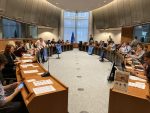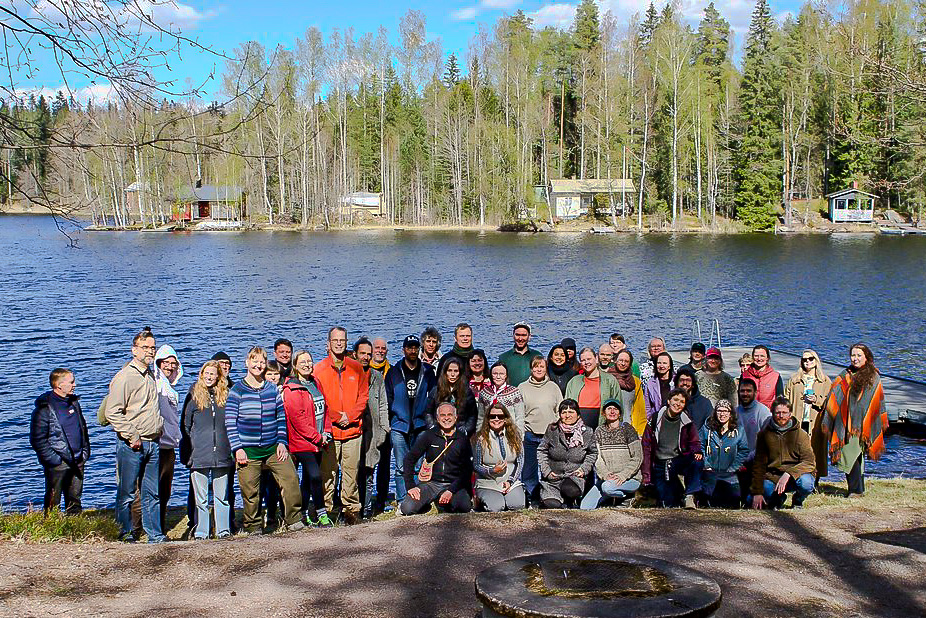
In a session at the Forest Movement Europe (FME) meeting in Finland from 4–7 May 2026, around 40 campaigners from forest NGOs across Europe continued their exchange on the potential impacts of, and possible entry points for NGO engagement within, the forthcoming EU Bioeconomy Strategy. Building on discussions from an online workshop in April, and with the aim of bridging the gap between abstract bioeconomy strategies and concrete political and economic realities, participants focused on identifying constructive approaches to engaging in the bioeconomy debate from a forest protection perspective.
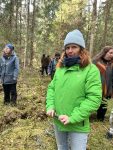
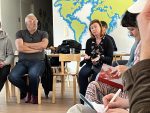
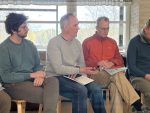
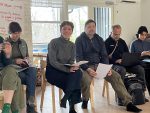
Working in smaller groups, they explored possible sustainable sources of income that could work at scale for people living in forested areas. The discussions highlighted both the opportunities and the challenges of developing rural economic models that are ecologically sustainable and socially viable.
In the second part of the session, several speakers reflected on forest-related strategies within a bioeconomy that could support more sustainable wood use and forest management. Karin Nutti Pilflykt from the Saami Council spoke about Saami traditions, noting that the principle is to take only what is needed from the forest, and not more than that. From this perspective, simply substituting one material for another in consumption patterns would not be sufficient; rather, the cultural value we assign to things is decisive.
Saija Kuusela, Chair of the AEFC, emphasized high-standard certification as an important solution and pointed to the growing demand for certified products. At the same time, she expressed frustration about the slow progress in developing genuinely high value-added forest products. She also presented a new certification scheme for continuous cover forestry, featuring strong biodiversity criteria and high levels of carbon retention in soils.
Sampo Manninen from Silva ry shared experiences from working with forest owners and described how this has contributed to shifts in forest management mindsets, including discussions on emerging markets for continuous cover forestry products. One of the main reasons clear-cutting continues to dominate forest management in Finland is that forest owners are often advised in ways that steer them towards this approach.
Jussi Nikula, working on bioeconomy issues at WWF Finland, highlighted that the Finnish forest industry still largely relies on bulk production, such as large sawmills and pulp production. The current trend is towards fewer but larger mills, fewer jobs, and higher harvest volumes. While the transition towards multi-purpose forestry remains difficult in a “pulp landscape,” he stressed the need for new narratives to challenge dominant industry paradigms.
Finally, Sydney Vennin from Fern presented the Brazilian concept of “sociobioeconomy” as a source of inspiration and explored potential connections between rural economies, small sawmills, and possible entry points within the EU Bioeconomy Strategy.
The session concluded with Ulrike Eppler and Jonas Daldrup from denkhausbremen presenting the broader project context and inviting participants to the bioeconomy conference “Closing the Biomass Gap”, which will take place near Berlin in Lychen in mid-November 2026.